April 2026
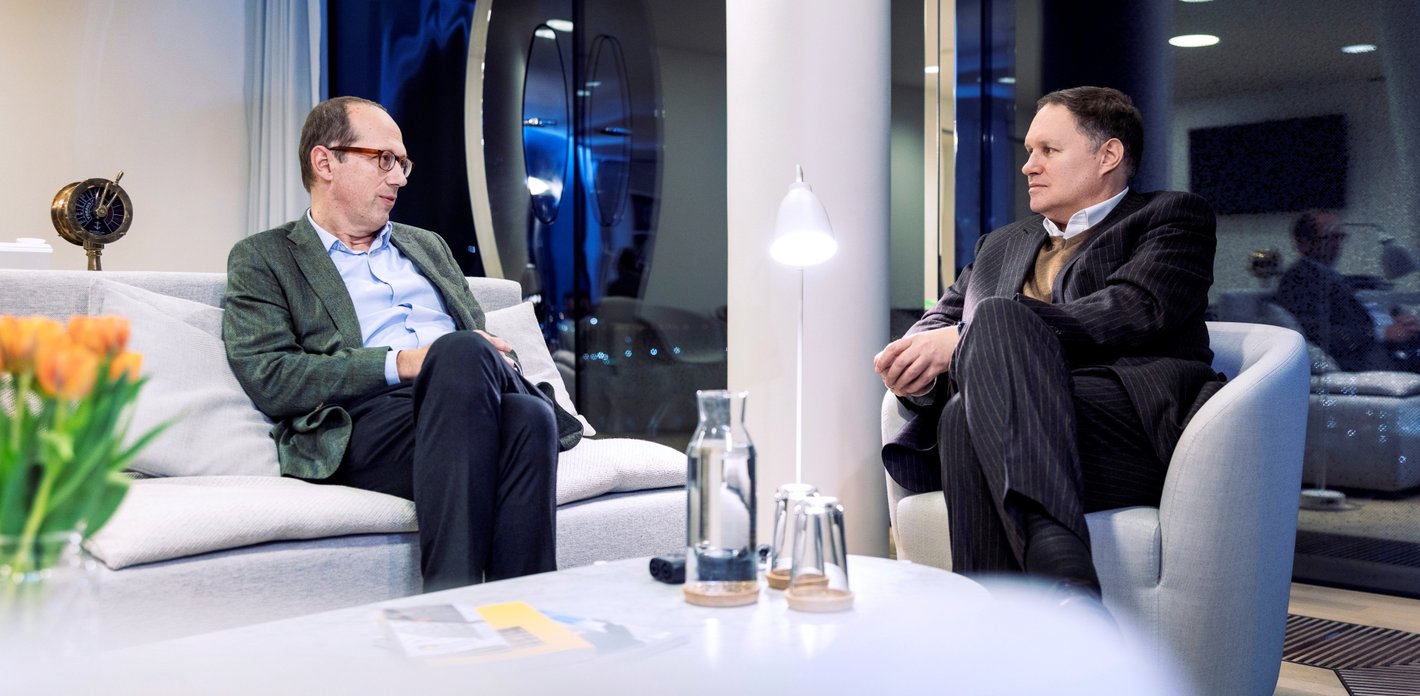
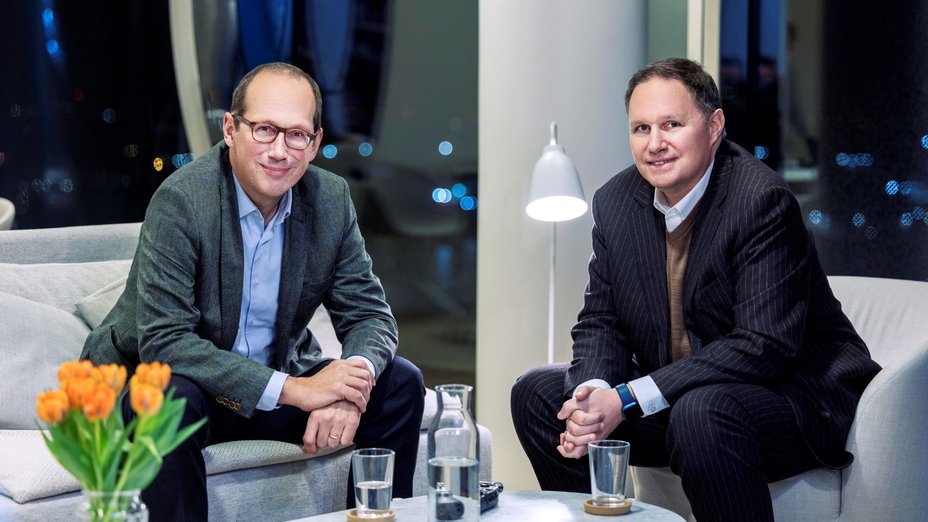
CHRISTOPH LIEBEN-SEUTTER (CLS) The upcoming season marks not only the tenth anniversary of the Elbphilharmonie’s opening concert, but also your appointment as Senator for Culture. Did you think back in 2017 that we’d still be sitting here 10 years later?
CARSTEN BROSDA (CB) I was convinced you’d be sitting here; when it comes to politicians, long-term predictions generally make less sense. Looking back, the city has undergone an incredible transformation since then. The way people in Hamburg talk about music and culture today, as if it were a given, would have been unthinkable ten years ago. And that, of course, has a lot to do with the Elbphilharmonie and the work you and your team are doing here. I get the feeling that the people of Hamburg have fallen in love with the idea that culture can be something truly meaningful, that matters. How have you experienced that? Has the work gotten any easier over the years?
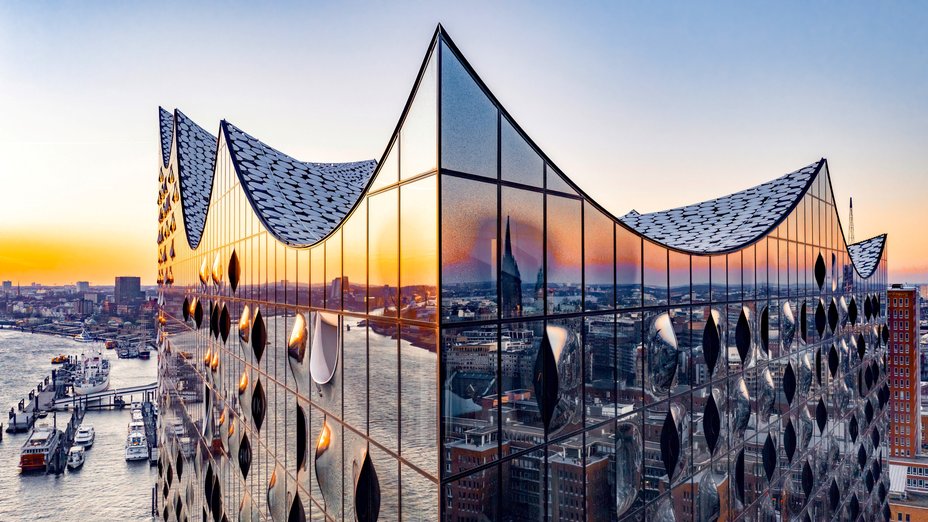
With a host of festivals and special themes, the Elbphilharmonie will celebrate its 10th anniversary in the 2026/27 season.
»Since 2017, classical music has become the talk of the town.«
Christoph Lieben-Seutter
Much more than just an architectural shell
CLS For me, it was as if a switch had been flipped in the opening year. Classical music used to have a loyal but also fairly small, contained audience in Hamburg. Since 2017, it’s become the talk of the town. I’m regularly approached on the street or in the subway by complete strangers wanting to talk about the concert programme, and every taxi driver seems to have an opinion about the acoustics of the Elbphilharmonie. Even ten years after the opening, three times as many people in Hamburg are attending concerts as before. Visitors from all over the world, but above all from Hamburg and the wider metropolitan region. This core audience is incredibly strong – people who live and breathe the Elbphilharmonie. But I’d also be interested to know: When you’re representing Hamburg to the rest of the world, what role does the Elbphilharmonie play?
CB The Elbphilharmonie is living proof that Hamburg sees itself today as a city of culture. Back then, we were pinning our hopes on it becoming a landmark. It has become not only a symbol of Hamburg, but a landmark for Germany as a whole. Cologne Cathedral, Neuschwanstein Castle, the Brandenburg Gate – these are all landmarks that are old, built before the dawn of democracy, predating the 21st century and none of them are in the north either. After its opening, the Elbphilharmonie suddenly became a part of Germany’s international image. Whenever a journalist asks how I would visually illustrate a report about Germany, it’s now clear that the Elbphilharmonie is a central part of that iconography. And that’s not just because of its striking architecture of the building, but because of the incredibly exciting things happening inside it.
CLS Yes, one secret to its success is certainly that the architecture and location promise a level of quality that must then be delivered in terms of substance. The Elbphilharmonie isn’t just something to see – it’s something to experience. And when all goes well, those high expectations are exceeded, creating an emotional bond and a desire for people to return.

With an open mind
CB I can imagine that this standard and these expectations can sometimes become a burden. Back in 2017, did you expect the enormous level of demand to remain this strong for so long?
CLS Back then, in an interview with the Abendblatt newspaper, I predicted that the first time a concert wouldn’t sell out would be in the spring of 2019. In reality, every concert remained sold out right up until the pandemic, and even after that, following a brief period of readjustment, we were fully booked again for another two years. This attendance rate remains a world record to this day, with the only difference being that tickets are now occasionally available at shorter notice, which has had a positive effect on the diversity and age range of our audiences. We are now seeing a higher proportion of younger concertgoers who are less inclined to purchase tickets for a classical concert five months in advance.
CB Since you asked about how the Elbphilharmonie is perceived beyond Hamburg: Christina Weiß, the former Minister of State for Culture, recently spoke to me about the »Visions« festival, which will return next season. She was genuinely impressed that we’ve succeeded in establishing a festival for 21st century music and contemporary composition – and that the Grand Hall regularly sells out for it. Elsewhere, organisers are pleased if such concert programmes attract 200 or 300 attendees. Here, however, the building’s appeal ensures that audiences come even for this kind of repertoire – and they leave inspired, having discovered just how compelling contemporary music can be.

»Here, however, the building’s appeal ensures that audiences come even for this kind of repertoire – and they leave inspired, having discovered just how compelling contemporary music can be.«
Carsten Brosda
CLS Exactly. The atmosphere of the space makes audiences far more open to listening than more traditional concert halls. Their expectations are simply much more open. That allows us to present such an unusual repertoire to a full house.
»Elbphilharmonie Visions« will take place again in 2027.
During the 2026/27 season, the leading American orchestras will be performing at the Elbphilharmonie.
Focus: 250 years of the USA
CB You’re also planning a major focus for the upcoming season on the 250th anniversary of the United States. I think that’s important, because right now feels like a timely opportunity to revisit the ideas upon which the country was founded.
CLS Undoubtedly. The USA remains a musical superpower, even though many of its cultural structures are currently under intense strain. It is still home to some of the world’s finest orchestras, and beyond classical music, just about every popular genre can trace its roots back to the blues, which African slaves developed on the cotton plantations of the American South. We want to showcase a little of this breadth and also give some critical voices a chance to speak out.
CB One of my absolute favourite artists, Rhiannon Giddens, will be a »Reflektor« artist this season. I’m very curious to see how she uses the concert hall. That’s something else we’ve learned in recent years: many artists don’t just see the Grand Hall as a cool performance venue, but as an instrument in itself.
CLS Yes, the hall is a unique space. Uplifting and intimate at the same time. Sometimes artists are intimidated by the directness and proximity to the audience, but most end up inspired by it. In any case, it’s important that the artists we invite to a »Reflektor« festival already know the hall well and let it inspire them when curating programmes all on their own.
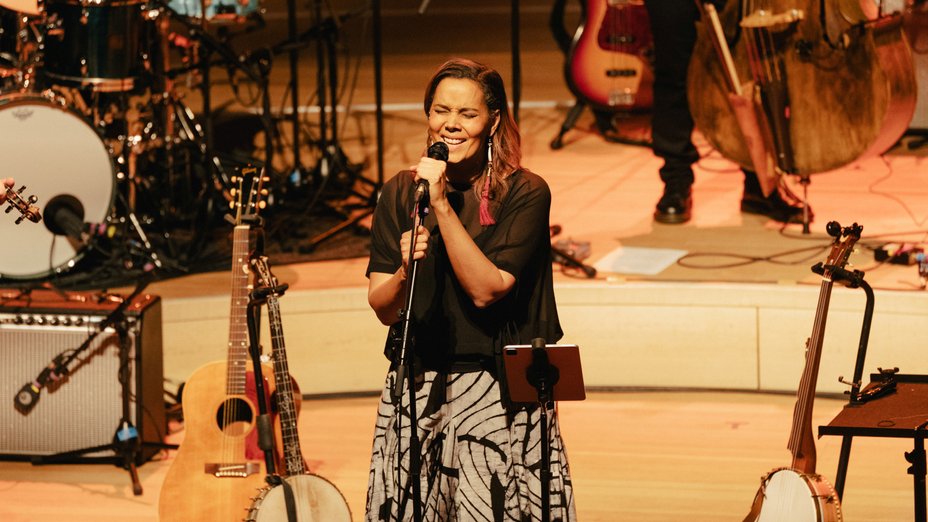
Highlights of the anniversary season
CB The line-up of guest orchestras is also impressive. If I’m not mistaken, you’ve already welcomed all the major US orchestras – something other venues spend a lifetime trying to achieve.
CLS Most orchestras are keen to perform at the Elbphilharmonie as often as possible, so it wasn’t difficult to bring together virtually all the leading orchestras for the anniversary season. We’re also embarking on a number of ambitious special projects, including performances of Mieczysław Weinberg’s opera »The Passenger« and Luigi Nono’s magnum opus »Prometeo«, a classic work of post-war modernism. Incidentally, this forms part of a broader focus on Prometheus, exploring the mythical figure from multiple perspectives. The violinist Patricia Kopatchinskaja is developing a production with Ensemble Resonanz that takes a rather critical view of Prometheus. The general tenet is: He brought fire to humanity – if only he hadn’t; now they are ruining the world with their hubris. For Beethoven, on the other hand, Prometheus was a symbol of the Enlightenment. Beethoven’s music will be an omnipresent fixture during the Beethoven Year 2027. Our partner venues are also organising several concert series: Quatuor Ébène will perform the complete string quartets, Igor Levit the full cycle of piano sonatas across two seasons, and Lang Lang will be performing Beethoven’s piano concertos.
Packed with music from every genre: the 2026/27 anniversary season.
Elbphilharmonie Session with Quatuor Ébène

Elbphilharmonie for Everyone
CB You’re reaching new audiences, above all through your music education programmes, which are truly outstanding, especially compared to other venues. After all, it can no longer be assumed that concert life will be sustained by those who attend five or six concerts a year. You are also succeeding in convincing new audiences about the relevance and importance of your programme.
CLS Music education is not just about the audiences of the future. More than anything, it’s about access to and participation in culture for those people who, for whatever reason, are unable to take part in concert life. The programme is remarkably diverse and extensive, and is now regarded across Europe as a standard to aim for. So far though, it has been incorporated into the overall programme in such a way that it is hard to distinguish on its own in its entirety. That’s why, moving forward, we will be bringing our music education activities together under the umbrella name »Music for Everyone«.
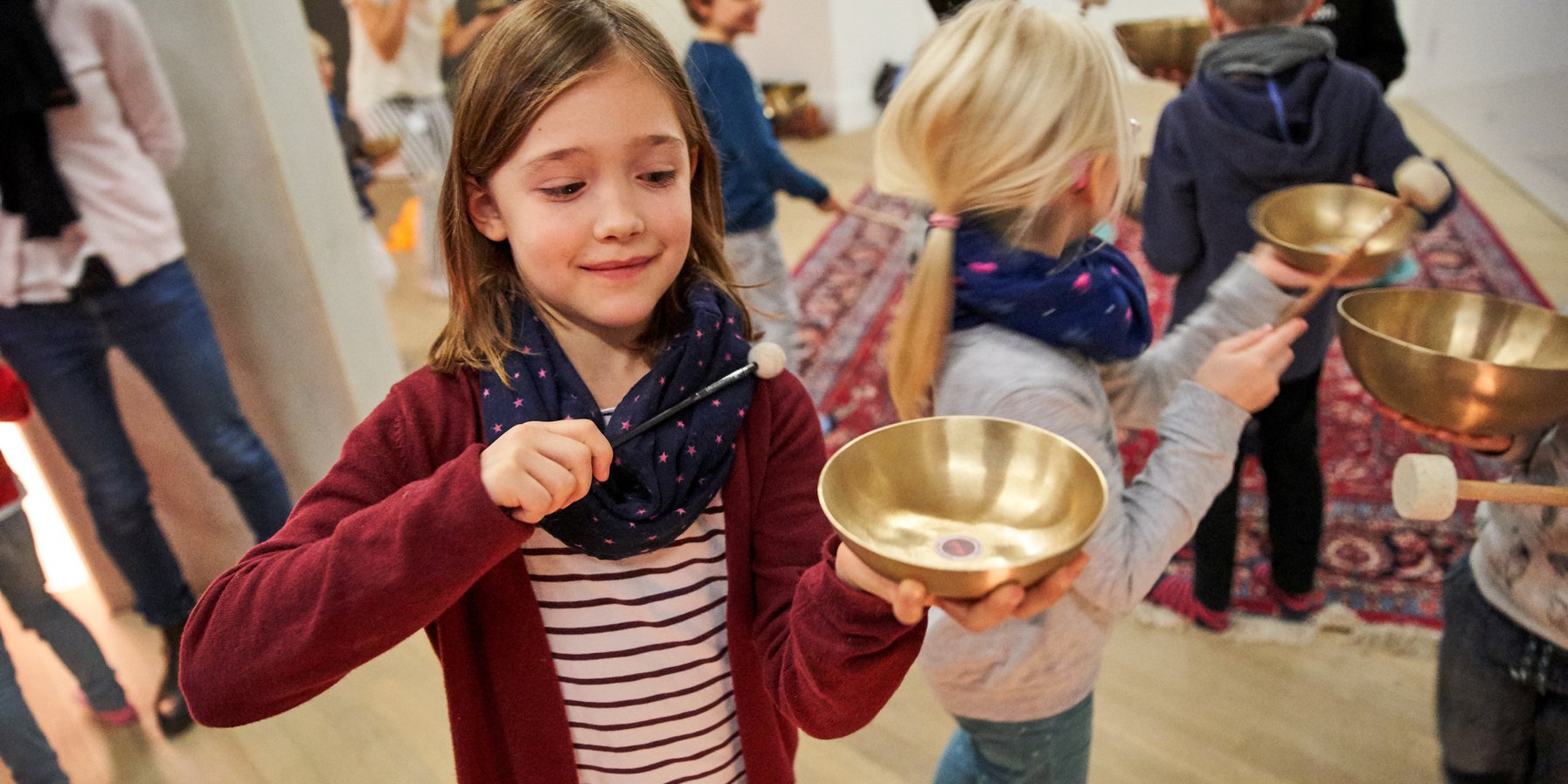
Workshops and concerts for all ages, as well as ensembles you can join in with: you can discover all this and much more under the heading »Music for All«.
Music for Everyone: Education at the Elbphilharmonie
What on earth should I wear? And when am I supposed to applaud? Our tips for your (first) visit to the Elbphilharmonie answer these and other questions.
CB A clear sign that the idea of a »Concert Hall for Everyone« is more than just a slogan. You see that in small moments too – like when audiences occasionally applaud between movements. That shows there are people in the hall who aren’t familiar with the supposedly proper way of clapping and are simply moved by the music. That always makes me happy.
CLS That’s exactly right, even though the infamous mid-performance applauses happen less frequently than is often suggested. More seasoned concertgoers tend to take greater offence at it than is really warranted. After all, applauding between movements, or even during the music, was standard practice until about a century ago, and it remains customary in opera and jazz after particularly successful arias or solos. How, then, are people supposed to know the difference? »Coach tour tourists« are also often criticised at concerts, yet the mode of travel says nothing about a listener’s level of knowledge. Not to mention the fact that four tour buses – such as those often parked on the Sandtorkai – can carry a maximum of around 200 visitors, which accounts for just 10% of the audience in the Grand Hall.
The artistic director’s wish list
CB One of my personal highlights of the past ten years was the concert with Jimmy Webb in 2024, when he gave his very first performance in Germany. Are there any artists still missing from the programme who you would love to perform here?
CLS Not in the classical music world – with the exception of one orchestra, which is now scheduled to open the season after next. We’ve worked through my original wish list quite thoroughly, although fate has prevented a few things from happening. Keith Jarrett, for instance, was no longer able to perform for health reasons. And my dream of bringing Marc Hollis back to the podium couldn’t be realised either. That said, with artists like Caetano Veloso, Paolo Conte, John Cale, Elvis Costello, Chick Corea, John McLaughlin and even the 91-year-old Burt Bacharach, I’ve had the privilege of welcoming some of my idols to the Elbphilharmonie. Now we can only hope that Tom Waits might one day feel inclined to tour again after 20 years, although that will likely remain a dream unfulfilled.
CB In any case, performing at the Elbphilharmonie at least once still seems to be on the wish list of many musicians; the Elbphilharmonie’s appeal for artists remains undiminished.
CLS Absolutely – and the appeal for audiences too! The desire to disconnect and go offline for a couple of hours and experience live music together with hundreds of others remains strong. Perhaps stronger than ever. For those two hours, everyone in the hall shares the same sense that something extraordinary is happening on stage. All the more reason not to worry about the future of live music. I’m convinced that humanity needs places like the Elbphilharmonie more than ever.
This interview originally appeared in the 2026/27 yearbook.


