The Wind Supply – the organ’s lungs: this grandest of instruments is comparable to a gigantic wind orchestra. No organist in the world has enough power to breathe air into all the pipes, so four large fan blowers with electric motors perform this task. The wind produced by the blowers is adjusted to the exact pressure required before being driven through wooden channels into the pipes.
Elbphilharmonie
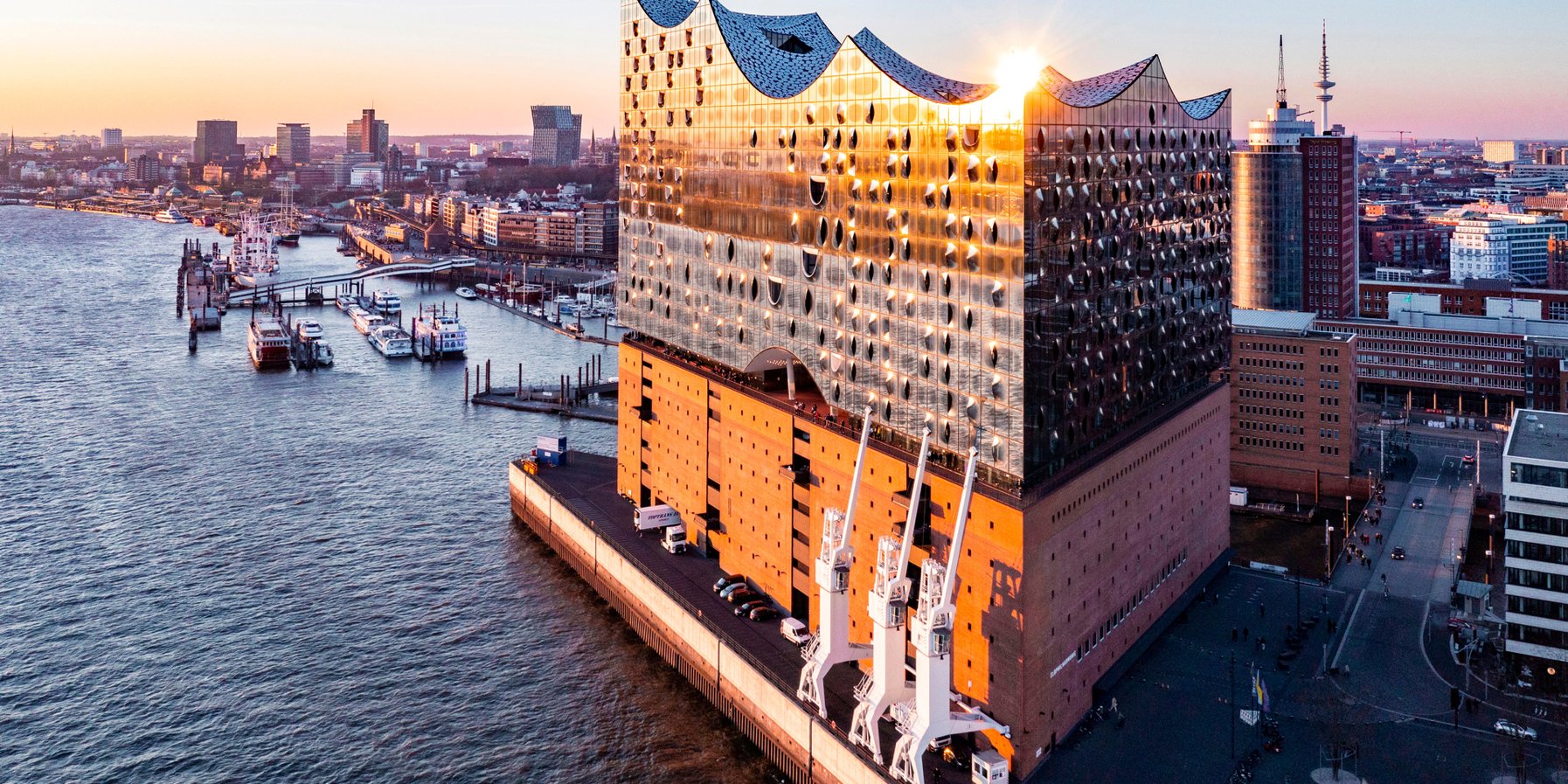
Die Elbphilharmonie ist ein Gesamtkunstwerk aus atemberaubender Architektur, exzellenter Akustik und einzigartiger Lage, entworfen vom Architekturbüro Herzog & de Meuron und 2017 fertiggestellt.
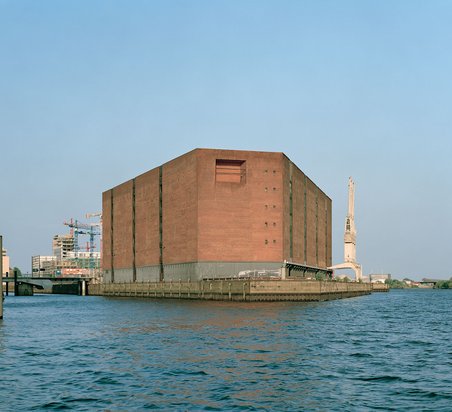
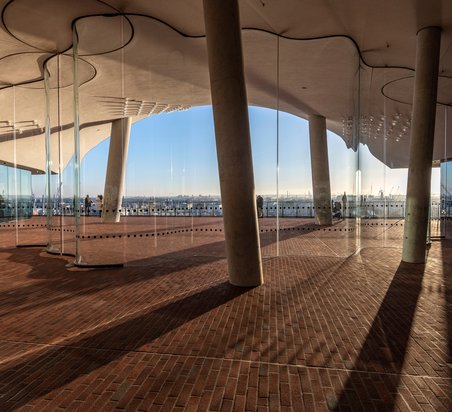
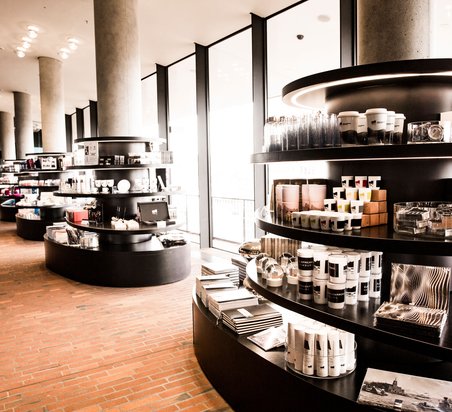
Eine funkelnde Glaswelle auf einem soliden Backsteinspeicher aus den 1960ern – dieser Anblick ist aus Hamburg nicht mehr wegzudenken. Zwischen Backstein und Glas liegt die Plaza, eine öffentlich zugängliche Aussichtsplattform als Treffpunkt und Startrampe zur Erkundung der verschiedenen Bereiche des Hauses: Großer und Kleiner Saal, Räume im Kaispeicher aber auch Hotel, Café und Souvenirshop.
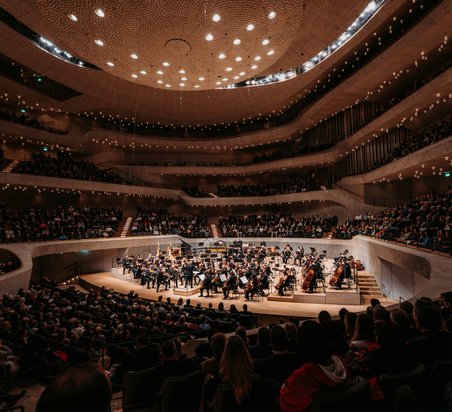
Ein Elbphilharmonie-Besuch ist ein Erlebnis für alle Sinne – im Mittelpunkt steht dabei natürlich die Musik. Und das im Großen Saal gleich im doppelten Sinne: Rund um die Bühne wachsen die Zuschauerränge terrassenförmig empor. Auch das Ertasten des Gebäudes ist ausdrücklich erwünscht – besonders die akustischen Wandverkleidungen im Großen und Kleinen Saal laden dazu ein. Und schließlich gibt es auf dem Weg durch das Gebäude durch die Rundum-Glasfassade überall spannende Ausblicke auf die ganze Stadt zu entdecken.
Jubiläum! In der Konzertsaison 2026/27 feiert die Elbphilharmonie ihren 10. Geburtstag.
Architecture
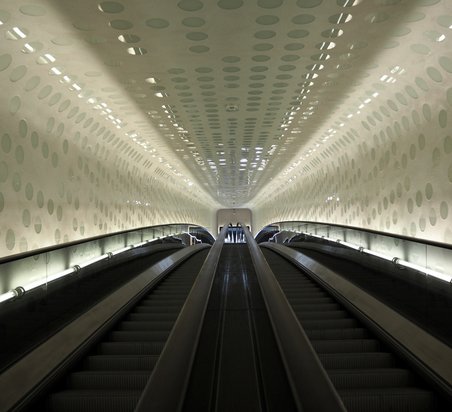
Über die Tube zur Plaza, von dort über die Foyers in die Säle und schließlich aufs Dach: In der Elbphilharmonie gibt es, verteilt auf 110 Metern in der Höhe, auf jeder Ebene faszinierende Räume.

Architecture and music – inseparable in the Elbphilharmonie

The programme at the Elbphilharmonie and Laeiszhalle is all about quality, diversity and breaking down genre boundaries. Lively interpretations of classical masterpieces are just as important as the discovery of contemporary music from various cultures – performed by the world’s best artists and the resident orchestras and ensembles of the two halls: the NDR Elbphilharmonie Orchestra, Ensemble Resonanz and Symphoniker Hamburg.
The great stars of jazz are a regular presence here, and they pave the way for the rising stars of the scene. The intensive »Reflektor« mini-festivals, in which exciting artists take charge of the programme and invite their favourite musical friends and colleagues to the Elbphilharmonie, are always a very special experience.
Die einzigartige Akustik
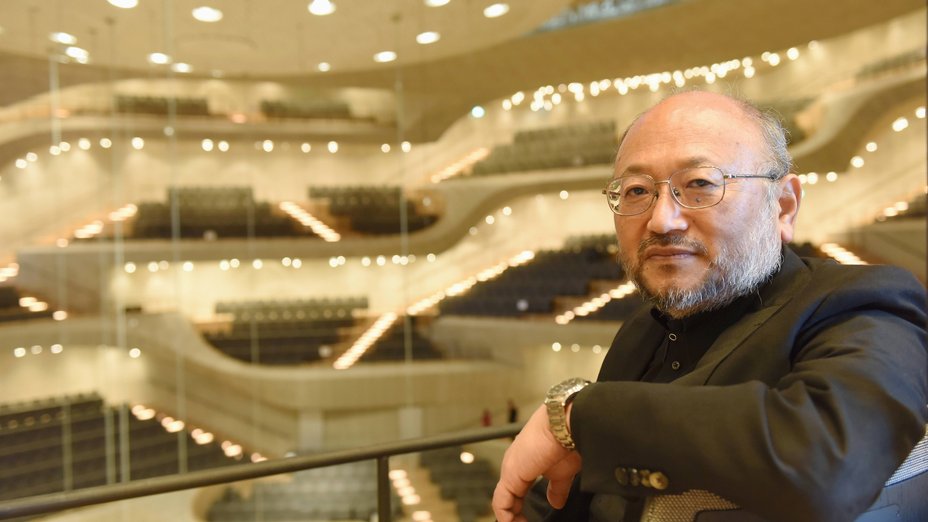
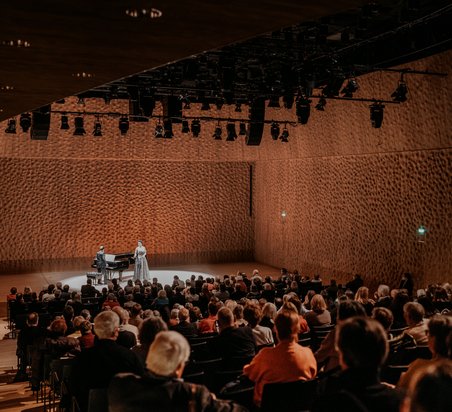
Von vielen Künstler:innen und vom Publikum geliebt, hat die Akustik der Konzertsäle in der Elbphilharmonie zahlreiche Besonderheiten. Wichtigstes Merkmal: Auf allen Plätzen hört man fantastisch, kein Ton geht verloren.
»Wenn man es als Akustiker schafft, dass das Publikum die große Distanz zur Musik nicht mehr wahrnimmt, hat man gute Arbeit geleistet.«
Yasuhisa Toyota, Akustiker der Elbphilharmonie
An organ for everyone
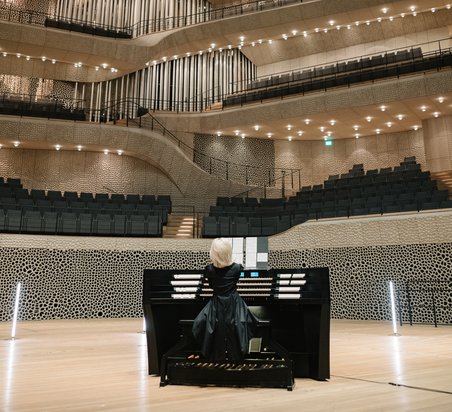
The Grand Hall organ honours the idea of the Elbphilharmonie as a »concert hall for everyone«: rather than towering high up and out of reach, it is built into and around the terraced rows of seats, and is elegantly integrated into the architecture. Feeling and touching are expressly allowed! The surface of the pipes is coated with a custom-made protective layer to ensure they remain in optimal condition.
The sound of an organ is produced by the air flowing through the pipes. From the organ console, the organist can »pull out« individual stops to switch ranks on or off, producing different timbres. When playing, the organist can choose from several manuals – i.e. keyboards – and sets of pedals, which are played using the feet.
The Elbphilharmonie organ was built by the renowned Bonn-based organ building company Klais, and has 69 stops. There are also four registers integrated into the reflector above the stage.
In addition to the mechanical console located directly in front of the instrument, the Elbphilharmonie’s organ can also be played from a mobile console that is pushed onto the stage for concerts.
The Elbphilharmonie organ is made up of almost 5,000 pipes, varying in length from 11 millimetres to more than 10 metres. Most of the pipes are made of tin: around 400 of them are made of wood, some of which is more than 180 years old, guaranteeing outstanding, long-lasting quality.
From »cutting, smoky« to »bell-like, iridescent«: the tones of the Elbphilharmonie organ are manifold and create a warm sound that fills the Grand Hall. This organ is optimised for music from the 19th century onwards and for the requirements of contemporary music. The Elbphilharmonie’s titular organist is the Latvian star organist Iveta Apkalna.

One organ – many divisions
-
(1) Wind Supply
-
(2) Console
The Console – the organ’s switchboard: from the seat of the console, the organist can operate every pipe individually or in combination. Each of the four manuals (the keyboards of the organ) and the pedalboard (the keyboard played with the feet) has been allocated specific sets of pipes. Each register – or rank of pipes – produces its own individual tone colour. Groups of registers are called divisions.
-
(3) Choir
The bottom manual is used to play the pipes of the Choir. The division of pipes making up the Choir is stored in a large box with shutters. These can be opened and closed using a foot pedal found above the pedalboard to vary the volume, allowing the sound to swell and diminish. This division is intended to accompany the choir, since, of all the pipes, these pipes produce a sound nearest to the human voice.
-
(4) The Great
As its name suggests, this manual controls the organ’s main division of pipes. One could say it is the very backbone of the organ’s sound. The Great is controlled by the second lowest manual.
-
(5) Swell
Just like the Choir, this division also has shutters that can be operated to vary the sound. Played from the third manual, the Swell division has many pipes that together create a convincing orchestral sound. The number and tone colour of the pipes in this division have been specially selected so that the sound can be very loud, but also very soft.
-
(6) Solo
Played from the top keyboard, the Solo includes a range of unusual tone colours and also has some very loud registers. The pipes in this division are particularly suitable for accompanying solo voices and instruments.
-
(7) Pedal Division
Wind passes through the pipes in this division when the pedalboard (keyboard played by the feet) is played. The deepest tones are produced via the pedals, so the longest and widest pipes, including the largest of the whole organ, can be found in this division. The biggest pipe is over 10 metres long. Since such large pipes require lots of storage space, they have been positioned at several different places. Registers containing shorter pipes for higher tones are placed together in the small pedal division behind the Solo division.
-
(8) Echo
It is integrated in the sound reflector hanging above the stage. The Echo division does not have its own specific keyboard but can be played from every keyboard of the organ console.

A new landmark emerges :Milestones in the Elbphilharmonie’s history
1875 Kaiserspeicher
With 19,000 square metres of storage space, the »Kaiserspeicher« at the tip of »Kaiserhöft« is the largest warehouse in the port.

1966 Cocoa, Tobacco, Tea
The City of Hamburg takes the decision to blow up the ruins of the badly damaged Kaiserspeicher. A new warehouse is erected on the site. Like its predecessor, the new Kaispeicher A is geared to storing goods such as cocoa, tobacco and tea.

2003 On the Drawing Board
The warehouse has been standing empty since the 1990s. In 2003, Hamburg project developer Alexander Gérard commissions architects Herzog & de Meuron to design a new concert hall on top of the old Kaispeicher. On 2 April 2007, the foundation stone is laid.

2008 Creating Space for Something New
The preparations for gutting the Kaispeicher A begin. The 1,111 existing piles anchor the Kaispeicher A in the river Elbe. The foundation of the Elbphilharmonie is cast.

2010 Aiming High
Out of the gutted Kaispeicher A, the Elbphilharmonie grows a further 17 floors. In 2010, the last level is added: the 25th floor. The installation of the innovative glass facade begins on the ninth floor.

2013 Major Advances
In 2013, after months of building freeze, the Elbphilharmonie partners sign a reassignment agreement. From this point on, the internal construction makes advances: the first panels of the »white skin« are installed in the Grand Hall.

2014 The Last Piece of the Puzzle
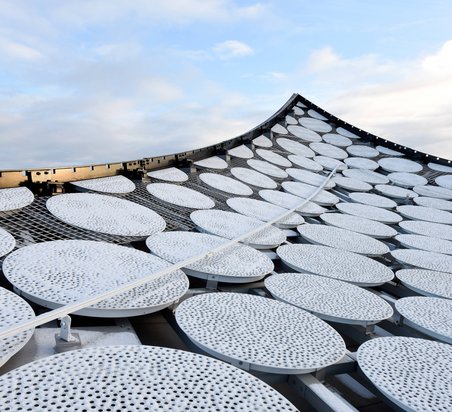
On 31 January 2014, five fitters attach the last of the 1,100 glass elements to the edge of the rolling rooftop. This concludes the construction of the facade, and the exterior of the Elbphilharmonie is now complete.

2016 Plaza
The Plaza opens to the public on 4 November 2016, two months ahead of the Grand Opening of the concert hall. The Plaza’s extensive deck creates a new public space for Hamburg.

2017 Grand Opening
The inauguration of the Elbphilharmonie is celebrated on 11 January 2017. This momentous event is attended by German Chancellor Angela Merkel and numerous other guests from the worlds of culture and politics.