Text: Simon Chlosta, October 2025
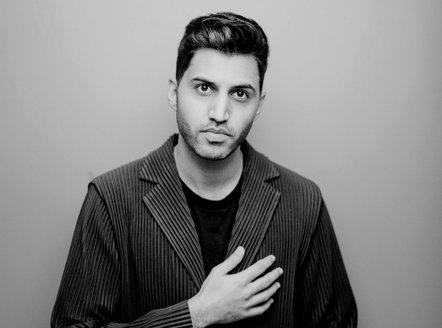
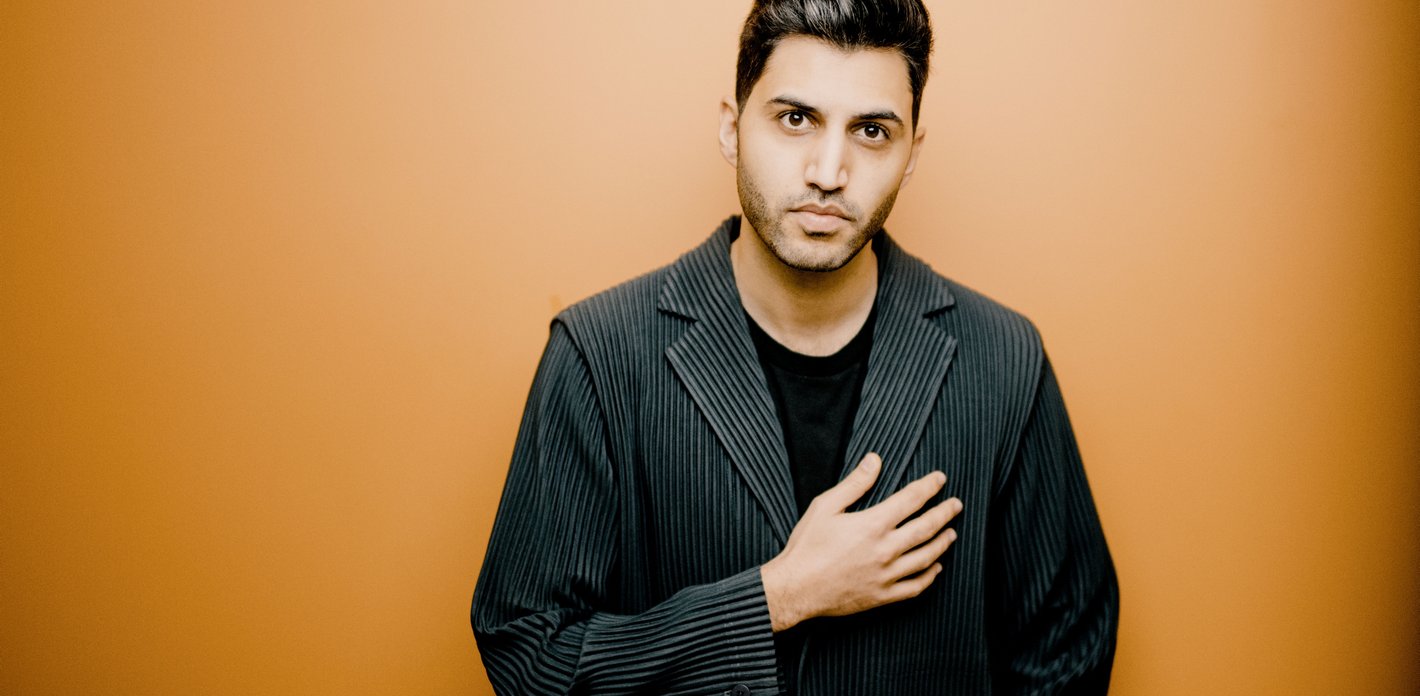
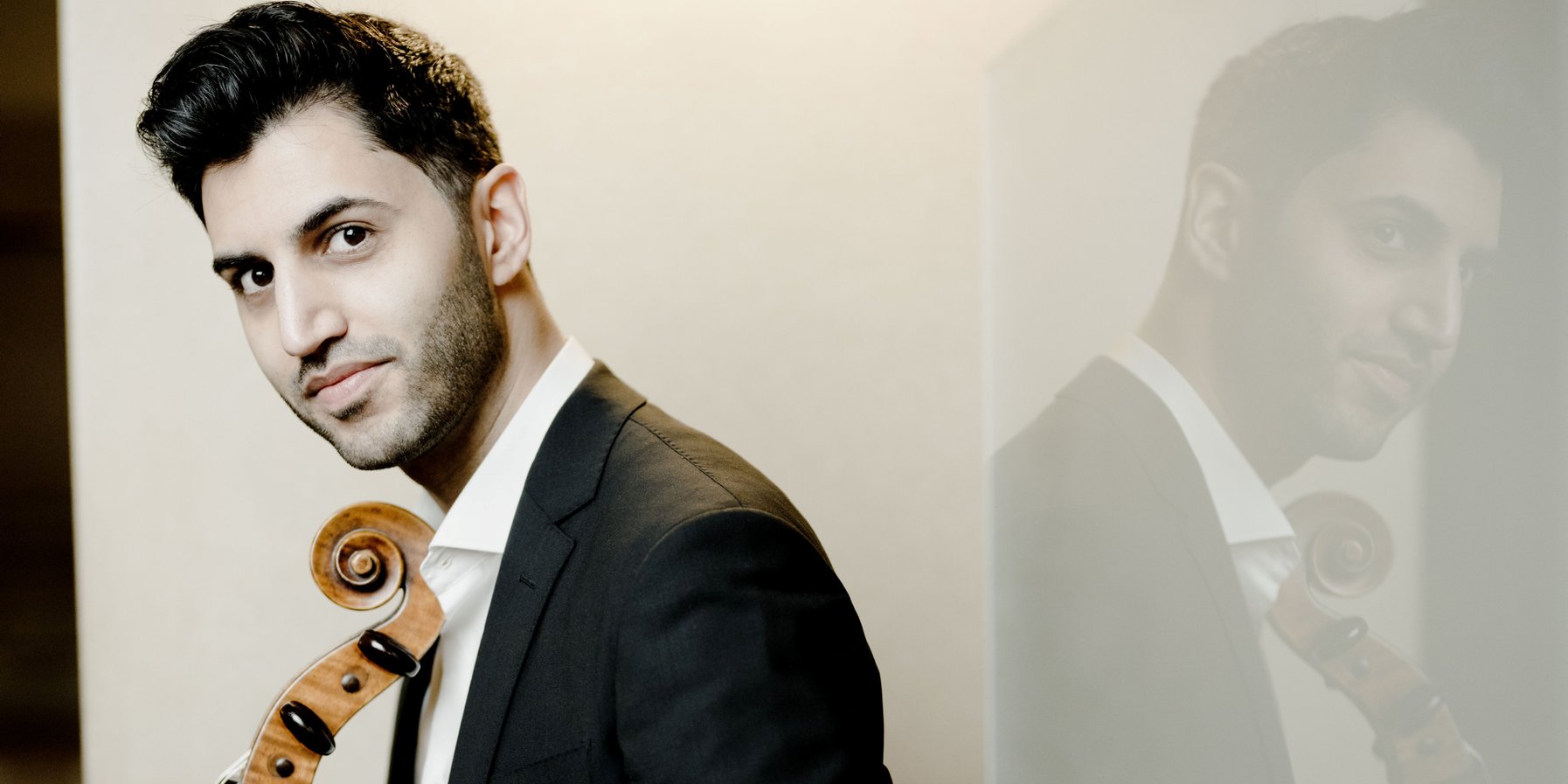
When Kian Soltani travels, which he does frequently, he always carries with him a rich sense of tradition. First, there is his cello, a Stradivari instrument bearing the beautiful name »London ex Boccherini 1694«, said to have once belonged to the famous Italian composer Luigi Boccherini. Then there is the intangible legacy passed down by his parents – a family of musicians who emigrated from Iran to Austria (more on that later) – and by his teacher Ivan Monighetti, himself one of the last pupils of Mstislav Rostropovich, the most famous cellist of all time, for whom composers like Dmitri Shostakovich and Sergei Prokofiev wrote their concertos.
»I feel very connected to him, and of course proud in a certain way,« Soltani says in the »Elbphilharmonie Talk« podcast – before immediately recounting what he calls the biggest mistake of his life: »Unfortunately, I never met Rostropovich in person, even though I did have the chance. He came to Basel while I was studying there and worked with Monighetti’s entire cello class. But I was still enrolled in a distance learning programme at the time and had school that day. I just can’t believe that I managed to miss that. If I could somehow meet my younger self, I’d give myself a slap.«
In der Saison 2025/26 ist Kian Soltani Residenz-Künstler der Elbphilharmonie. In verschiedensten Besetzungen wird er seine Begeisterung für die Musik und sein Instrument präsentieren.
The road to success
Apart from that one error of judgment, Soltani has done a lot of things right in his life so far. Whether he will one day become a legend like Rostropovich remains to be seen – but he has already established himself as one of the most successful cellists of his generation at a young age. His prospects were promising from the start: Soltani’s father is a bassoonist and his mother plays the harp. Both fled Iran for Austria in 1979, where Soltani was born in Bregenz in 1992 and immersed himself in Western classical music from an early age.
At the age of four, he picked up the cello for the first time and fell in love with its sound, which he felt resembled the human voice. By the age of twelve, he was studying with Ivan Monighetti in Basel. First prizes at major competitions soon followed, but more importantly, leading figures in the classical world began to take notice: Daniel Barenboim made him principal cellist of his West-Eastern Divan Orchestra, Anne-Sophie Mutter welcomed him into her foundation and took him on tour with her, and he signed his first recording contract with the Deutsche Grammophon label. Since then, Soltani has performed as a soloist with many of the world’s leading orchestras. A picture-perfect career that might almost seem so flawless as to be a little boring.
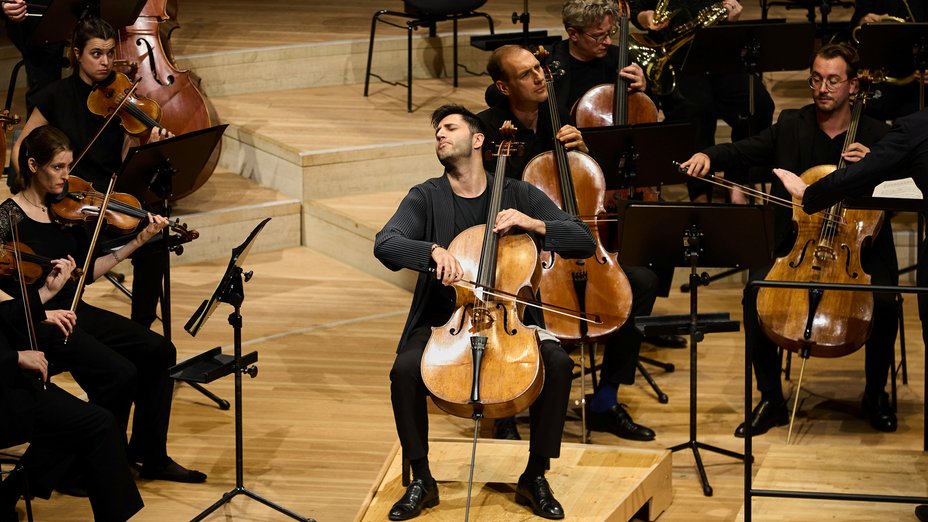
But Soltani would disagree. In interviews, he comes across as relaxed, down-to-earth and free of any airs and graces. He’s just as charming and entertaining on Instagram, where he shares glimpses of both his everyday life and his life as a cellist with his 104,000 followers – an impressive figure for a classical musician. Add to that a healthy dose of pragmatism and a thirst for adventure, which have led him to pursue a range of interesting projects beyond his »normal« cello playing.
One such project is »Cello Unlimited«, a product of the pandemic year 2020. At that time, Soltani arranged film scores from some of his favourite films – »The Lord of the Rings«, »Pirates of the Caribbean« and »The Da Vinci Code« – for an entire cello orchestra, playing each of the individual parts himself (there are up to 40!), recording them separately and later layering them on the computer.
»I didn’t write a single note, but did everything by ear and played it directly into the microphone,« he says of the ambitious project, which was later released as an album. »I wasn’t interested at all in how many parts there would be or which of them would be cello one, two or three.
I always took four bars and only when I was completely happy with the sound of those four bars did I build the next four bars – starting from the ground up, like a house. And when the whole house was standing, I started to decorate it and, like an architect, assembled it voice by voice.«
Listen now
What could easily have turned into a bland crossover in the style of David Garrett turned out to be remarkably convincing and musically epic. Soltani decided to notate his arrangements after all, allowing him to perform »Cello Unlimited« live on stage with an eight-member cello ensemble, enriched by additional recorded parts that he refers to, tongue in cheek, as his »army of ghost cellists«.
In the future, Soltani hopes to go even further and compose more of his own music. »I’ve already written a few pieces for cello ensemble, a small string quartet, and of course works for solo cello. But not yet for larger ensembles. I’d have to see how I’d approach that.« His main source of inspiration, he says, would be folk music. »And of course, I’d start with the cello part.« With so many interests and concerts, it’s hardly surprising that some things have had to take a back seat. It was for this reason that, at the start of this season, Soltani stepped down from his professorship in Vienna, where he had taught a cello class for two years. »I just had to pull the plug and admit: it’s better for everyone if I take a break now.«
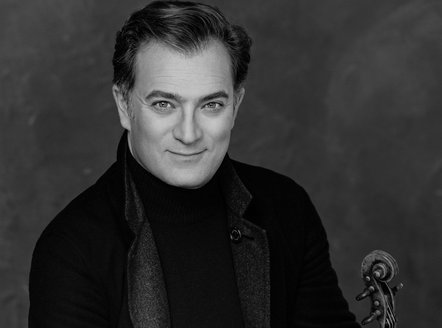
Several of Soltani’s performances in the 2025/26 season take him to Hamburg, where he will showcase at least some of his talents as Artist in Residence at the Elbphilharmonie. In September, he already performed a Haydn cello concerto with the Mahler Chamber Orchestra. This is followed in January by Tchaikovsky’s famous Rococo Variations (»a work that simply offers everything«) with the WDR Symphony Orchestra, and in March by the cello concerto by the Polish composer Witold Lutosławski (»a composer I love and admire very, very much«) together with the Iceland Symphony Orchestra – a work that takes him into more modern soundscapes. In May, he will join violinist Renaud Capuçon and pianist Mao Fujita for a chamber music evening at the Laeiszhalle, performing piano trios by Tchaikovsky and Mendelssohn.
A musical ambassador
And then, of course, there are his Persian roots, which will feature in the final concert of his residency. When asked about this, Soltani paints a nuanced picture: »My family remains very closely connected to its Persian heritage and the community here. But, of course, I see myself as entirely Austrian. I always say Persian because I personally have no connection whatsoever to the geographical country of Iran. I wasn’t born there, nor have I ever lived there. But Persian culture, food, language, music – that’s what my parents have passed on to me.«
He is also careful not to make overtly political statements about Iran and the protests of recent years. »Posting something about it on Instagram isn’t brave,« he once remarked. Nevertheless, beneath one of his posts featuring an excerpt from his own composition »Persian Fire Dance«, he writes: »I know that nothing I do will ever be enough, but I will continue to try to make a small contribution by raising awareness through my concerts. As always, I fully support the people of Iran who are fighting for their freedoms and human rights.«
And so, in a way, Soltani has become an ambassador for the culture and people of a country he has not set foot in for 20 years. Yet he still hopes to return someday. »Not under the current circumstances, of course. But it would be my dream to perform in a free Iran one day.«
The translator
Until then, Soltani is bringing Persian music to European stages. For several years now, he has performed with the Shiraz Ensemble, which is devoted to presenting this music on predominantly traditional instruments and making it accessible to Western audiences. His father, Khosro Soltani, plays the ney and duduk flutes in the group. In Hamburg, the five musicians are set to present the programme »Persian Night« at the end of May, marking the conclusion of Soltani’s residency. The performance is largely improvised and played from memory. Soltani describes his role in the ensemble as follows: »I approach this music as a classical musician who has discovered it for himself. My job as a cellist is to guide the dialogue. I see myself as a communicator between the audience and these Persian masters on stage. Someone who listens with both a Western ear and a Persian ear.«
Soltani describes his aim as translating Persian music in a way that makes it accessible to European listeners. »That’s also the best reason why I’m qualified to do this – because, in a sense, I see myself as part of the European audience,« he explains. »We’ve performed the programme several times now and it’s becoming more and more refined. I think we’ve really arrived at a version that perfectly matches what I had envisioned in terms of length and style. It’s absolutely tailored for an audience that attends traditional European concerts.« And if there are any moments of difficulty in understanding, Soltani will, of course, be there to help with the translation.
This interview appeared (in German) in Elbphilharmonie Magazin
- Elbphilharmonie Großer Saal
Mahler Chamber Orchestra / Kian Soltani / Gianandrea Noseda
Mendelssohn Bartholdy: The Hebrides / Haydn: Cello Concerto in C major / Schumann: Symphony No. 2
Past Concert - Elbphilharmonie Großer Saal
WDR Sinfonieorchester / Kian Soltani / Cristian Măcelaru
Tchaikovsky: Nocturne & Variations on a Rococo Theme / Mahler: Symphony No. 5
Past Concert - Elbphilharmonie Großer Saal
Iceland Symphony Orchestra / Kian Soltani / Eva Ollikainen
Sibelius: Pohjola’s Daughter / Lutosławski: Cello Concerto / Thorvaldsdóttir: Archora / Stravinsky: The Firebird
Sold out - Laeiszhalle Kleiner Saal
Renaud Capuçon / Kian Soltani / Mao Fujita
Tchaikovsky: Piano Trio in A minor, Op. 50 / Mendelssohn: Piano Trio in D minor, Op. 49 – Hamburg International Music Festival
- Elbphilharmonie Kleiner Saal
Kian Soltani / Ensemble Shiraz
»Persian Night« – Traditional Persian Music / Hamburg International Music Festival
Sold out