Text: Michael Rebhahn, 7 August 2025
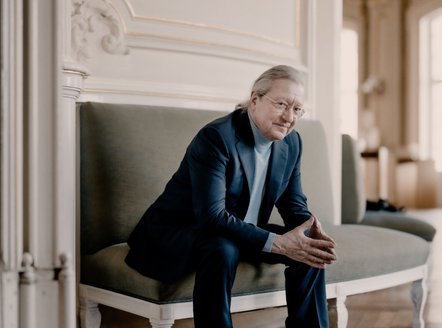
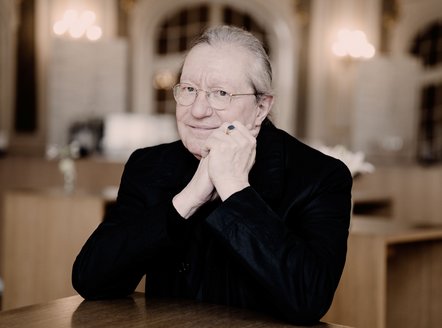
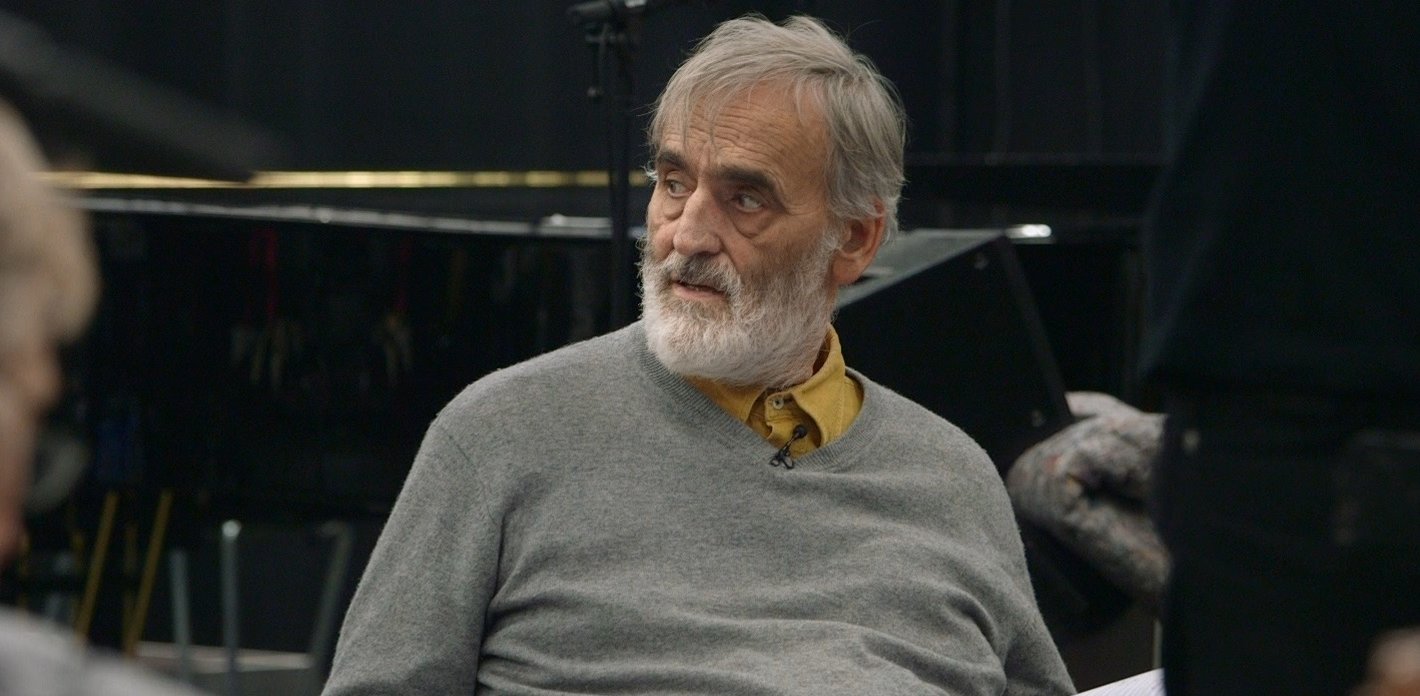
»What I want,« Helmut Lachenmann says in an interview from 1971, »is a music at once an expression and aesthetic object of a curiosity that is prepared to reflect everything, but also capable of revealing any progressive brilliance.« Reflect everything, challenge everything, take nothing for granted: on the basis of this methodological doubt, Lachenmann radically revised the meanings of what seems protected by the term »music« like hardly any other composer. This development commenced in Venice. In the late 1950s, Lachenmann studied privately there under Luigi Nono and went through the rigorous school of a Marxist-grounded form of critical composing. From Nono, he summarises he had primarily learned, »how from an aesthetically radically upturned environment something familiar emerged so unfamiliarly strong and new«.
The interrogation and redefinition of those »familiar works« became Helmut Lachenmann’s big talking point; beginning with Nono’s ideal of an anti-bourgeois music, he wanted to go further, »right into the energetic roots of the means of sound itself where this blasts the familiar performance practice.« In this sense, his music is always about the critical analysis of traditional acoustic approaches, about the separation of the unexpected from the realm of practised effects. For him, composing does not exactly mean switching to exotic playgrounds, but to assessing where the conventions have become firmly established. His mission was the passageway »into the lion’s den«, into the thick of the »philharmonically pre-shaped space.«
Spotlight: Helmut Lachenmann :2025/26 Season
An adventurer of contemporary music turns 90, and that calls for a celebration! Helmut Lachenmann has shaped contemporary music with his spirit of discovery and love of experimentation.
Have a listen!

Against this background, Lachenmann conceives nothing less than the »liberation of listening« as the purpose of his compositional work. Listening, especially at a time of incessant overabundance of music both over- and underchallenged, had, according to him, to liberate itself by entering into the structure of what must be listened to as a » perception consciously set in motion, an evident, provoked perception.« Lachenmann describes his aesthetic design, which should lead to this liberation, as a dialectic of »offer and refusal.« And it is precisely this declaration which was repeatedly curtailed or misunderstood. The point here is by no means about the refusal of music per se, but rather about an avoidance of existing tonal usages, which listeners merely register instead of reacting to what is actually sounding. The »refusal« accordingly applies to a music that simply triggers reflexes instead of generating reflections. Lachenmann himself puts it so clearly: »By blocking out the familiar performance practice, hitherto suppressed practice is brought to light and the soundscape virtually shows the flipside of the familiar philharmonic model.«
An echo at the beginning
Back to the beginnings. Helmut Lachenmann gives his public debut in 1962 at the International Summer Course for New Music in Darmstadt. »Echo Andante« is the title of the piece for piano solo premiered there by the composer himself – i.e. for an instrument which he is later once supposed to have described as a »bourgeois piece of furniture«. His Opus 1 is an »attempt at the rebellious objective«: a circumvention of the piano whose sound persistently fades away due to its decay. Lachenmann wants instead to generate a continuous, flowing piano sound and, in this form of resistance, his already mentioned aesthetic creed becomes conceivably evident: challenge everything, take nothing for granted.
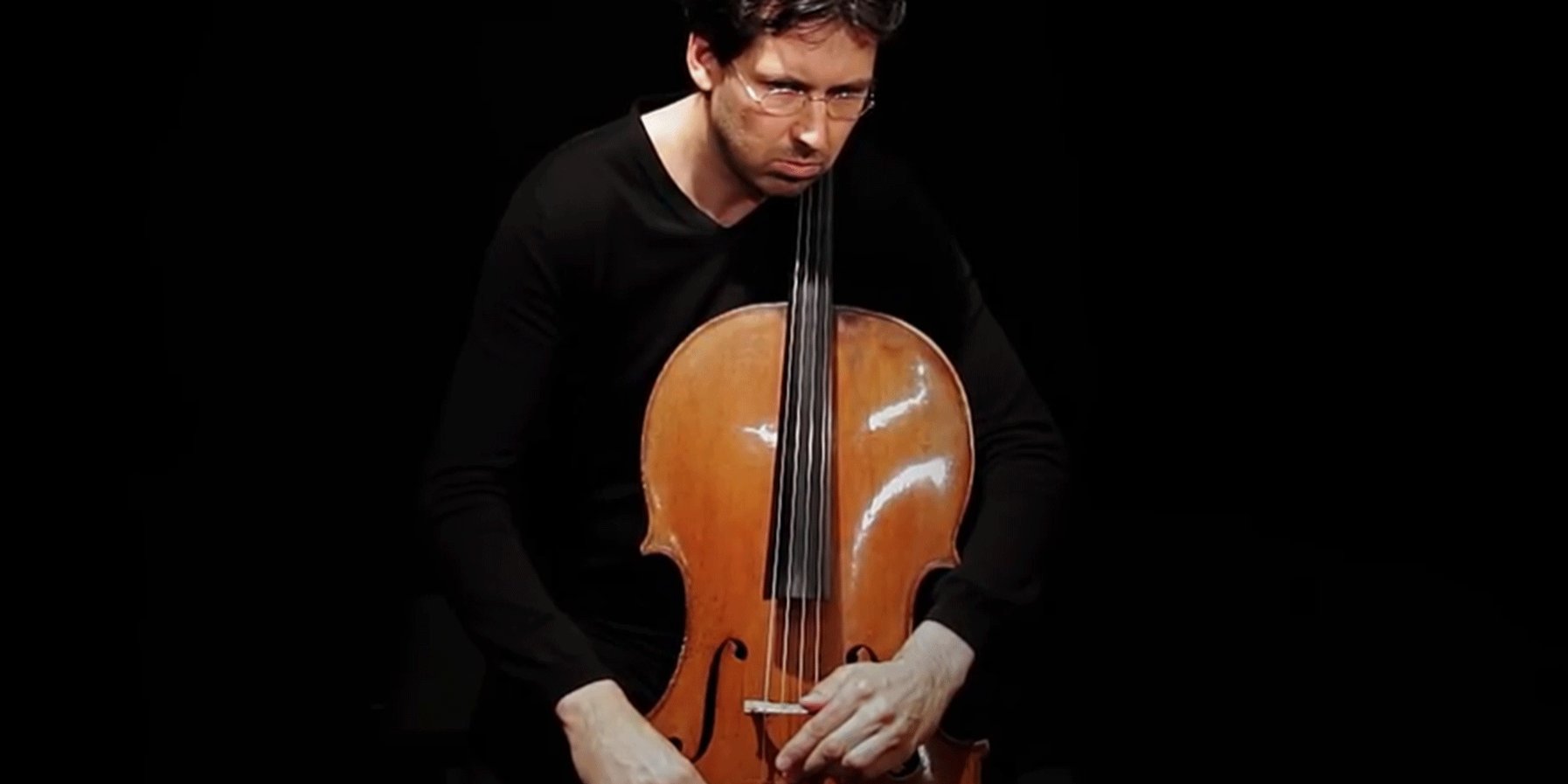
At the end of the 1960s, he carries this approach to another consequence. He explicitly opposes any domestication of the sound and develops a music in which the sonic events are chosen and arranged so that people accept the act of their emergence just as significantly as the resulting »tone« itself. Specifically, this means that the noises of sound generation, which are usually avoided as unwelcome, become the main point. »Pression« [‘Pressure’] is the title of a cello piece from 1970 in which he formulates this principle for the first time. He calls the compositional process with which he realises his ideal of »Umpolung« [‘reversed polarity’] ‘musique concrète instrumentale’ [literally, ‘instrumental concrete music’] – simply blocking out the familiar performance practice and bringing to light that hitherto suppressed. The result is a music in which the boundaries between sound and noise dissolve. The pure, beautiful tone of the cello is in »Pression« just one special case subject to different possibilities and stands equally, for instance, alongside the sharp creaking which a bow guided on the string with excess pressure produces.
Helmut Lachenmann: »Pression«
Emboldening freedom
A key term, which Helmut Lachenmann frequently used at this time, is – with explicitly political connotations – the term of freedom. In 1978, he holds a nine-part series of lectures at the Darmstadt Summer Course entitled »Über die Freiheit des kompositorischen Denkens« [‘On the freedom of compositional thought’], which he opens with the following quote: »Because your freedom is only rooted in one section of society, it is incomplete. All consciousness is influenced by society. But, because you are not aware of it, you imagine you were free.« These words come from the Marxist author Christopher Caudwell, who died in 1937 in the Spanish Civil War on the side of those who were trying to put a stop to Franco’s regime. (In 1977, Lachenmann had dedicated his guitar duo »Salut für Caudwell« [‘Salute to Caudwell’] to him.) Caudwell’s insistence on the aesthetic scope is directed at a craft, which aims at a freedom that emboldens people. Rather than seeking refuge in private idylls, the artist should face up to reality and its conditions and contradictions realistically.
The same applies to Lachenmann’s composing: being a composer is for him inextricably linked with the effort of repeatedly challenging the requirements and conditions of social intercourse with music afresh. »Musik als existenzielle Erfahrung« [‘Music as an existential experience’] is the title of his collected writings and may furthermore be regarded as an artistic principle: »Music only has meaning,« says Lachenmann, »provided that it transcends its own structure above structures, contexts, i.e.: above realities and possibilities around us and in ourselves.«
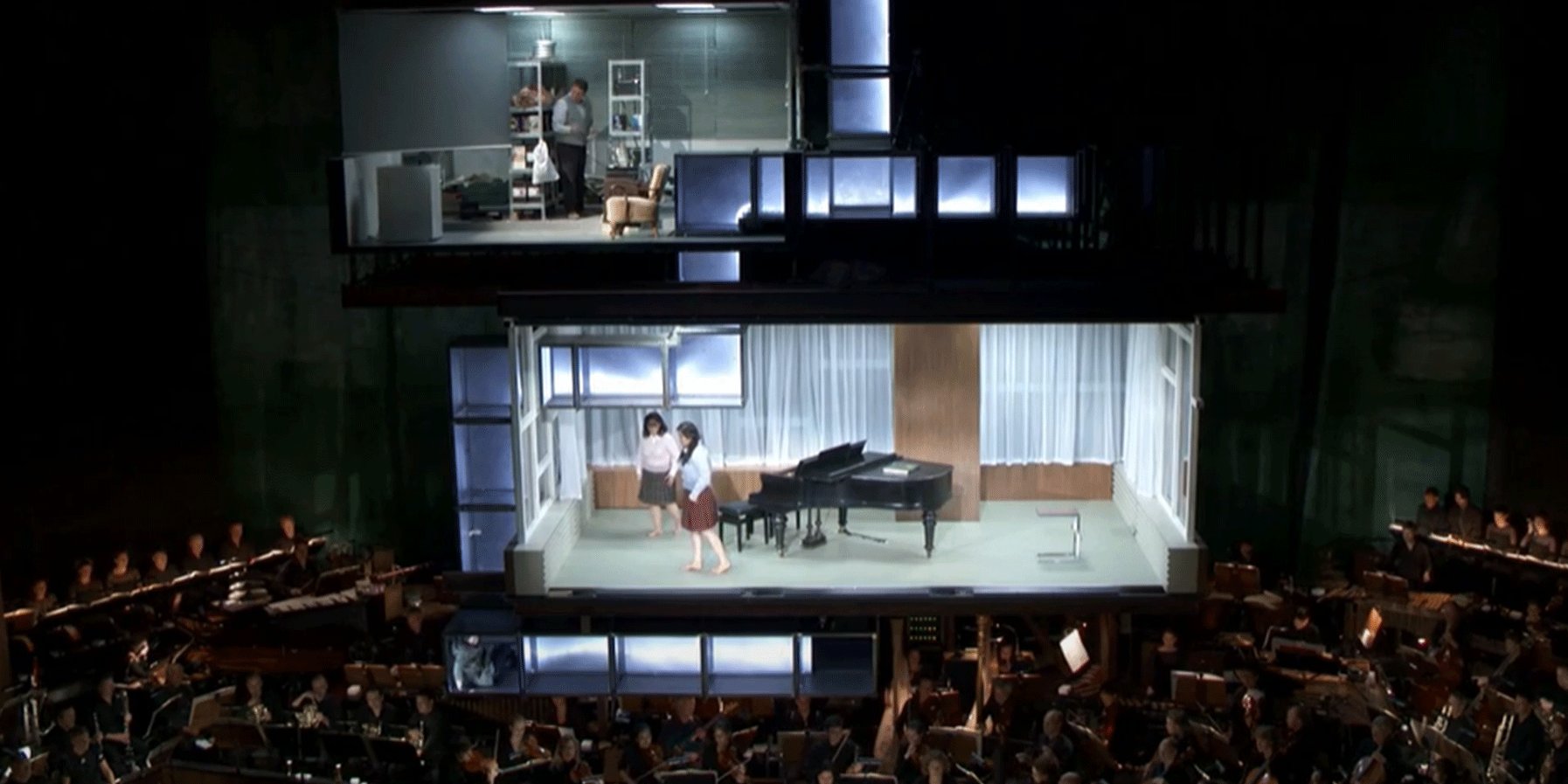
In the musical theatre piece »Das Mädchen mit den Schwefelhölzern« [‘The Little Match Girl’], first performed in 1997 directed by Achim Freyer at the Hamburg State Opera, everything finally came together. Lachenmann makes out of Hans Christian Andersen’s tragic fairy tale a socio-critical parable of the social coldness of affluent society and the utopia of the Red Army Faction perverted into committing acts of terror. The piece stands out musically due to being tremendously vivid: the severe freezing of the little girl is just as audible as the fleeting warmth of the little flames, marked by a triple »rip« with which the orchestra turns into the gigantic metaphor of a matchstick.
Helmut Lachenmann: »Das Mädchen mit den Schwefelhölzern«
Playful expansion
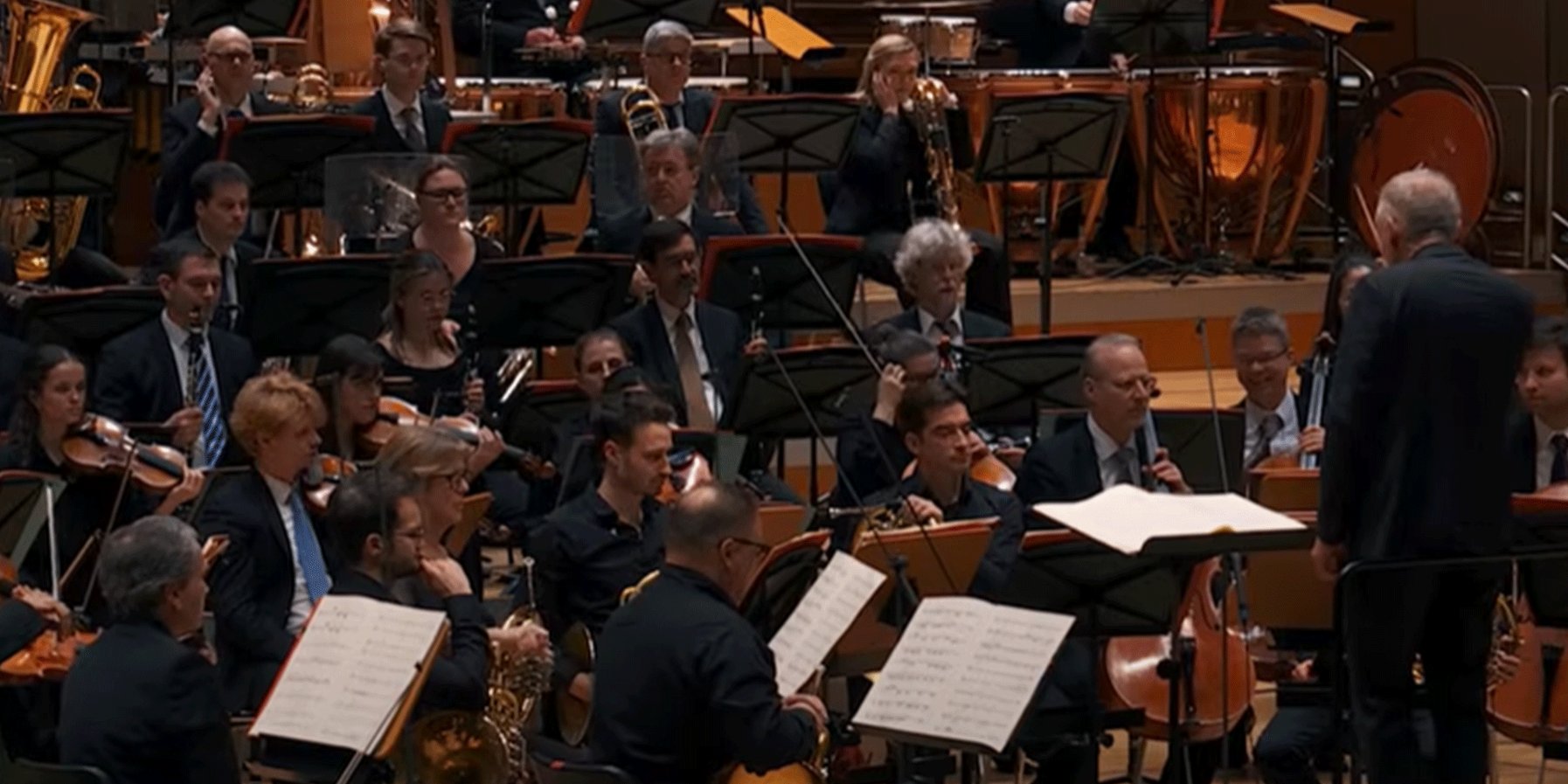
In the early 21st century, a new »phase« then starts in the composing of Helmut Lachenmann, which has continued to this day. To the elemental austerity of the musique concrète instrumentale steps up an unmistakably playful expansion of any methods capable of »persistently re-illuminating everything sounding and moved by sound.« After undermining the philharmonic tone, this »illumination« references other musical parameters: rhythms, gestures, melodies, harmonies. In 2018, a composition is then premiered in Munich whose title had caused irritations in advance: »My Melodies« for eight horns and orchestra. Lachenmann and melody? That seemed incompatible.
And of course he does not deliver a varied medley of his favourite melodies here. »›My Melodies,‹« Lachenmann makes clear, »are precisely not ›my melodies‹ – they don’t exist –, but Frank Sinatra sends his regards: they convey ›my way of melodies‹ in their creative handling of the means of sound.« Here too again: challenge everything! »My Melodies« does not indulge itself in melodies – instead, a form of »meta musicianship« evolves. As soon as they emerge, the melodies warp so that their presence is never evident.
Helmut Lachenmann: »My Melodies«
Nothing is developed
The fact that Helmut Lachenmann has changed the thinking in, with and about music like only a few other composers and has ranked among the most significant protagonists of New Music for a long time is, not least, the result of constant self-criticism. A music which elevates challenging as its motto, tolerates neither complacency nor discoverer ego. »Nothing is developed,« says Lachenmann, »because pathways in art lead nowhere – and much less to the destination.«
On 27 November, Lachenmann will be 90 years old. He lived through the history of New Music from the fledgling post-war avant-garde to the present time. Nevertheless, he cannot contemplate putting himself into the comfort zone of the established »old master«, but is still convinced that a composer is obliged to accept himself as a lifelong learner. Only in the continual learning process could he succeed »in staying young and making others curious about the concept of music as always being capable of different articulation.«
This articles appears in the Elbphilharmonie Magazine (issue 3/25).
- Laeiszhalle Großer Saal
Symphoniker Hamburg / Sylvain Cambreling
Lachenmann: Schreiben / Mahler: Symphony No. 1
Past Concert - Elbphilharmonie Kleiner Saal
Helmut Lachenmann: The String Quartets
Quatuor Diotima / Ensemble Resonanz
Past Concert - Elbphilharmonie Großer Saal
Ensemble Modern / Sylvain Cambreling
Chin: Graffiti / Lachenmann: Concertini – NDR das neue werk
Past Concert - Elbphilharmonie Großer Saal
SWR Symphonieorchester / Jean-Frédéric Neuburger / François-Xavier Roth
Lachenmann: Ausklang / Beethoven: Symphony No. 7
Past Concert