When it comes to classical composers, most people think of old masters such as Beethoven and Mozart. But the »Elbphilharmonie Visions« festival demonstrates that contemporary music can also be »just as rich and diverse as humanity itself« (Alan Gilbert). The festival’s programme features only music by contemporary composers. Not only is that musically very exciting, it also offers an amazing opportunity to ask the composers questions about their works and the process of creating them. How do you go about composing? Do you have a concrete idea of the work before you sit down to write it, or does it emerge only when you start? What role do your surroundings play? And what are your hopes for your music?
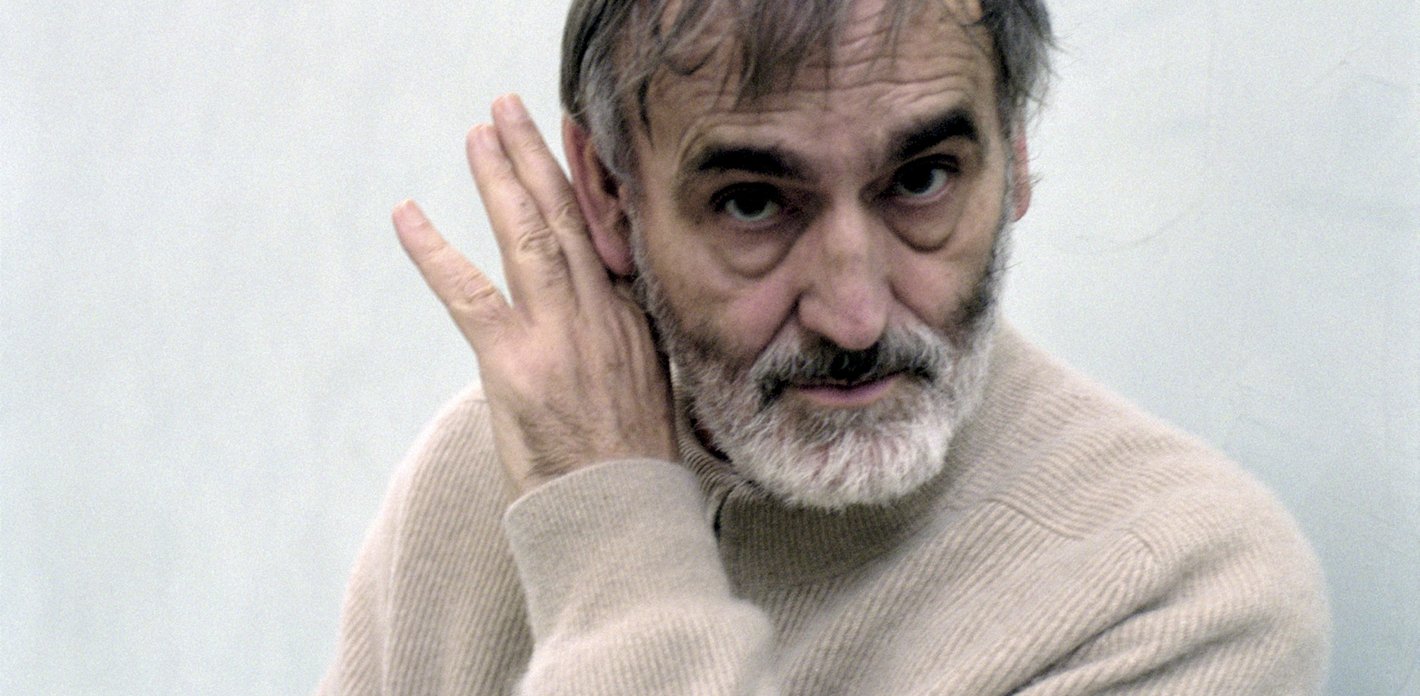
This is what the festival's composers talk about in short interviews. In this edition with Helmut Lachenmann, who has been a central figure in contemporary music for decades. At the festival, his impressive »My Melodies« is on the programme.
Spotlight: Helmut Lachenmann :Season 2025/26
Der wichtigste lebende deutsche Komponist feiert seinen 90. Geburtstag! Weggefährten würdigen ihn mit der Aufführung seiner wichtigsten Werke.
Listen now!

How well developed is your internal performance of a work before you begin composing it?
Different on every occasion, the initial »internal« performance serves me, in any case, only as a kind of propellant in order to overcome the gravitational force of the innate, somehow or other conditioned fantasy. A propellant which, as with any rocket, eventually lingers and has less to do with the work released in this way.
What role does the extramusical play in your creative work?
I don’t know, consciously none. Unconsciously: who knows?
At the »Elbphilharmonie Visions« Festival, contemporary orchestral music is placed so densely and prominently on the programme as probably in no other concert hall in the world. Do you find that rational or do you consider this to be the wrong approach?
This is an ambitious offering. I am pleased about it, but it depends in detail on the expertise, wisdom and innovative courage of the promoter.
What does new music need to win the affection of the audience?
»So what on earth is the new music«? Are »we« composers a collective with commercially available popularity generating a service contract? Popularity, even love with the »audience«, so with whom please – with Björn Höcke [an AfD politician] or with Sarah Wagenknecht [in contrast, a left-wing German politician]?
Such a question shirks the responsibility not only of the cultural policy authorities, but in principle of all of us regarding what is called »the dignity of the person« in Germany’s Basic Law and is the duty of the »responsible« citizen: in knowledge to continually expand your own limitation of your horizons aesthetically as well, to recognise it as expandable and to respect those with all the implications who invite us through their work to the indispensable adventure of the spirit. Our task, or better our work as composers: to turn informed »audience members« into curious and adventurous listeners.
What would be your dream of concert life – today and in the foreseeable future?
No concert where not at least one work is played which invites us to open up the familiar aesthetic experiential space. Even the »classical« music incidentally, and be it Mozart, Schubert or Tchaikovsky, whose beauty is largely enjoyed as a »feast for the ears« by the »paying public« (R. Strauss) and is usually innocently missed – ok, why not? –, could, due to imaginatively thought-out intervention into its representation, guide or stimulate our antennas to the structure of that created, i.e. to the creative energy conveyed therein. Music as a sensual experience, which reminds us of our purpose as intellectual creatures. Why just a dream?
Keep up to date
Stay in the loop on the »cutting edge« with our newsletter about all our concerts with pioneering music at the Elbphilharmonie.
- Elbphilharmonie Großer Saal
Frankfurt Radio Symphony / Matthias Hermann
Visions 6: Christian Mason / Helmut Lachenmann
Past Concert


