Text: Stefan Franzen, 17 January 2026
The incredibly beautiful world which Ragnar Axelsson depicted in 2011 in his coffee-table book »The Last Days of the Arctic« the Icelandic photographer saw as doomed to certain extinction even then. Axelsson, who has frequently lived among and with the Inuit for decades, described the indigenous of the Arctic as the human faces of climate change. Their natural way of life was already under threat since the »achievements« of industrial society and alien belief systems had been imposed on them. This threat became exacerbated and accelerated by the new climatic challenges.
Paradoxically: to the extent in which the original way of life of indigenous peoples threatens to disappear, their music cultures reach out all the more boldly and become integrated into the globalised concert landscape. The sounds of the Inuit and the Sami are prime examples of that. Both have unique vocal techniques, long ago integrated into everyday life. Now, they unleash themselves from their original context and elevate themselves to an art form also making inroads into experimental spheres.
»Arctic Voices« :26.2.–1.3.2026
Im höchsten Norden gibt es faszinierende Musiktraditionen, die von Norwegen bis Japan, von der Mongolei bis in die Arktis mitreißend in die Gegenwart geholt werden.
The Inuit and the katajjaq
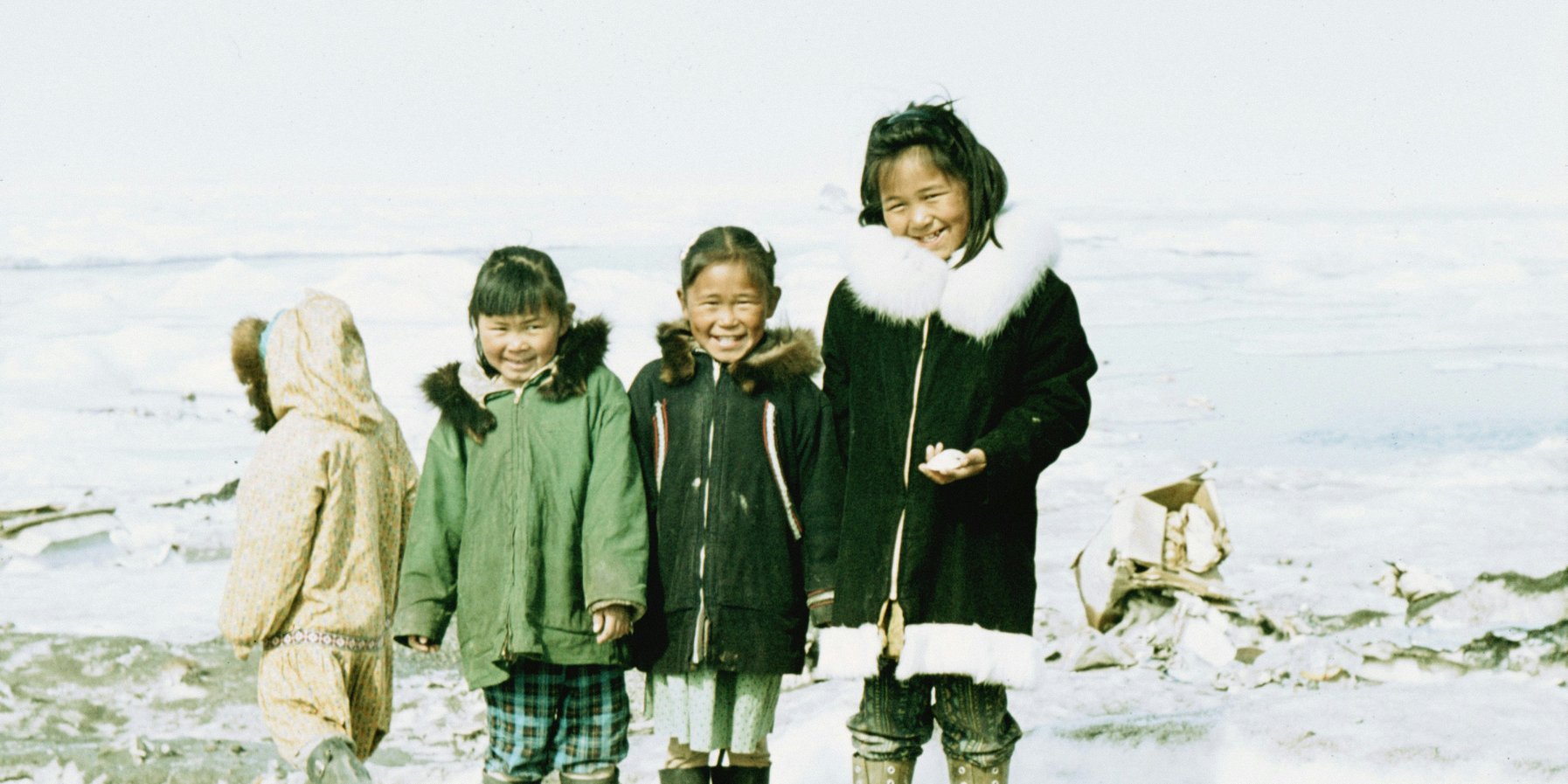
Until a few decades ago, the culture of the Inuit, who live in Greenland and in the extensive polar regions of Canada, was buried by the suppression of colonial powers. In Canada, children were systematically separated from their parents, their heritage and their language Inuktut were driven out of them in Catholic residential schools right up until the 1990s, cases of abuse were the order of the day. The political reappraisal and redress of this time is only at the beginning.
The most important means of expression of Inuit music culture is the throat singing katajjaq. Its background is mythical, it is regarded as a language of the Tunnituarit spirits who live underground. Only ethnomusicology was initially interested in the katajjaq. It strains listening habits: a guttural antiphonal singing with panting, hiccupping, humming and buzzing sounds. It can only deploy its rhythmic idiosyncrasies through the overlapping song patterns of a duo. There are essentially two women confronting each other here, breathing on in a swaying motion and thereby playfully mimicking birds, wild animals and natural forces until one of them has to burst out laughing or breaks their stride. The katajjaq consequently also has an amusing competitive character. Now, it has reached the concert stages south of the Arctic Circle.

Natural phenomena are also a source of inspiration for the katajjaq: the name of the duo PIQSIQ, for instance, describes the phenomenon when snowflakes appear to return to the skies due to turbulence. Sisters Inuksuk Mackay and Tiffany Ayalik come from the Canadian territory of Nunavut, semi-autonomous since 1999, a vast area six times the size of Germany with just 40,000 inhabitants. They master the traditional form of the katajjaq, however also use it to pair it subtly with electronics. Or to create brand new, polyphonic sound structures in layers of their voices by using loop methods with it as the raw material. For the two young women, the katajjaq establishes their identity, an act of decolonialisation.
Katajjaq performance by Tanya Tagaq

Tanya Tagaq occupies an exceptional position amongst the current Inuit performers from Cambridge Bay, likewise situated in Nunavut. Tagaq has worked with Björk and the Kronos Quartet and elevated the katajjaq to an experimental level. In her childhood, this tradition was hardly present as a cultural background, she only came upon the sonic roots of her people by a roundabout route: in order to alleviate her homesickness at her far-away place of study of Halifax, her mother sent her cassettes with katajjaq pieces. Touched, Tagaq seized on the legacy of her people, listened to the techniques from the tapes. Now, no other singer is her opponent anymore, but there are strings, rappers, drums, electronics. She names her compositions after animals and sounds, but also after abstract spiritual and physical states. Tagaq’s sonic language ranges between New Music, beatboxing and trip hop. Her English lyrics are thereby very free, the themes range from quite animalistic portrayals of sex to penetrating criticism of the exploitation of nature, for instance due to fracking.
The Sami and the joik
Indigenous music culture in the age of globalisation: with increasing distance to their roots despite, at the same time, ever easier access to a wealth of musical creative media begins a reorientation to what was lost. This is also the case with the music of the Sami in the northern part of the Finnish-Scandinavian peninsula. Sami music is substantially characterised by the joik, a guttural vocal technique, which however sounds far more melodic than the katajjaq of the Inuit. Nature, animals and people are »joiked« on simple onomatopoeic syllables and this is always an expression of an individual emotional state, often also a heartfelt dedication to those sung about or even a »blend« with them.
For centuries, the culture of the Sami was suppressed by the Scandinavians, their shamanic nature religion combatted. The indigenous people re-educated as Protestant felt ashamed of their origin and kept it secret. The history of the Sami was impressively brought to the screen in 2008 in the cinema film »Kautokeino-opprøret« (»The Kautokeino Rebellion«) by the influential activist and director Nils Gaup. Their music has only been re-emerging for a few decades.
Mari Boine in the Tedx talk about her roots and joiking
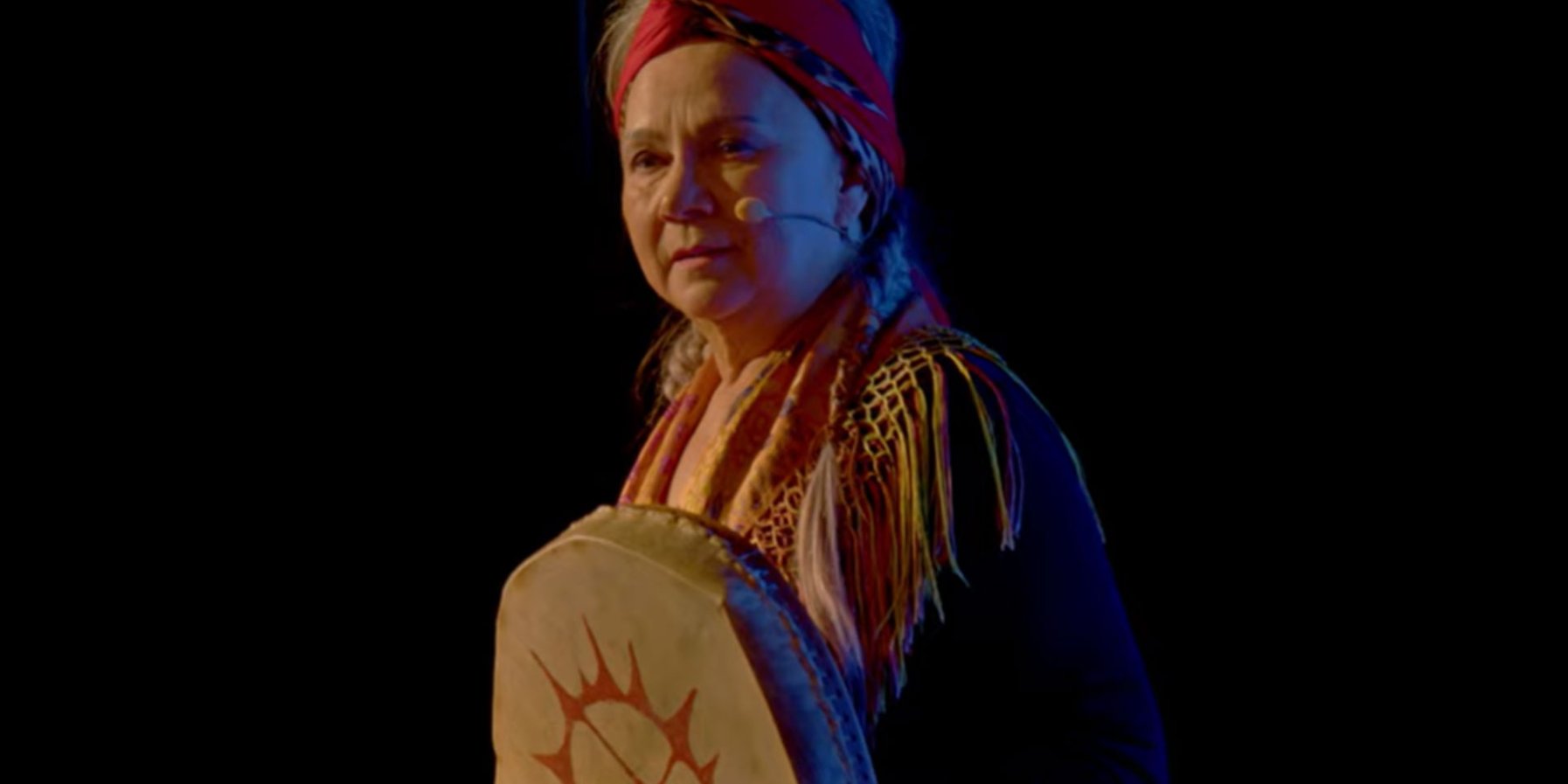
Mari Boine from the Norwegian part of Sápmi, the official name of the cultural region of the Sami, was known as its first international figurehead. »Listen, brother, listen, sister. Hear the voices of our foremothers. They ask you why the earth is poisoned and depleted. They remind you that the earth is our mother.« So read the first lines in Boine’s now world-renowned anthem »Gula Gula« from 1989. In her songs, the earth, the wind, the sacred mountains, the water speak. Boine combines the joik with contemporary poetry in the vowel-rich Sami idiom and she approached a spherical sonic language early on. For this, she frequently got jazz musicians into the studio, for instance electro jazz artist Bugge Wesseltoft and saxophonist Jan Garbarek. To this day, after having overcome personal crises, she is onstage with her sensitive adaptation of Sami heritage, making her childhood come to life very expressively with her current programme »Alva«.
The Sami music scene builds upon Boine’s pioneering work to this day. She ventured forward in collaboration with almost every conceivable genre, with world and folk, pop and jazz. A prime example of teamwork beyond styles is the singer Marja Mortensson from a family of southern forest Sami and reindeer herders. Together with her husband, Norwegian jazz tubist Daniel Herskedal, she sometimes works with jazz musicians, sometimes with classical musicians. The combination of voice and tuba produces a powerful-anthemic soundscape, which though always sounds warm and completely dispenses with electronics
Jetzt reinhören!
Change of location: ukuok and khöömii
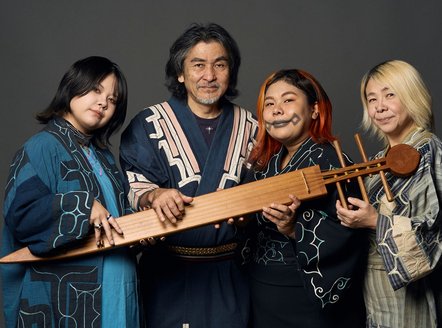
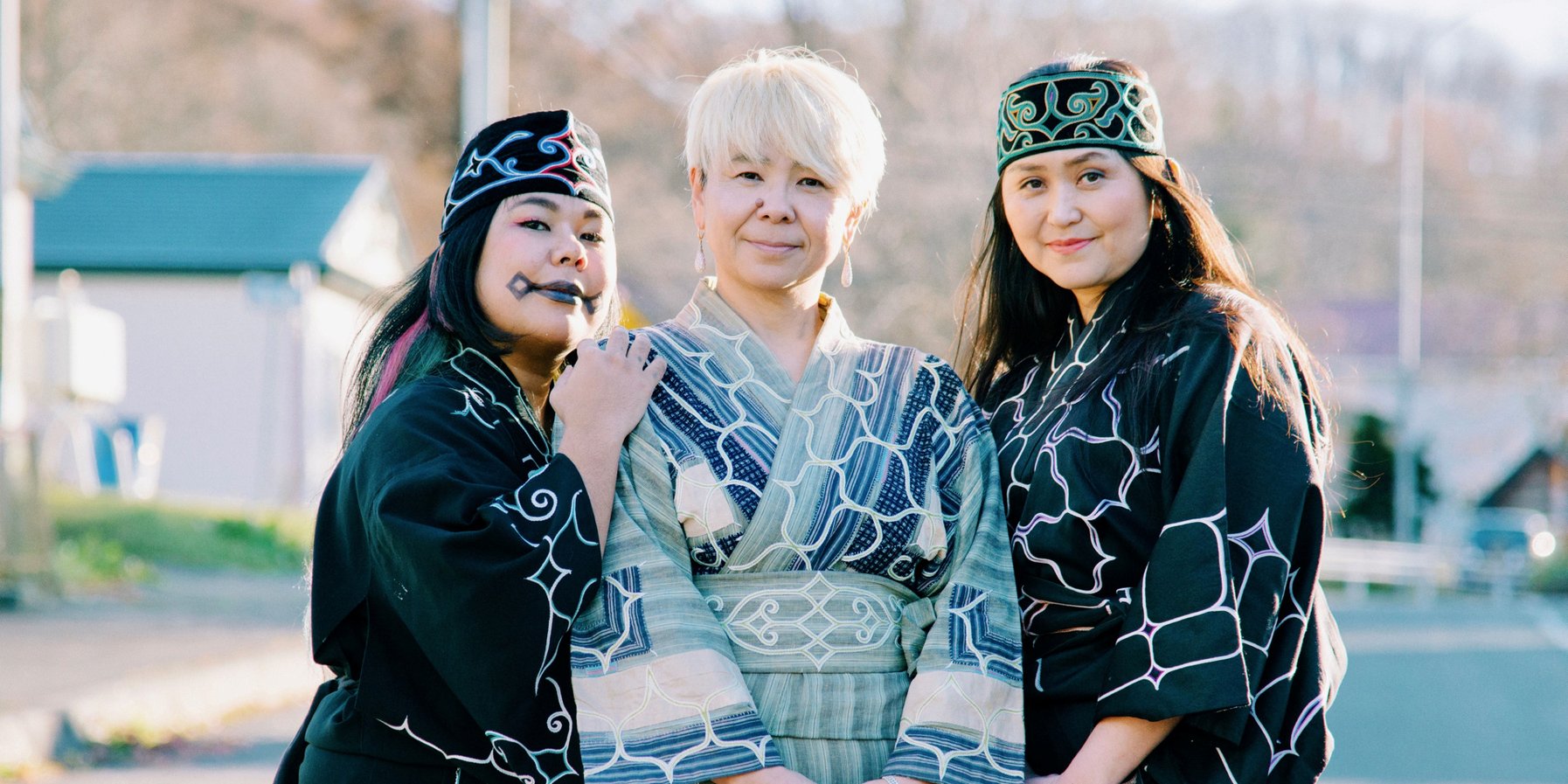
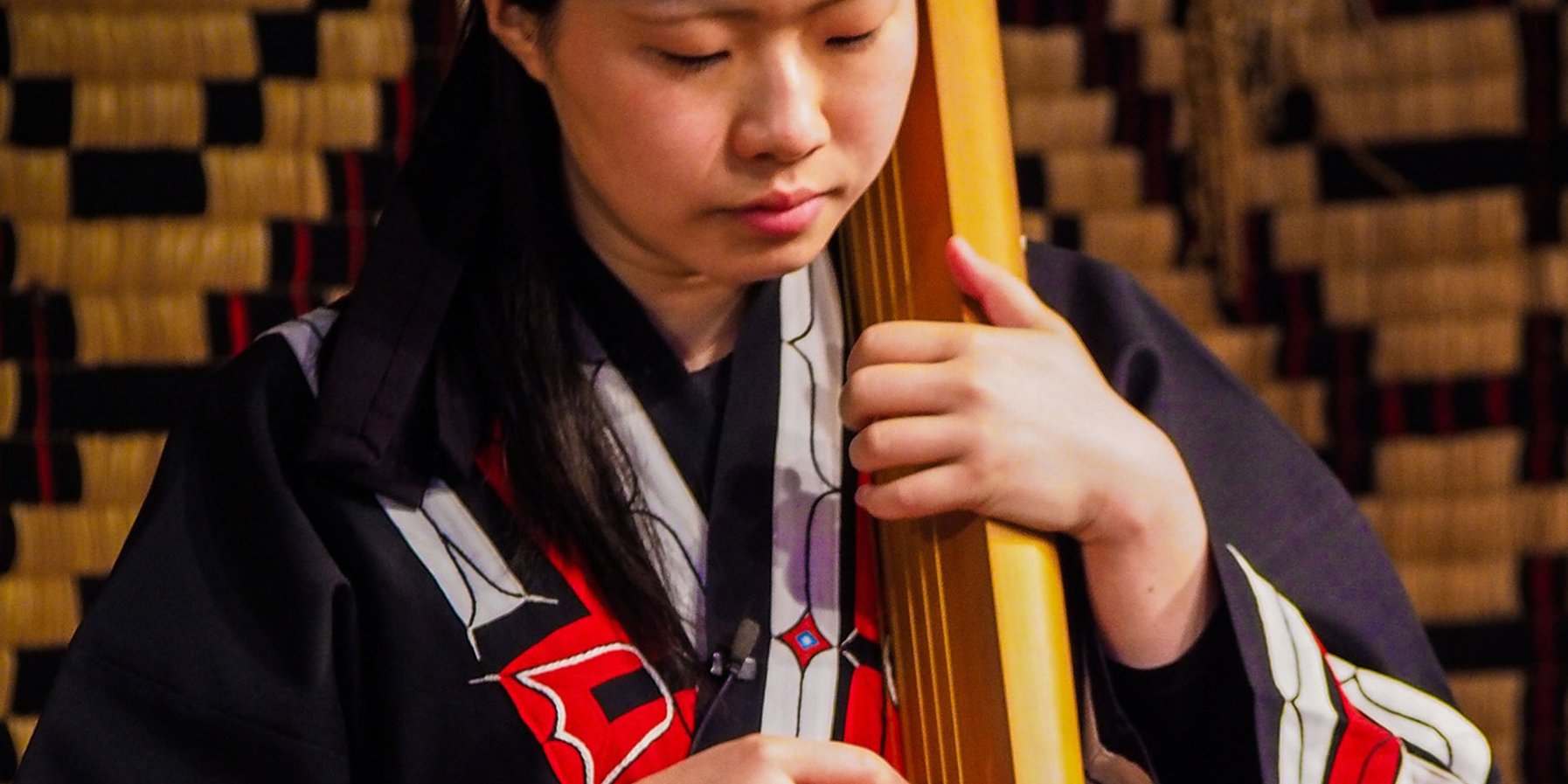
Another glance across the Arctic Circle southwards, to the cultures of the Ainu and the Mongols. Because their ways of life and musics have parallels with the native population of the Arctic. The Ainu are the native inhabitants of northern Japan, including the island of Hokkaido, and how strongly they feel connected to other indigenous people becomes apparent in their recently recorded cultural collaboration with the Sami. Also for the Ainu, women are the bearers of their sound culture. They cultivate a distinctive vocal technique called ukuok, which feeds off the intertwining of voices offset against each other in terms of time. This, resembling a canon, creates a trance-like effect. The female trio Marewrew demonstrates its own, updated form of ukuok and is accompanied by the tonkori harp, the most important instrument of the Ainu.
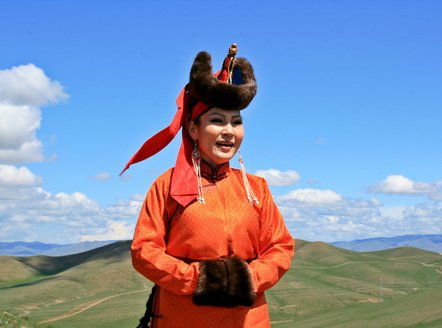
Like the Sami, the Mongolian nomads also live with their animals – horses, yaks and camels – sometimes to this day in a steppe characterised by almost endless expanse. And also their outstanding vocal styles, as well as their national instrument, the horsehead fiddle morin khuur, make reference to the nature and animal sounds of their homeland. Mongolian music has differentiated into many stylistic facets in recent decades. This is how the Tengerton Ensemble cast the 2-string morin khuur in the style of a western string quartet in a number of locations; at the same time, the musicians maintain their famous throat singing khöömii. Singer Erdenetsetseg Khenmedekh, by contrast, has, with her trio, dedicated herself to the ‘long songs’ Urtiin Duu, which are traditionally sung with a powerful timbre from the mountain peaks down into the steppe. In their epic lyrics, characterised by long syllables, spiritual, nature religious and philosophical reflections encounter each other.
This article appeared in the Elbphilharmonie Magazine (issue 01/2026)
- Elbphilharmonie Kleiner Saal
Marja Mortensson / Daniel Herskedal / Jakop Janssønn
»Båalmaldahkesne – Entwined« – Traditional joiking from Scandinavia with tuba echoes / Arctic Voices
Past Concert - Elbphilharmonie Kleiner Saal
Inuit throat singing with improvisation / Arctic Voices
Past Concert - Elbphilharmonie Kleiner Saal
Katajjaq – Inuit throat singing between tradition and modernity / Arctic Voices / ePhil
Past Concert - Elbphilharmonie Großer Saal
»Alva« / Arctic Voices
Past Concert - Elbphilharmonie Kleiner Saal
Ukouk – Ainu canon singing from the island of Hokkaido / Arctic Voices
Past Concert - Elbphilharmonie Kleiner Saal
Tengerton Ensemble & Erdenetsetseg Khenmedekh Trio
Melismas of the Mongolian steppe – epic and overtone songs / Arctic Voices
Past Concert