
Elbphilharmonie explains: The theorbo

Historical parallels
When a certain Leo Fender came along and revolutionised the guitar amplifier in the 1940s, he definitely wasn't thinking of a bass lute from the Renaissance. But as music history has always been closely linked to the technical progress of its time, Leo Fender's story also has something to do with our theorbo.
Back in the 1940s, the Fender guitar amp helped guitarists on the show stages of the day to hold their own against to the big band sound that was then in vogue, and the guitarists of the Renaissance, lutenists, had a very similar problem 400 years earlier.
When opera and solo singing evolved towards the end of the Renaissance period in Italy, there was a considerable need for accompanying instruments. And as the gentle-sounding lutes of the day couldn't hold their own with the new ensembles, which were growing in size, a solution had to be found. Obviously it wasn't an option to amplify the sound electronically as Leo Fender later did, so instrument builders came up with a new construction.
Theorbo or chitarrone?
For many years, scholars argued about differences in construction, but musicologists now agree that the two names theorbo and chitarrone actually denote the same instrument.


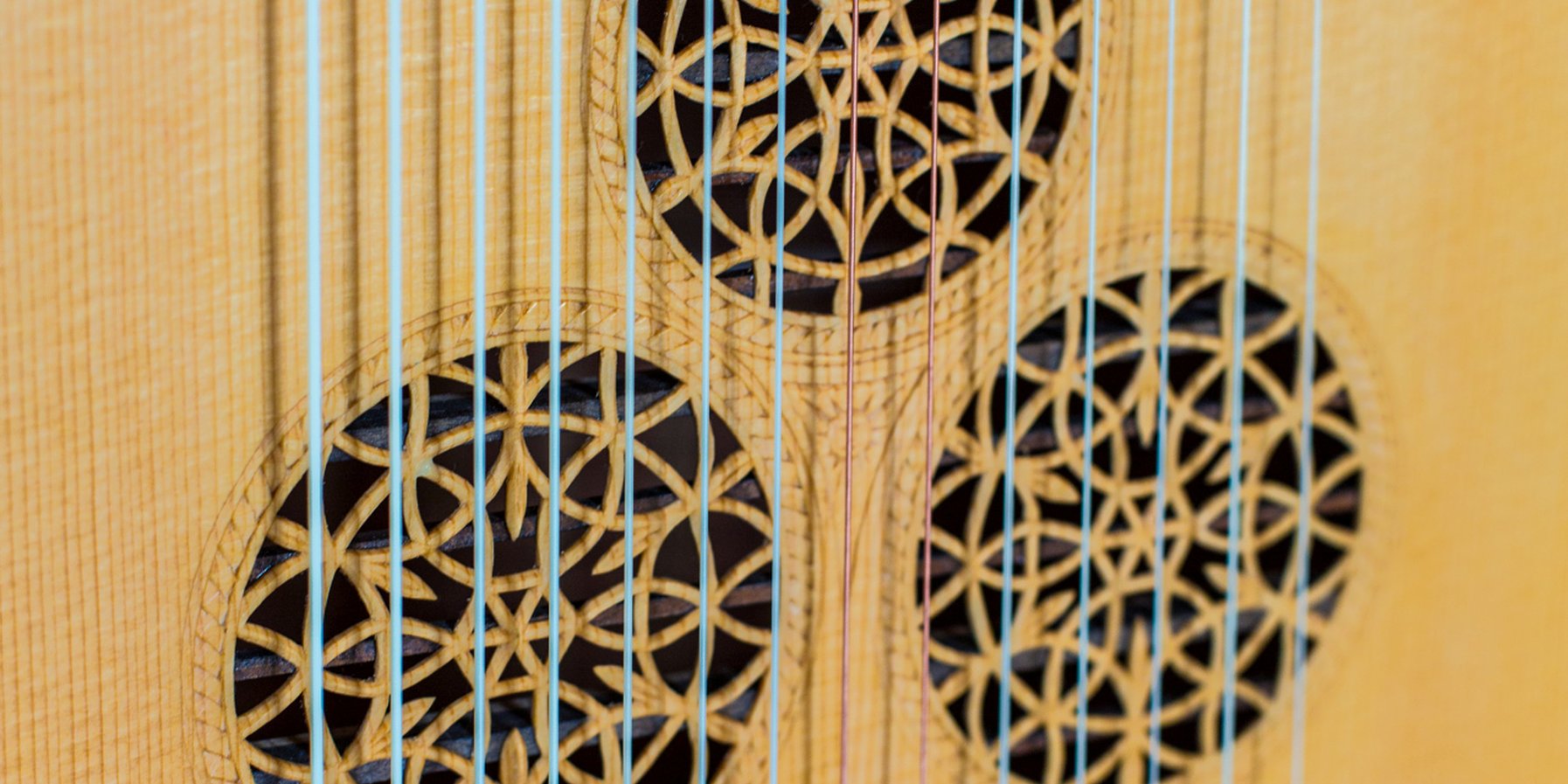
The giraffe lute
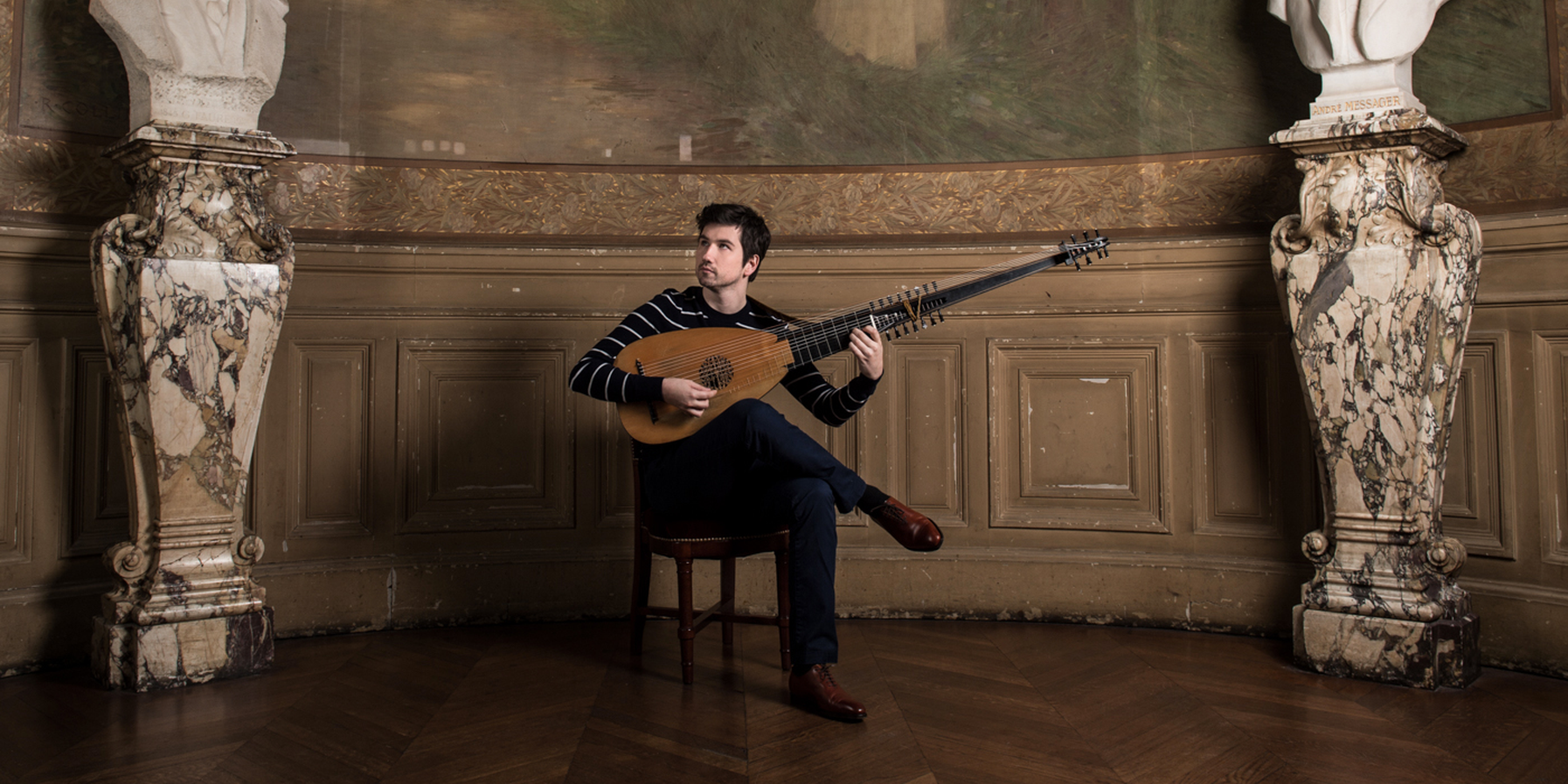
In order to extend the ambitus or range of the instrument, a whole spectrum of bass notes were added to the classic lute construction. These bass strings are up to two metres long to enable really low bass notes to be played without overstretching the strings, and this gives the instrument a giraffe-like shape. The theorbo normally has 14 strings: the seven high strings are plucked in the traditional way, while the seven bass strings are diatonically tuned to vibrate freely.
Christina Pluhar and L'Arpeggiata perform the Ciaccona del Paradiso e dell' Inferno

More than just accompaniment
The theorbo's rich and resonant sound made it one of the most popular continuo instruments of the 17th century. Composers like Antonio Caldara and Claudio Monteverdi specifically called for a theorbo to accompany the singer(s) in many of their motets and madrigals
Few pieces were composed for the theorbo as a solo instrument on account of its very special construction. But exceptions written by Alessandro Piccinini or Johann Hieronymus Kapsberger demonstrate the virtuoso potential of the long-necked lute.
And today the theorbo is enjoying an absolute comeback thanks to fine performers like Christina Pluhar and Thomas Dunford. But we are going to have to wait a little for the first theorbo and electric guitar duo.
Johann Hieronymus Kapsberger: Toccata Nr. 1, played by Thomas Dunford
Text: Julian Conrad, last updated: 7.5.2020
Alte Musik in Elbphilharmonie und Laeiszhalle erleben:


