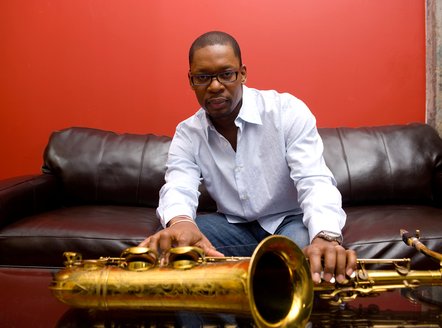
»It’s about resistance through imagination.«
Adyam Tesfamariam
»There are black people in the future« – with this statement, Adyam Tesfamariam sums up the central idea behind Afrofuturism. »It’s more than just a genre, it’s an artistic style,« she explains. The young author and social scientist is of Eritrean origin and lives in Berlin. She focuses on Afrofuturism in her work with a wide variety of approaches, writing, giving workshops and making music herself.
Tesfamariam sees the special potential of Afrofuturism in the opportunity to »transform the pain of repression into empowerment narratives and new visions of the future.« This may sound abstract at first, but it takes concrete shape in the music of pioneers like Sun Ra, who was one of the first to make Afrofuturism popular with his idea that »Space is the Place«.
The term »Afrofuturism« goes back to an essay by the (white) American writer Mark Dery from the 1990s. But the idea originated much earlier, at the beginning of the 20th century, chiefly in the writings of the American historian and journalist W. E. B. Du Bois, who depicted apocalyptic scenarios revolving around black heroes in his short stories.
- Elbphilharmonie Großer Saal
Elbphilharmonie Sommer / Internationales Sommerfestival Kampnagel
Past Concert - Elbphilharmonie Kleiner Saal
Angel Bat Dawid & Tha Brothahood
Fokus Afrofuturism
Past Concert - Elbphilharmonie Kleiner Saal
Chief Xian aTunde Adjuah (Christian Scott)
Fokus Afrofuturism / Fokus Jazz Trumpet
Past Concert - Elbphilharmonie Großer Saal
»Cosmic Music« – Fokus Afrofuturism / Jazz at the Phil
Past Concert - Elbphilharmonie Kaistudio 1
Afrofuturism – Vision of the future
Interactive Lecture with Sammus / Elbphilharmonie+
Past Concert - Elbphilharmonie Kleiner Saal
»LOVE QUANTUM« – Fokus Afrofuturism / Fokus Jazz Trumpet
LivestreamPast Concert - Elbphilharmonie Großer Saal
Fokus Afrofuturism
Past Concert