Production: 27.9.2025
»Less is more« – few composers embody this idea as profoundly as Arvo Pärt. His deeply spiritual music is pared down to the essence: trance-like soundscapes, meditative triads and resonant bell tones. »I have discovered that it is enough for a single note to be played beautifully,« he once said. Greatness in simplicity – a quality that has made Pärt one of the most frequently performed composers of our time.
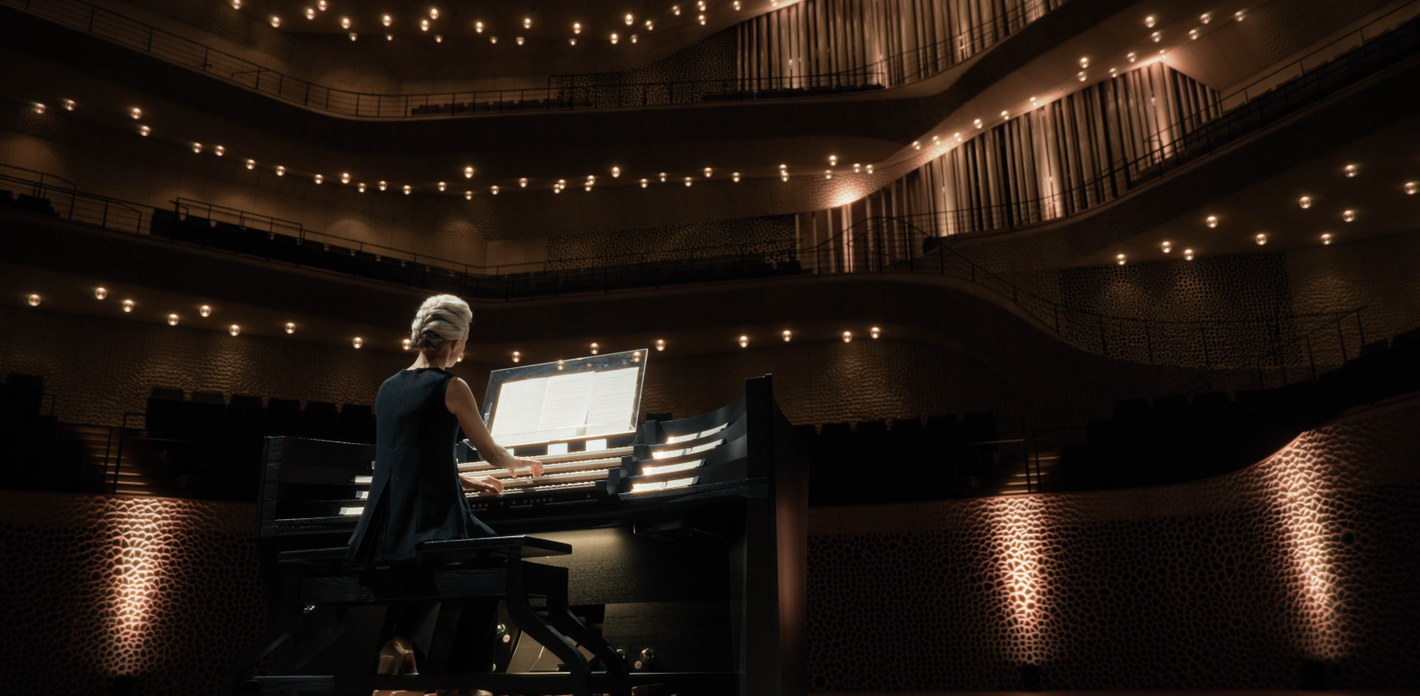
In the empty Elbphilharmonie Grand Hall, star organist Iveta Apkalna turns to one of his most beloved works: the contemplative »Spiegel im Spiegel«.
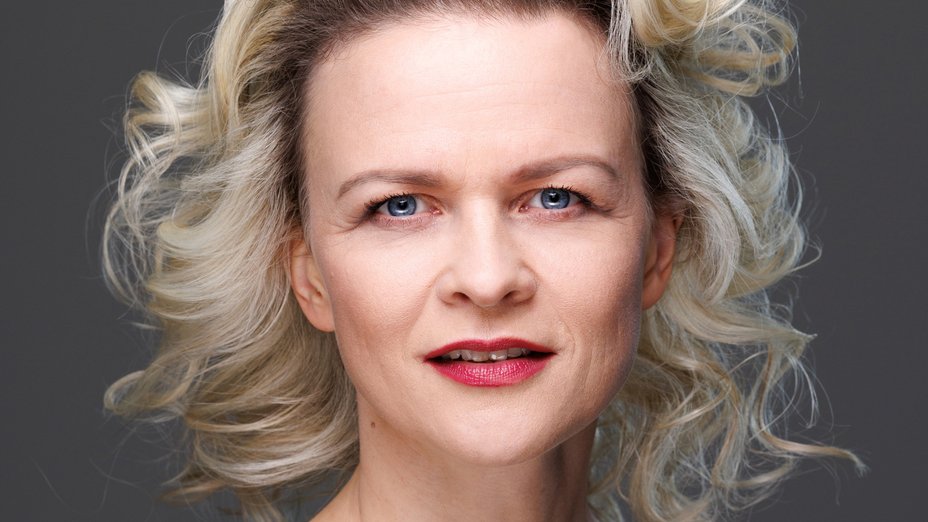
Iveta Apkalna
-
About Iveta Apkalna
As the titular organist of the Elbphilharmonie, Iveta Apkalna shares a special bond with the concert hall. She gives the instrument a face and performs frequently at the manuals – both as a soloist and alongside orchestras. She was involved in the opening concerts in January 2017, gave the first organ solo recital, and has premiered works by Peter Eötvös, Jörg Widmann, Wolfgang Rihm and Pascal Dusapin. In 2018, she released »Light & Dark«, the first-ever solo album recorded on the Elbphilharmonie organ.
Considered one of the world’s leading instrumentalists, the Latvian organist was hailed by the British music magazine »Bachtrack« as the »Queen of the Organ«. In 2005, she was the first organist ever to receive an Echo Klassik award as »Instrumentalist of the Year«. She is often invited to advise on and inaugurate new instruments – among them, in 2018, the largest organ in Asia at Taiwan’s National Center for the Arts.
Since her first concert with the Berlin Philharmonic under Claudio Abbado in 2008, Iveta Apkalna has performed with a host of leading international orchestras, including the Bavarian Radio Symphony Orchestra, the Royal Concertgebouw Orchestra and the Los Angeles Philharmonic. She has worked with conductors such as Gustavo Dudamel, Sir Antonio Pappano, Esa-Pekka Salonen and Mariss Jansons.
In recent seasons, Iveta Apkalna has held residencies at the Konzerthaus Berlin, the Tonhalle Zurich and the Cologne Philharmonie, where she premiered Peter Eötvös‘ latest work, »Echo«. Her latest album, »Oceanic«, featuring works by Bernd Richard Deutsch, Maurice Ravel, Jean Sibelius and Ēriks Ešenvalds, was released in 2023. In 2018, she was awarded Latvia’s highest state honour, the Order of the Three Stars.
About the music
Arvo Pärt (born 1935) has described his completely new musical language as »tintinnabuli«, meaning »little bells«. This style intentionally distances itself from the complexities of the avant-garde, instead embracing simplicity through triads and scales. Yet with these modest means, it creates an atmosphere of remarkable density and emotional intensity. Phrases that repeatedly begin and fade away are reminiscent of the most natural thing in the world: breathing in and out. The music seems to emerge from silence itself – which, as the Estonian composer once said, »is always more perfect than music; you just have to learn to hear it.«
»Spiegel im Spiegel« (»Mirror in Mirror«) is one of Pärt‘s best-known and most frequently performed works. Originally written for violin and piano, the reduced compositional principles of the tintinnabuli style are very clearly evident here. The composition consists only of a single melody accompanied by simple triads, with small, bell-like tones resonating above and below the melody line. Every note is placed with intention. The title refers directly to the structure of the music: each ascending melody line is answered by a descending reflection.
(Text: Guido Krawinkel)


