Interview: Michael Sangkuhl, April 2025
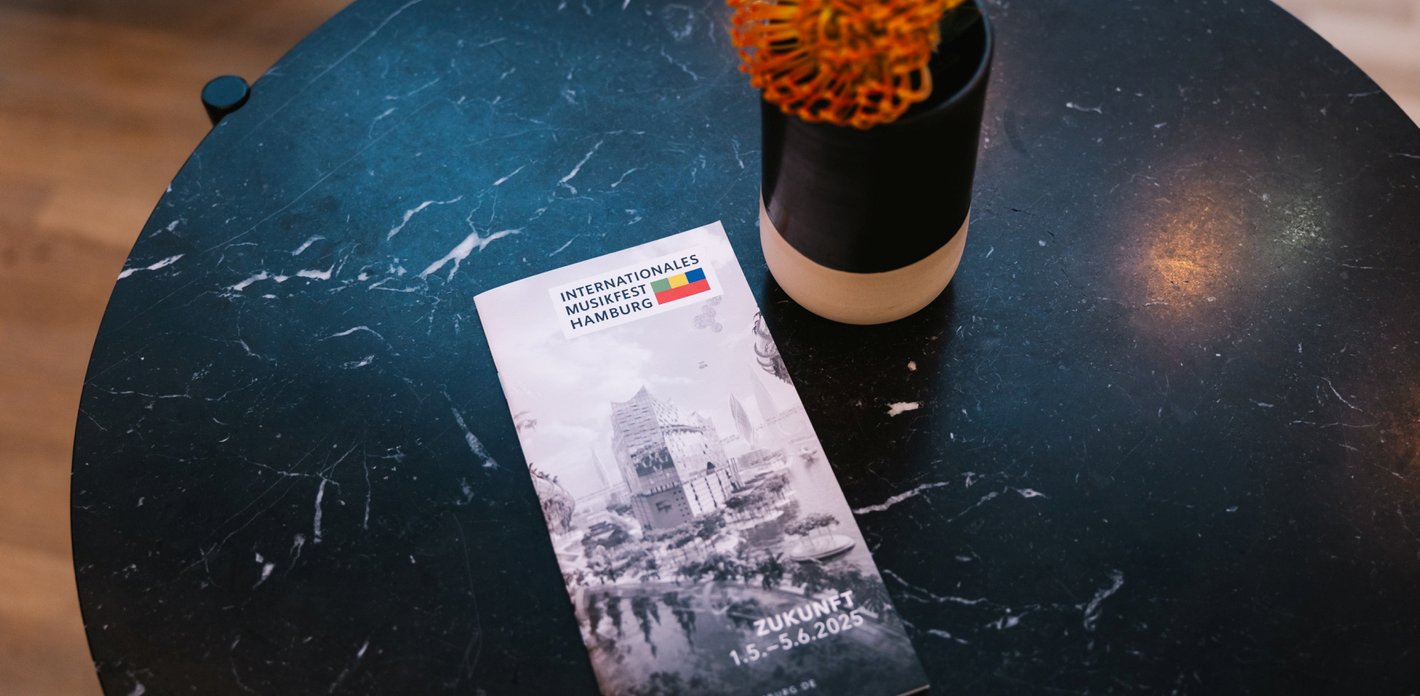
»Future« is the overarching theme of the 2025 Hamburg International Music Festival. Featuring local orchestras, a line-up of top stars and a major community project, the festival presents a diverse programme ranging from classical music to jazz – and all centred around this compelling theme. »In times like these, we wanted to remind people that the continuum of time includes a future,« says Barbara Lebitsch, Artistic Director of the Elbphilharmonie. In this interview, she shares insights on the significance behind the festival’s motto, talks about highlights of the programme, and why it’s more important than ever to focus on the future.

Hamburg International Music Festival 2025
Programme highlights to close the season: in the five-week festival, the great Hamburg orchestras and star guests explore the theme of »Future«
Interview
This year’s festival is all about »Future«. How does such a thematic focus come about: does the motto come first or are there perhaps specific musical works from which it stems?
It can happen both ways. In the run-up to the festival, we reflect on what is currently impacting society most deeply. The music festival has always addressed themes that are socially relevant in the broadest sense, rather than limiting itself strictly to musical concerns.
What is the thinking behind the theme »Future«?
In these uncertain times, we deliberately opted not to fall into backward, nostalgic thinking – the notion that »everything used to be better in the past«. Instead, we wanted to remember that the continuum of time includes the future, and that this future is worth engaging with. Composers and artists have always grappled with questions of what lies ahead. We aim to explore not only what the future might hold for us today, but also how this theme can be engaged with in artistic terms.
The future can always be understood as renewal too. With this in mind, we asked ourselves which composers or works heralded a turning point in the history of music and in artistic expression. Christoph Willibald Gluck, for example, rethought the genre of opera in his lifetime. His »Iphigénie en Tauride« is performed in May. In contrast, John Luther Adams’ »Become Ocean« presents a contemporary, time-critical reflection on the consequences of our current global behaviour, asking what kind of future awaits us if we continue on this path.
In diesem Kontext gibt es auch im diesjährigen Musikfest wieder einen Komponistenschwerpunkt: Pierre Boulez.
Richtig. Wir hatten bislang etwa mit Sofia Gubaidulina, Alfred Schnittke und György Ligeti immer einen Hamburg-Bezug; das ist in diesem Jahr mit Pierre Boulez etwas anders. Er hat mit seinen Neuerungen, seinem musikalischen Denken und seiner Ästhetik einen besonders starken Bezug zu unserem Thema. Zudem begehen wir 2025 Pierre Boulez’ 100. Geburtstag.
This year’s music festival once again places the spotlight on a particular composer – this time on Pierre Boulez.
That’s right. In previous years, we’ve highlighted composers with strong ties to Hamburg, such as Sofia Gubaidulina, Alfred Schnittke and György Ligeti. This year is a little different: Pierre Boulez may not have that direct local connection, but his innovations, his musical philosophy and his aesthetic vision resonate deeply with our theme. We’re also marking a special occasion – the 100th anniversary of Boulez’s birth in 2025.
Another thematic focus associated with »Future« this year is the intersection of music and artificial intelligence.
We’re devoting an entire themed weekend to »Artificial Intelligence«, as it’s an issue none of us – artists or cultural professionals – can afford to ignore. AI has already found its way into music production, raising important questions: What different approaches exist? How are artists of different generations responding to it? To explore these questions, we’ve integrated panel discussions into the programme – not only to provide food for thought but also to pose direct questions to the artists: What does AI mean for your creative process? Do you use AI or are you afraid of it? Do you believe that you can control it or that it will one day replace you?

What I find particularly fascinating is that in »Répons«, which is performed at the opening of the 2025 Music Festival, Boulez was already using technology back in 1981 that now feels outdated.
Exactly – and that raises a compelling question: how do institutions like IRCAM or the SWR Experimentalstudio deal with this? Do they succeed in adapting Boulez’s ideas or the result using modern technologies, or do they remain faithful to the original form – and therefore to what is now outdated technology that was once cutting-edge? It’s yet another way of recognising the passage of time.
To come back to the term »future«: Where do you see the future of classical music?
In an age marked by isolation, individualism and instant digital access, I think the shared experience of a live concert will gain even more significance. The act of listening together, in the same space, to music performed live by real people, in real time. That kind of moment is unrepeatable and unmistakable.
This interview was originally published in the programme booklet of the Hamburg Philharmonic State Orchestra for the opening concert of the 2025 International Music Festival.


