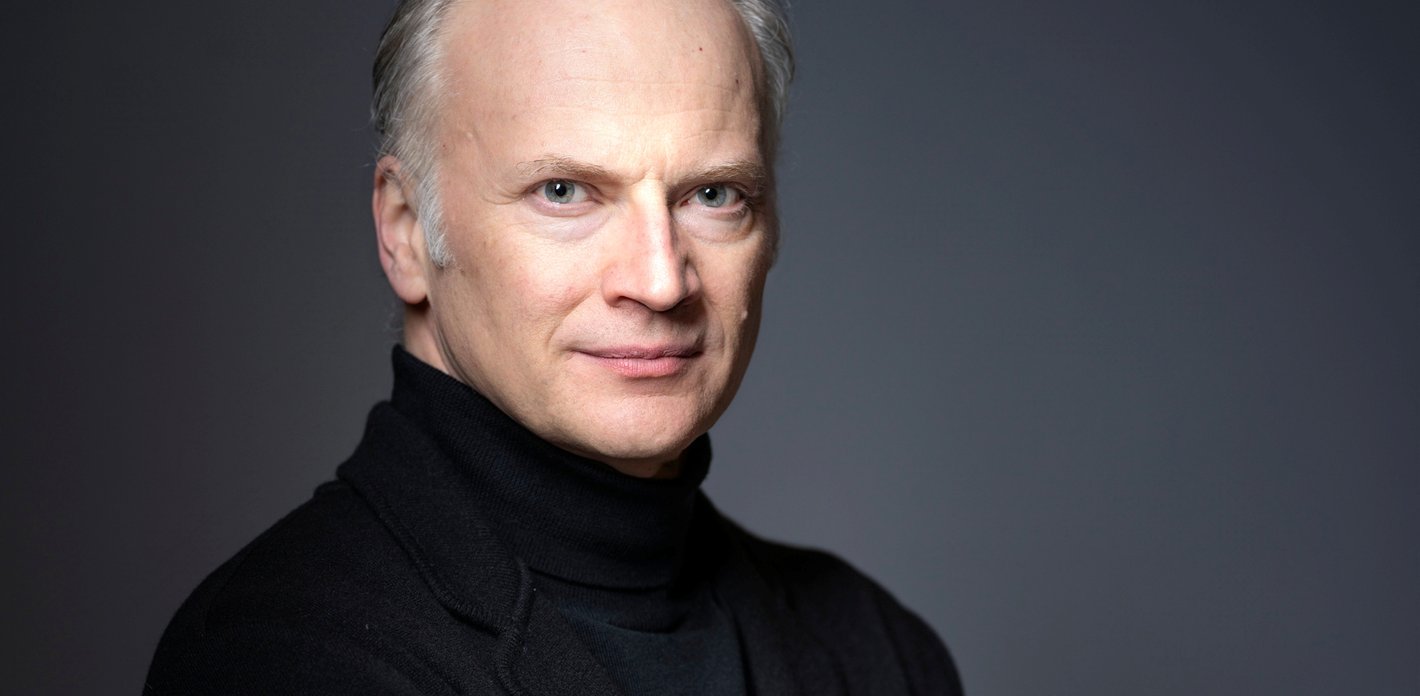
Interview: Ivana Rajič
Gianandrea Noseda and the Orchestra of the Zurich Opera House form a perfectly attuned team, masterful in conveying intense emotions and supporting renowned voices. At the Elbphilharmonie, they present two Easter programs: Giuseppe Verdi’s Requiem on March 31st, followed by a collection of Passion-themed works on April 1.
In the interview, the Italian star conductor reveals how he experiences spirituality, why he prefers to »read« rather than interpret scores, and what makes the live experience of music so incomparable. His message to the audience: stay open, listen closely—and let yourself be surprised.
Audio-Einführung zum Konzert am 1. April
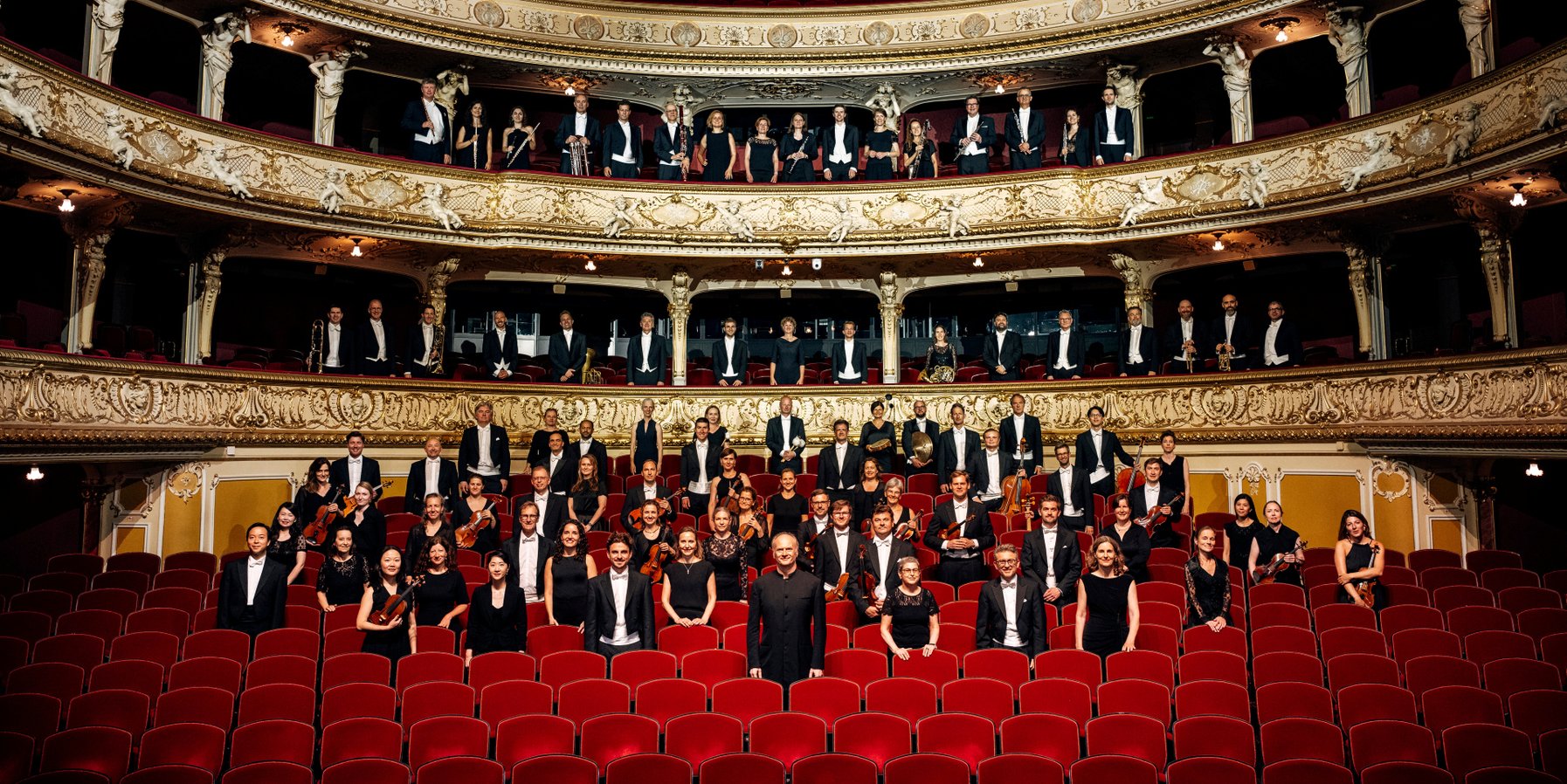
Maestro Noseda, you will be performing two Easter concerts at the Elbphilharmonie with the Orchestra of the Zurich Opera House: the first features Verdi’s Requiem, and the second a collage of Passion-themed works that ultimately leads into Prokofiev’s Suites from the ballet »Romeo and Juliet«. How did the idea for this program come about?
The starting point was the Easter season. I was thinking about how to shape a program that would reflect that spiritual dimension, and at the same time connect with our upcoming new production of Prokofiev’s »Romeo and Juliet«. So the idea was to create a meaningful bridge between these worlds.
For the first half, I wanted to focus on spirituality. That is why we chose selected movements from »The Seven Last Words of Our Savior on the Cross« by Haydn. Since Regula Mühlemann is joining us, it felt very natural to include soprano arias from the »Stabat Mater« by Giovanni Battista Pergolesi and from the Mass in C minor by Mozart. We also perform the Sinfonia »Al Santo Sepolcro« by Vivaldi. It is a combination of different musical forms—sacred music, symphonic writing, vocal expression. At first glance it may seem very composite, but I believe it works. Especially with the presence of Regula, the first half becomes very intriguing, with the alternation between orchestral music and sacred vocal pieces. The second half then presents Prokofiev’s ballet score to »Romeo and Juliet« that I conducted in my very first professional concert. It is different in character, but it also connects in certain ways.
And in what way do you see a connection between the spiritual first half and Prokofiev’s Suites?
The story of »Romeo and Juliet« is about the conflict between two families. There is violence and hatred. But there is also the figure of Friar Laurence, who tries to bring the two sides together. He fails, but the attempt itself is meaningful. So there is also an element of how spirituality could help to reconcile different things. Life is not easy. There are moments of friction and anger. If there is an element of stability—whether you call it spirituality or something else—it can help you find a way out of conflict. Not only to escape from it, but perhaps to become a different and hopefully better person.
You mentioned that spirituality can act as an element of stability in moments of conflict or tension. I’m curious — what does spirituality mean to you personally?
For me, spirituality is not only connected with religion. Being spiritual does not automatically mean being a religious person. It is more about a connection—a connection with the world and with yourself—that can guide you in making a decision. We are constantly making decisions, even when we do not realize it. Sometimes we believe we are deciding freely, but in reality we are influenced by many external factors. Even algorithms suggest things to us and guide us in certain directions. But we still have the possibility to decide—even to decide not to follow what is proposed.
Music gives us the space to reflect before making those decisions. It makes us thoughtful. It allows us to be present and to take responsibility for our lives, knowing that there are always elements we cannot control. That is why I believe music is so powerful. It is not a speech or a lecture. It speaks through emotion. It reaches the heart and the mind at the same time. And through that emotional experience, it can guide us—not by forcing us, but by inviting us to listen and to think.
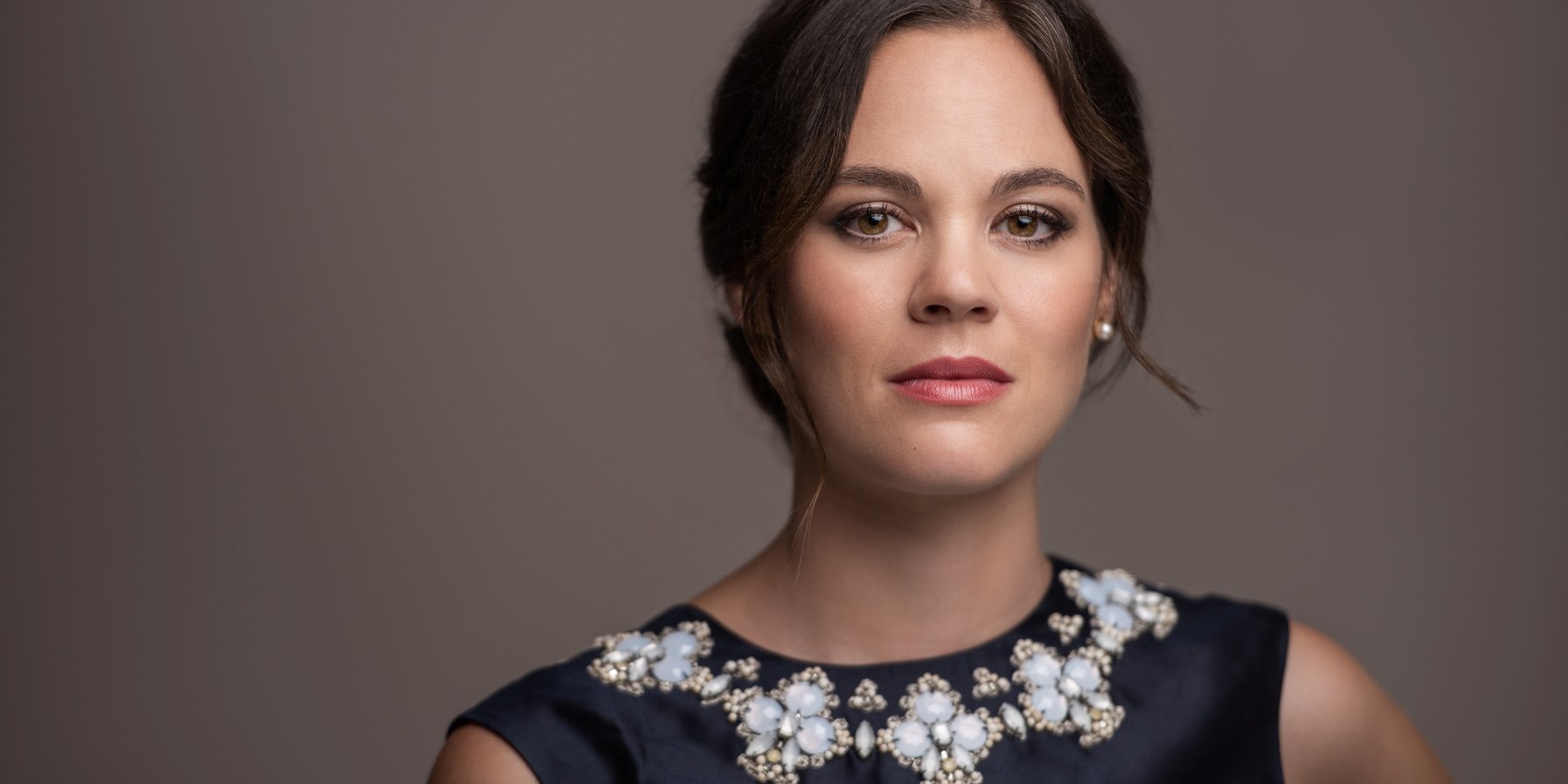
Regula Mühlemann sings Mozart's »Exsultate, jubilate«
The program moves from late Baroque works by Vivaldi and Pergolesi through the High Classical sacred style of Haydn and Mozart to the modernist ballet music of Prokofiev. As a conductor, how do you navigate these stylistic shifts?
When you look at a program like this, the stylistic contrasts are actually part of a longer historical continuum. In the Baroque era, for instance, the Italian style was almost a shared language across Europe. This exchange continued into the Classical period. As a young musician, Mozart travelled to Italy with his father Leopold, studied with Giovanni Battista Martini in Bologna, and spent time in Turin and Milan. Composers inspired one another even across distances that were much harder to overcome than today, and the effort required to obtain a piece of music often made these connections even more meaningful. The cantabile vocal lines we find in Pergolesi, for example, are very expressive and characteristically Italian, and this clear, singable musical language influenced composers far beyond Italy.
The technical foundation of conducting, however, remains the same. Of course one adjusts according to style and content. The first half of the program calls for a smaller, more transparent orchestral sound, whereas Prokofiev requires a completely different kind of energy. But ultimately it is about finding a clear musical line. I always try to »read« the music rather than impose an interpretation on it.
What is the difference between reading and interpreting a piece of music for you?
The word »interpretation« sometimes suggests placing oneself in front of the music. I’m not trying to translate the music. I prefer to think that I am reading what is already there. Of course, each conductor will see different aspects, because we are all different. Not only the conductor, but the audience as well. Our own point of view changes—our energy, our experiences, even our mood that day. Each performance becomes a different chapter of the same novel. The story remains, but the perspective evolves. Great performers, past and present, are incredible narrators. They can catch your attention and guide you through the story. My role as a conductor is similar: to touch the heart first and then the mind, to communicate what the composer intended. Of course, not everyone will respond the same way—personal taste will always play a part—, but the goal is to serve the composition and bring the story to life.
Have a listen!

And that story comes alive in a very particular way in a live concert. What is it about a live performance that makes it different from listening to recordings?
In a live concert, you make a conscious decision to be there, which in a way obliges you to stay. You leave your comfort zone, plan your day, travel to the hall, maybe meet new people—all that effort and intention matters. Often, we don’t really use our time freely because we are constantly interrupted, reacting rather than choosing. By deciding to attend a live performance, you allow yourself to truly be present. You commit to staying, even without knowing in advance whether you will enjoy the music. In that openness, in that willingness to give yourself over to the music, something unexpected can happen. Even for just eighty minutes, that commitment allows you to absorb the music fully, without distraction, and makes the experience profoundly meaningful.
Speaking of music that transforms: You will also be performing Giuseppe Verdi’s moving Requiem with the Orchestra of the Zurich Opera House at the Elbphilharmonie. How do you experience this music on the podium?
The Verdi Requiem is extraordinary in its intensity and humanity. Performing it with the Orchestra of the Zurich Opera House is particularly remarkable because the musicians’ operatic background infuses the music with profound expressiveness. They form a true melting pot, coming from many countries, and each musician brings their own life experience to the performance.
For me, the Requiem is more than a religious work; it is a meditation on life and death, on the breadth of human experience. It begins in silence, as if emerging from nothing, and concludes in silence, encompassing the full spectrum of human emotion—fear, hope, forgiveness, longing, joy, and serenity. The piece moves subtly: starting in A minor and, after an hour and ten minutes, returning one semitone higher in B-flat—a small shift, yet it feels as if I am just a semitone closer to the divine. The final words, »Libera me«—»make me free«—remind both performers and listeners that each day is an opportunity for growth: to become a better conductor, a better friend, a better human being.
What else do you hope the audience will take away from your Easter concerts?
I want them to reflect, to think, to enjoy, and sometimes to feel a surprise—a slap in the face without actually getting one! Music is very healthy in that sense. Even if it cannot change the world by itself, it can guide people’s hearts and minds, and that gives hope.


