
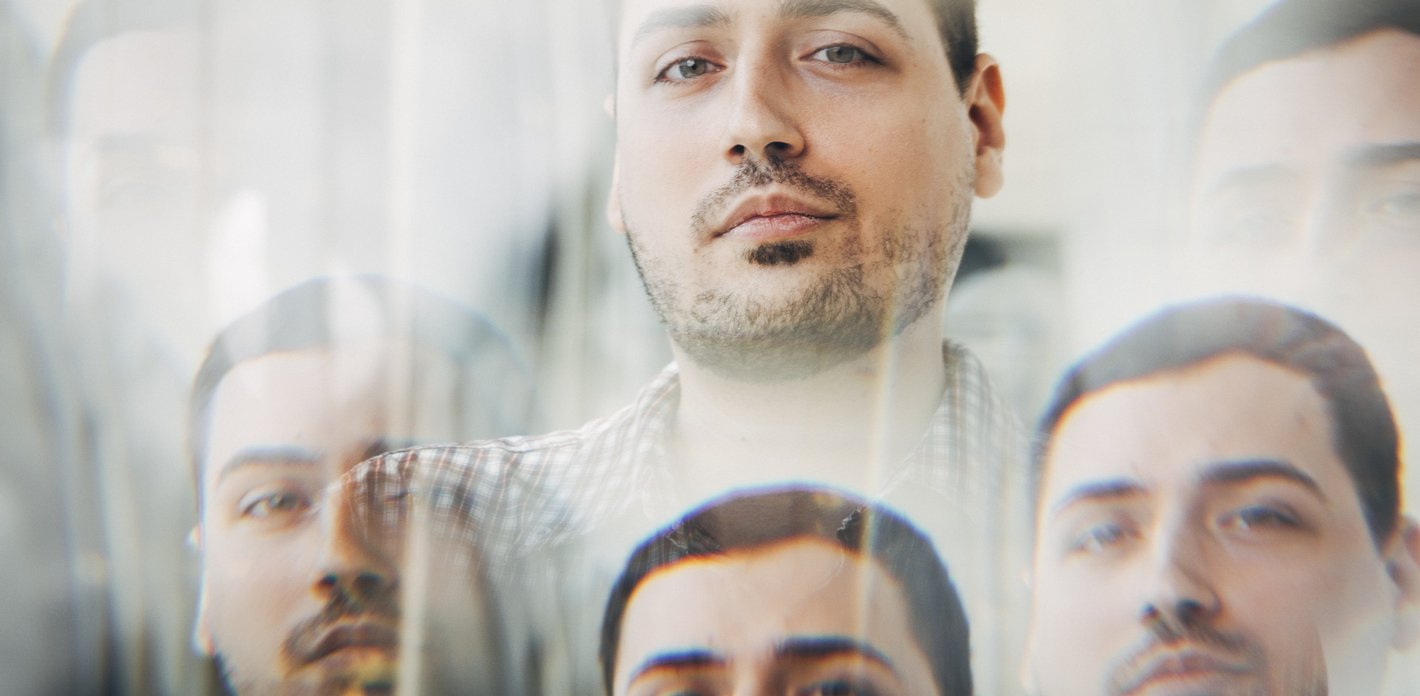
Interview: Luise Weiss, October 2026
Veljko Nenadić describes composing and making music as basic physical needs rather than a profession. For him, life without music is simply unimaginable. As a child, the young Serbian dreamed of becoming a concert pianist, but later decided to study composition. It seems to have been the right decision: his works have already received numerous awards, most recently the Claussen-Simon Composition Prize. As a member of the jury, conductor Alan Gilbert says: »Veljko Nenadić stood out among the many talented composers we considered for the Claussen-Simon Composition Prize through the honesty and sincerity of his compositional voice. His music feels natural and compelling, and reveals a highly personal perspective on his musical roots.«
The prize includes a commission for the NDR Elbphilharmonie Orchestra, which will be performed in the opening concert of the 2027 »Elbphilharmonie Visions« festival. In the interview, the young prizewinner talks about his earliest musical experiences, the composers who have inspired him and his new work »Six Caryatides«.
-
Veljko Nenadić: Short Biography
Veljko Nenadić, born in 1998, is one of the most frequently awarded and performed Serbian composers of his generation. He has won more than 50 prizes at composition competitions and festivals, including major accolades such as the Bartók World Composition Competition 2022 in Hungary, first prize at the 6th Ennio Morricone International Choral Composition Competition, first prize at the Luigi Nono Composition Competition in Italy and the Jeunesses Musicales International Composer Competition in Belgium.
His works have been recognised by leading figures in contemporary composition, including Ennio Morricone, John Corigliano, Unsuk Chin and Tristan Murail, and performed by outstanding soloists such as Barnabás Kelemen, Alberto Mesirca, Julia Hartig, Maja Bogdanović and Daniel Rowland. Nenadić’s compositions have been heard in concerts and at music festivals across Europe and broadcast on the radio.
Nenadić studied at the Faculty of Music in Belgrade with Isidora Žebeljan. Since 2021, he has also been studying organ there with Maja Smiljanić-Radić and currently works as an assistant in the Composition Department. Alongside his work as a composer, he regularly performs as a pianist, organist and harpsichordist.
Elbphilharmonie Visions :A festival of contemporary music from 29 January – 7 February 2027
A Video Portrait of Veljko Nenadić
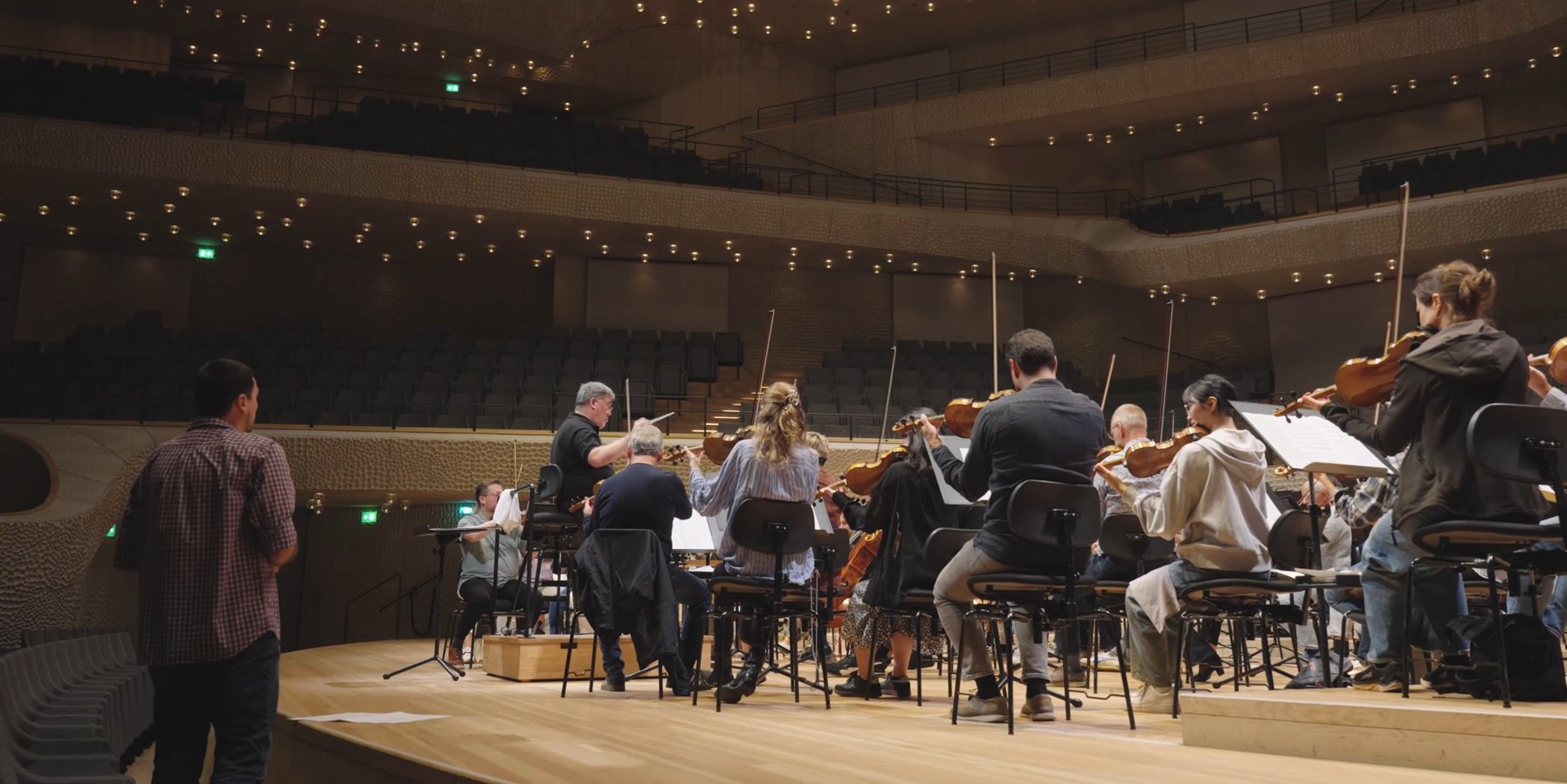
You play the piano, right? Do you play any other instruments?
Veljko Nenadić: Yes, that’s right! I started playing the piano when I was around eight or nine, and at first my wish was to become a concert pianist. As my love for composition gradually grew, I moved away from that idea, but the piano remains my most important tool and companion when composing. Besides the piano, I also play the organ, which I have been studying at the university for the past several years, and I have also given several concerts on the harpsichord.
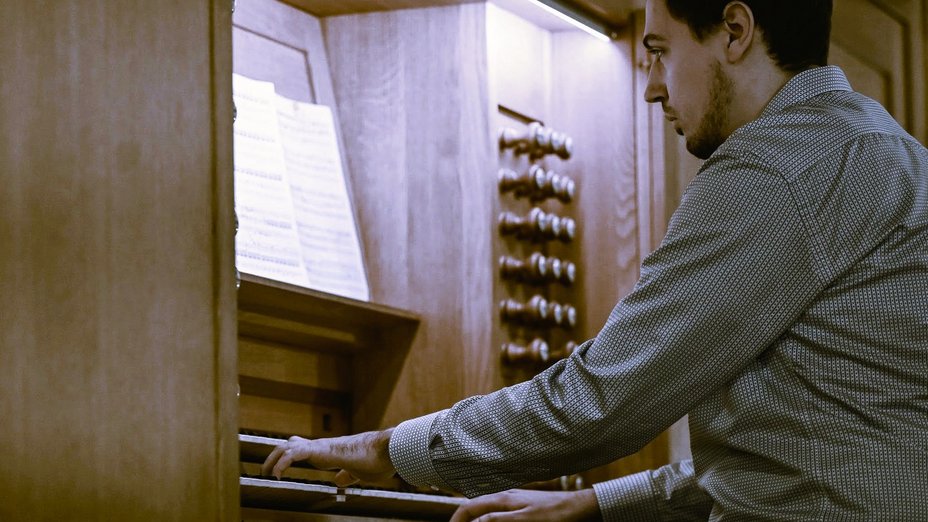
In the video portrait that we filmed last year, you said that you started composing at the same time as playing the piano. What were those pieces like? Which composers did you admire first?
They were fairly simple pieces in the style of Mozart, Beethoven and Bach, who were my greatest musical heroes at that age. From my perspective today, I would say that this music had no artistic value, but what is interesting is that certain contrapuntal procedures, harmonic relationships and their resolutions in these early pieces were very logical and accurate, even though I had absolutely no knowledge of harmony or music theory, and I did not even know what counterpoint meant. I composed entirely intuitively, much as I still do today. I was never particularly interested in rules.
Veljko Nenadić: »Comic Book« for piano and synthesizer

Which music did you listen to when growing up?
In classical music, once I had moved beyond the composers I mentioned earlier, I gradually fell in love with the music of Claude Debussy, Maurice Ravel, Sergei Prokofiev, Igor Stravinsky and Béla Bartók, and a little later with Olivier Messiaen (because of whom I started playing the organ!), György Ligeti, Iannis Xenakis, Tōru Takemitsu, Alberto Ginastera and many others. I also loved, and still love, listening to jazz, especially Chick Corea and Pat Metheny. And I have always been passionate about traditional and folk music, whether it is Balkan and Serbian music, African or Latin American music, or gamelan. All of these different kinds of music can be found on my playlists, almost chaotically mixed together. So after Ravel’s Pavane, you might suddenly hear Balkan brass, or the music of Taraf de Haïdouks, the Romanian Roma band.
When and how did you know that you want to become a professional composer?
Actually, I never really decided to become a professional composer, and even today, I’m not entirely sure whether I am a »professional composer« or what that term actually means. I experience composing and music itself, almost as a physiological necessity, something I simply have to do in order to exist and survive, rather than as a profession!
Who was or is a big influence or inspiration for you?
The movie directors David Lynch, Akira Kurosawa und Sergei Parajanov, the authors Michail Bulgakow, Gabriel García Márquezand many others – as well as all the directors, writers, composers and artists with incredibly strong, striking and distinctive artistic voices. What attracts me to them most is the way each, in their own way, blurs the boundary between reality and imagination. I am also fascinated by magical realism and surrealism, and I feel that my own music, in its own way, shares something of that same aesthetic.
To the present: do you often compose music for large orchestra? Do you have a favourite instrument to write for?
My »favourite instrument« is the orchestra itself! Just a few months ago, I had the premiere of my horn concerto, written for Stefan Dohr and the Belgrade Philharmonic, and last year my orchestral work was premiered at the ISCM World Music Days in Portugal. After the premiere with the NDR Elbphilharmonie Orchestra, I have three new commissions coming up, all of them for orchestra, so I’ll be writing quite a lot of orchestral music in the near future, which I’m particularly happy about!
ISCM World Music Days: Three Mythical Creatures
How does it feel when your music comes to life in a concert hall?
It is a whole mixture of different emotions, rather strange ones at first, but ultimately, at the very end, incredibly beautiful and rewarding. There is always a certain tension in hearing something that has existed only in your imagination and on paper suddenly come to life in front of an audience, but that actual moment when a piece is performed in a concert hall, especially when it is a premiere, and everything finally comes together and the music begins to breathe on its own, is an indescribable feeling.
Your piece for the NDR Elbphilharmonie Orchestra is called »Six Caryatides«. Can you describe your ideas and inspiration behind this work?
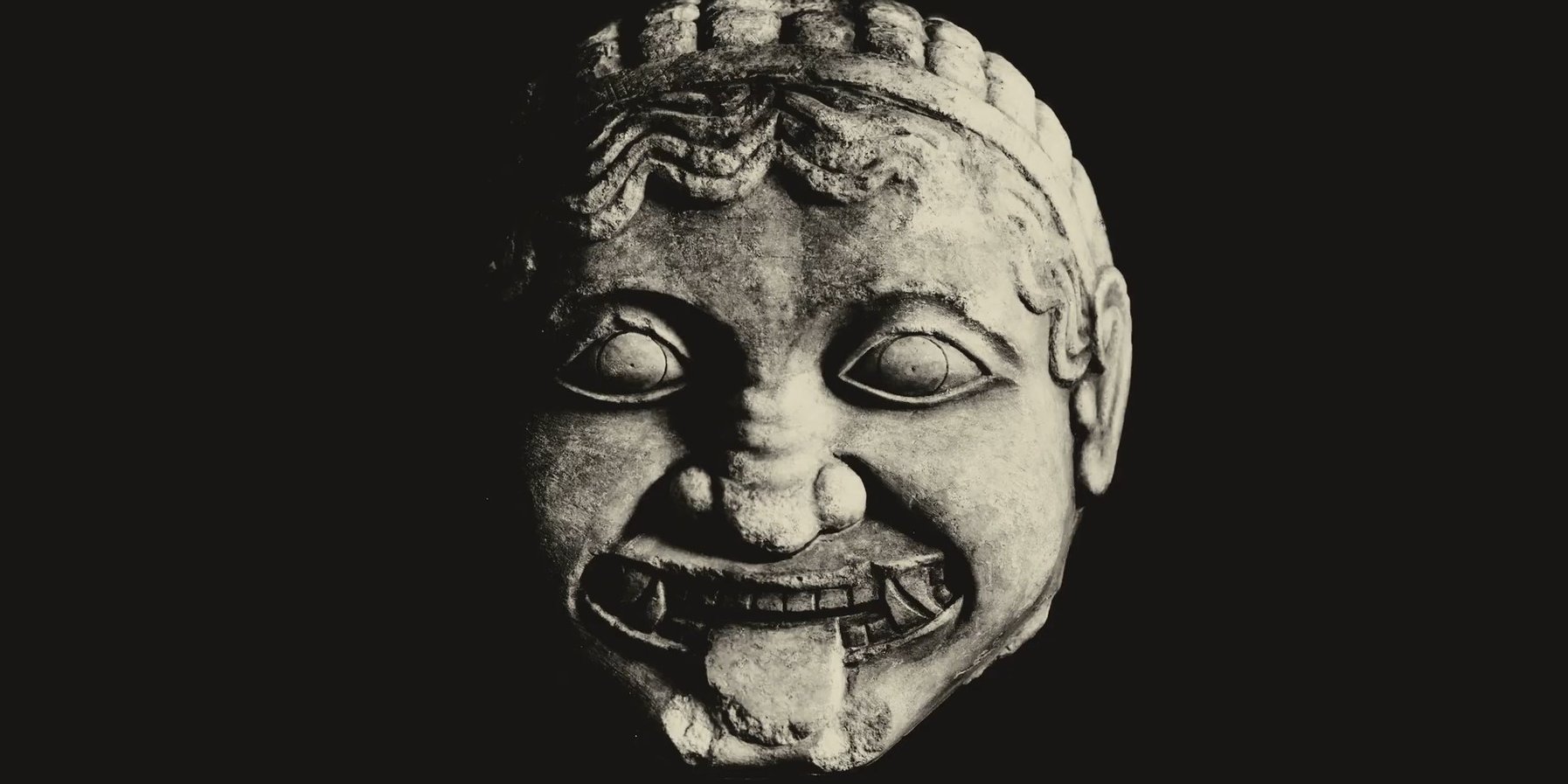
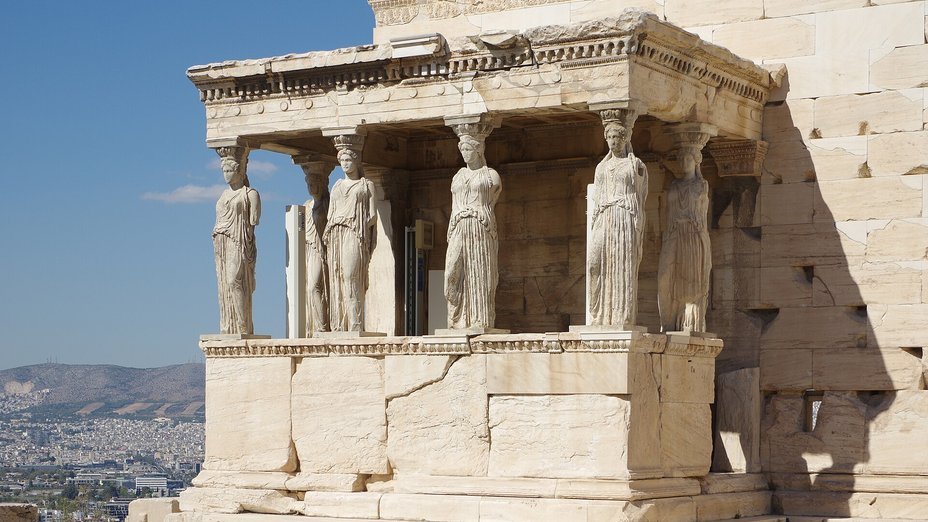
The piece is inspired by the story of the six Caryatids of the Erechtheion in Athens, one of whom was taken to Britain in the early nineteenth century. According to a Greek legend, the remaining five lamented the loss of their sister. I was particularly drawn to this image of separation and cultural heritage scattered across continents. The work is conceived in six movements, as a series of sonic sculptures, and some of the movements are conceived as homages to particular composers. I also draw on what I think of as a kind of primordial, archetypal folklore, combining elements from very different musical traditions, an approach also reflected in the percussion, which includes a wide variety of instruments drawn from a range of cultures – from Thai gongs and Japanese temple bowls to the nigerian udu.
There are many people who are somehow afraid of contemporary music – or at least, they would not choose a concert with contemporary music. What would you tell them – why is contemporary music absolutely worth listening to?
To be completely honest, I am sometimes afraid of contemporary music myself. However, if contemporary music is the real thing – powerful, authentic, original and fresh – I deeply believe that its impact can be understood, or rather felt, by anyone, even by someone who does not usually enjoy contemporary classical music. Contemporary music is incredibly eclectic, so my advice would be: stay open-minded, be persistent, and give it a chance. I am sure that everyone can find at least something they connect with, and when you do, it can be truly invaluable.
How would you describe your music in three words?
Energy. Passion. Instinct.
- Elbphilharmonie Großer Saal
NDR Elbphilharmonie Orchestra / Vivi Vassileva / Alan Gilbert
Nenadić: Six Caryatids / Bjarnason: Inferno – Elbphilharmonie Visions Opening Concert


