Text: Stefan Franzen, August 2026
Blues and bluegrass, jazz, soul, American, Italian and African folk, opera and ballet – you almost need to pause for breath just listing all the styles that find their way into Rhiannon Giddens’ music. The singer, banjo player and violinist from North Carolina approaches and narrates the musical history of the U.S. from a global perspective: she explores the shared musical heritage of America’s diverse communities, brings it back to life and gives each tradition an equal voice. And in times like these, that certainly sends a message – although, as Giddens said back in 2015, at the beginning of her solo career: »The folk movement needs to regain its strength, because it’s an outlet for people to talk about what’s going on right now.« That statement remains every bit as relevant today.
-
Rhiannon Giddens: Her life story in brief
All that said, American roots music was not important to her from an early age. Born in 1977, Giddens grew up in a multi-ethnic family; her mother is of African American and Indigenous descent, while her father is white. The Piedmont region of North Carolina is regarded as a heartland of blues and old-time music – folk music shaped by the fiddle, banjo, mandolin and dance. Although she listened to her grandparents’ collection of blues and bluegrass records, as a child she largely followed her mother’s taste for classic rock, ranging from Queen to Sting. »It wasn’t until college that I really got into the traditional stuff. And that’s when I realised: The European influence on American music is well documented, which is not the case with Black string bands.« Giddens made it her mission to explore this forgotten tradition and bring it back into public awareness.
After studying opera singing at Oberlin College in Ohio, she initially immersed herself in a band scene devoted primarily to Celtic music. It was there that she met multi-instrumentalist Dom Flemons and founded the Sankofa Strings with him, a group presenting a broad spectrum of African-American musical genres: country and classic blues, early jazz, African and Caribbean songs, as well as the repertoire of minstrel shows – those theatrical performances in which white performers caricatured Black people through the practice known as »blackface«. With the Sankofa Strings, Giddens was already able to display the full range of her talents: she sings, plays the violin and performs on the five-string banjo.
Telling the Story of the Banjo
The banjo is her principal instrument and telling its fascinating story is her main interest. Although it is often dismissed as a novelty and made the butt of jokes, this remarkable instrument has a history stretching back thousands of years: its ancestors can be traced as far back as ancient Egypt; among the griots, the storytellers of West Africa, it was already being played 800 years ago – as the spike lute known as the ngoni – to accompany songs in praise of kings and warriors. From there, it made its way via the Senegal River to the Caribbean and the U.S. as the »banjar« aboard slave ships, gradually undergoing a metamorphosis from an instrument made of calabash or wood into the metal-bodied form familiar today. This African heritage resonates powerfully in Giddens’ programme »Early Banjo Music«. The banjo is also a key tool in her songwriting: »The licks, the chord structure, the groove – it all changes when you write on the banjo instead of the guitar,« she says from experience.
In 2005, the Sankofa Strings evolved into the Carolina Chocolate Drops, who eventually went on to support Bob Dylan as the opening act. With albums such as »Genuine Negro Jig« (2010) and »Leaving Eden« (2012), the band also garnered international attention. A particular stroke of luck here is Giddens’ collaboration with Leyla McCalla, who also plays the banjo but primarily the cello and draws on the musical heritage of her Haitian ancestors and Louisiana’s French-influenced Cajun culture.
Reflektor Rhiannon Giddens :25.–29.11.2026
At the five-day »Reflektor« festival, the American artist showcases her multifaceted work, which bridges folk music, history and global musical traditions.
Carolina Chocolate Drops: Country Girl
Everything is connected
Her wide-ranging work with the Carolina Chocolate Drops laid the groundwork for Giddens’ solo career, which she launched in 2015. One of the driving forces was producer T-Bone Burnett: he invited her to take part in »Another Day, Another Time«, a project featuring recordings inspired by the music of the Coen brothers’ film »Inside Llewyn Davis«. Giddens delivers an explosive and deeply soulful rendition of »Water Boy«, originally performed by singer and civil rights activist Odetta.
Soon afterwards, Giddens was back behind the microphone with Burnett’s guidance, recording her first solo album, »Tomorrow Is My Turn«: a tribute to the courageous women of blues, country, folk and jazz, from Sister Rosetta Tharpe and Nina Simone to Dolly Parton. Here, Giddens reveals the extraordinary versatility and range of her voice: »I want my own voice to remain recognisable; in every song, I look for a message that I can relate to from my own experience. With my debut, I wanted to show that I’m influenced by musicians from a wide variety of social backgrounds. Because if you pull out one of the threads that American music is woven from, it all falls apart! Everything is connected. Country singer Jimmy Rodgers also sang the blues and blues singers also played country. The dividing lines, the categorisations – those were created solely by the record companies for commercial purposes.«

The next chapter in Giddens’ career was shaped by her partnership with her then-husband, the Italian musician Francesco Turrisi. A versatile instrumentalist, Francesco Turrisi plays everything from piano and accordion to various lute-like instruments and the frame drum. He brings a global musical perspective to Giddens’ work. From their new home in Ireland, the couple produced two albums exploring the connections between Arabic and African sounds and the folk traditions of the U.S. and Europe – particularly those of Italy. The astonishing spectrum extends all the way to spirituals and opera, with arias ranging from the Baroque era to the 20th century, from Claudio Monteverdi to Gian Carlo Menotti.
Rhiannon Giddens has drawn on her classical training on several occasions in recent years, but always through the prism of African-American history. With »Omar«, she and composer Michael Abels have created an opera telling the life story of Omar Ibn Said. The Muslim scholar was forcibly taken to America in 1807 from the region now known as Senegal, where, while enslaved, he wrote an autobiography in Arabic. Through this work, Giddens gives an individual voice to the fate of millions of Black people who were deported.
As a composer, Giddens also ventures into the world of ballet in a fascinating way: in »Black Lucy And The Bard«, she turns her attention to Shakespeare’s sonnets addressed to the »Dark Lady« – though viewed through the lens of poet Caroline Randall Williams, who has reimagined the originals as poems addressed to an African woman.
Rhiannon Giddens has also invited Francesco Turrisi to her festival for an evening (25 November) featuring American and Italian folk music, spirituals and arias.
Nashville Ballet: Lucy Negro Redux

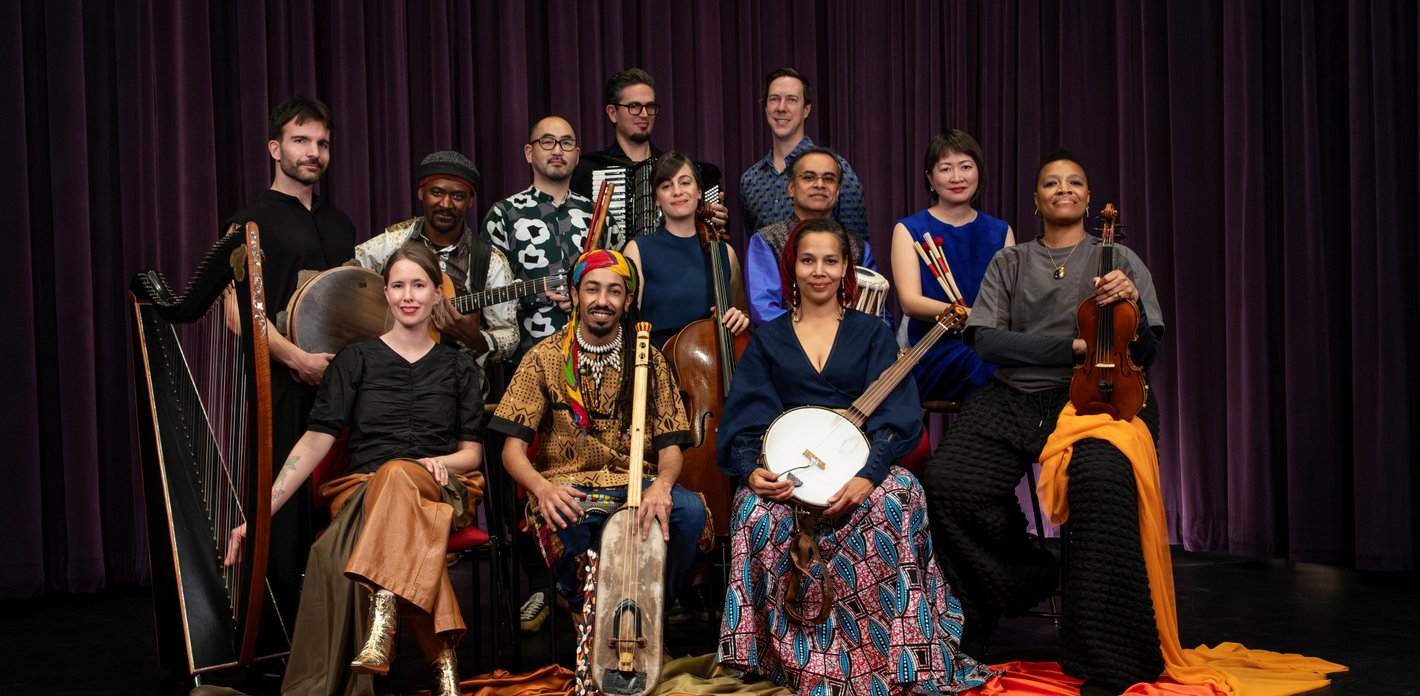
Perhaps the most surprising development in Giddens’ multifaceted career came with her appointment as artistic director of the Silkroad Ensemble in 2020. Its founder, cellist Yo-Yo Ma, personally handed over the reins of this unique global ensemble – which brings together artists from different continents – after 22 years. Giddens has invited new faces into this latest chapter of the Silkroad project and developed an unconventional repertoire with them, including cellist Karen Ouzounian and pianist Lara Downes.
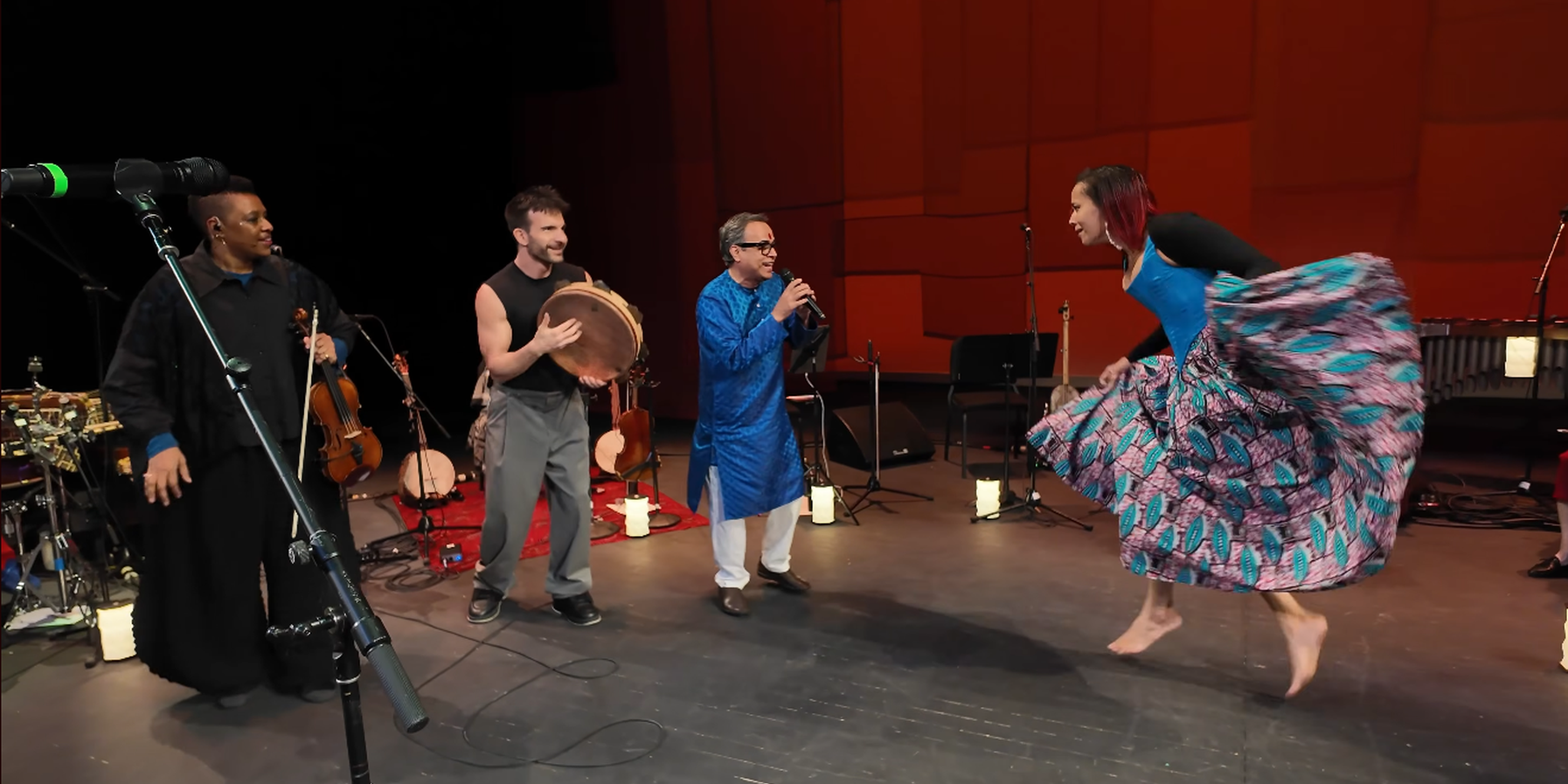
The current Silkroad programme, »Sanctuary«, for example, shows how music has always served as an anchor for communities in times of turmoil, upheaval, loss and grief. At its heart are songs in which ritual and trance-like elements, silence and healing all play an important role. They encompass an enormous geographical spectrum, stretching from Moroccan Gnawa chants to the southern Italian tarantella and American folk traditions.
Of course, the Silkroad Ensemble is a must at her »Reflektor« festival as well! »Sanctuary« is performed at the Elbphilharmonie on 29 November.
Silkroad Ensemble: Pizzica
This programme, in particular, embodies Giddens’ artistic vision in especially powerful form: the vision of a different America. Her music is a resounding, hopeful cry for this utopia – and she draws that sense of hope from looking at her homeland from afar: »As I was exposed to influences and news from all over the world, I learned more and more about the backgrounds of all the people who came to America. I learned that America is literally made up of people from all over the world. It is an idea that hasn’t really caught on over there. A lot of people there still believe that white, Anglo-Saxon Protestants founded the country. People today are not even aware of the incredible number of German immigrants who came over – so many that, for a time, it wasn’t clear whether English or German would become the national language. Not to mention the Africans, the Indigenous peoples and the other Europeans. All of that is embedded in the music, too, and still needs to be discovered and brought to light. That makes me curious. We Americans are not a unique or exceptional people. We are a mix, just like people everywhere else!«
This article appeared (in German) in Elbphilharmonie Magazin (Issue 3/26).
Rhiannon Giddens talks more about the programme for her »Reflektor« festival and about the U.S. in the »Elbphilharmonie Talk« podcast.
- Elbphilharmonie Kleiner Saal
Rhiannon Giddens & Francesco Turrisi
»When I Am Laid in Earth« – Reflektor Rhiannon Giddens
- Elbphilharmonie Kleiner Saal
»Juba Zinga Jubilee« – Bringing Early Banjo Music Back Home / Reflektor Rhiannon Giddens
Sold out - Elbphilharmonie Kaistudio 1
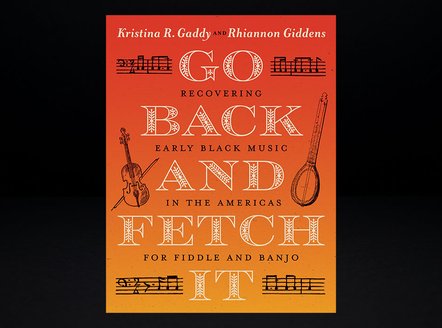
Kristina Gaddy & Rhiannon Giddens / Talk
»Go Back and Fetch It« – Reflektor Rhiannon Giddens
- Elbphilharmonie Kleiner Saal
Rhiannon Giddens: »Omar and Lucy«
with Francesco Turrisi and Members of the Silkroad Ensemble – Reflektor Rhiannon Giddens
- Elbphilharmonie Kleiner Saal
Karen Ouzounian / Lembit Beecher
»Mayrig – Mother« – Reflektor Rhiannon Giddens
- Elbphilharmonie Kleiner Saal
»Finding Home« – Reflektor Rhiannon Giddens
- Elbphilharmonie Großer Saal
»The People Could Fly« – Reflektor Rhiannon Giddens
Sold out - Elbphilharmonie Kleiner Saal
Creole and Cajun Music from Louisiana – Reflektor Rhiannon Giddens
- Elbphilharmonie Kleiner Saal
»Celebrating 30 Years of Music« – Reflektor Rhiannon Giddens
- Elbphilharmonie Großer Saal
Silkroad Ensemble featuring Rhiannon Giddens
»Sanctuary« – Reflektor Rhiannon Giddens