
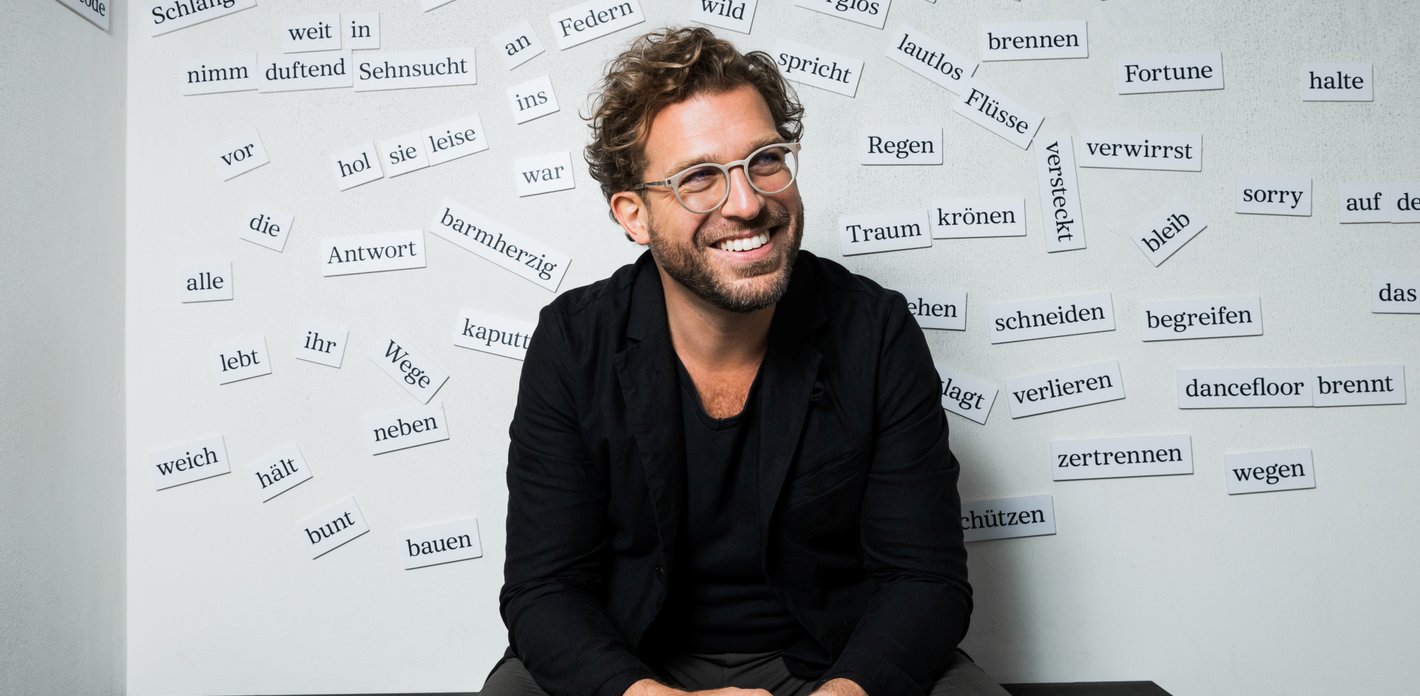
Text: Regine Müller, August 2026
Julian Prégardien’s schedule in the spring of 2026 was not only jam-packed. It also showcased the tenor’s almost bewildering versatility. In April, he appeared multiple times at the Vienna Konzerthaus as an Artist in Residence. Within just five days, the programme ranged from Mahler’s »Rückert Lieder« to the open-format »Schubert for All« and concerts for babies. Prior to that, he gave two performances at the Heidelberger Frühling (Heidelberg Spring Festival), with which he has long been associated and where he has also served as Artistic Director of the Liedzentrum since the beginning of the year. At the same time, he was rehearsing in Schwetzingen for a staged production of Monteverdi’s »L’Orfeo«. Prégardien was also already busy preparing for Liedstadt Hamburg: the festival, which he co-founded in 2023, once again presents extraordinary concerts centred on the classical art song at various venues throughout the city in September, including the Elbphilharmonie and the Laeiszhalle.
»I’ve just reached the peak of a series of projects that change almost every week and will continue through the summer, culminating in a production of Handel’s ›Alcina‹ at the Bavarian State Opera. After that, things will quieten down,« he says during an interview in the foyer of the newly renovated Heidelberg Stadthalle, just two hours before his performance in Hans Zender’s orchestral interpretation of Schubert’s »Winterreise«. Before the interview, he calmly plays a round of frisbee with his children in the adjacent park. And then the conversation stretches well beyond the planned twenty minutes; meanwhile the concert audience has long since begun to congregate in the foyer.
With Respect and Nonchalance
This remarkable nonchalance speaks volumes. For it evidently stems from Prégardien’s complete command of his vocal craft. He seems to require no warm-up rituals for hours on end and does not feel his concentration disrupted even by a long conversation before a performance. That said, he has great respect for the work, considering, as he admits, how Zender’s work for tenor and small orchestra demands unrelenting intensity and a great deal of energy. Within the transparent acoustics of the Heidelberg Stadthalle, his lyrical tenor carries seemingly effortlessly, but Zender’s dense instrumentation is demanding. It is above all Prégardien’s vivid diction and his lean vocal delivery – which never tips over into strain – that carry him across the clinking glaciers and rugged cliffs of the score.
The Liedstadt Festival is taking place at a wide variety of venues throughout Hamburg from 26 September to 5 October 2026.

Concerts like this, however, make up only a relatively small part of Prégardien’s work. Alongside his classical opera and concert activities, he is also deeply committed to pioneering new approaches to presenting classical music. »Even while still a student, I began organising recitals myself and staging opera projects. At the same time, I also began my concert career, with a focus on Bach. In other words, it was already becoming clear twenty years ago that I needed this breadth for my artistic fulfilment. Because one thing influences the other – and I mean reciprocally, not just in one direction.«
In the international opera world, lyric tenors with the vocal assertiveness of Prégardien are particularly sought after. He could therefore easily lead the jet-setting life of an ideal Tamino in Mozart’s »Magic Flute«. However, the two most firmly rooted pillars of his vocal identity prevent him from doing this. »When singing ›lieder‹ and Bach, I feel a comparatively small sense of self, but a great devotion to the themes being explored there. That can also be very expressive, as in the role of the Evangelist in a Bach Passion. But even so, there’s a relatively small ›self‹ involved; it’s never about the attitude of ›Now I’m going to show you how brilliantly I can sing!‹ In opera, in my opinion, that aspect often takes up more space.«
Like Father ...
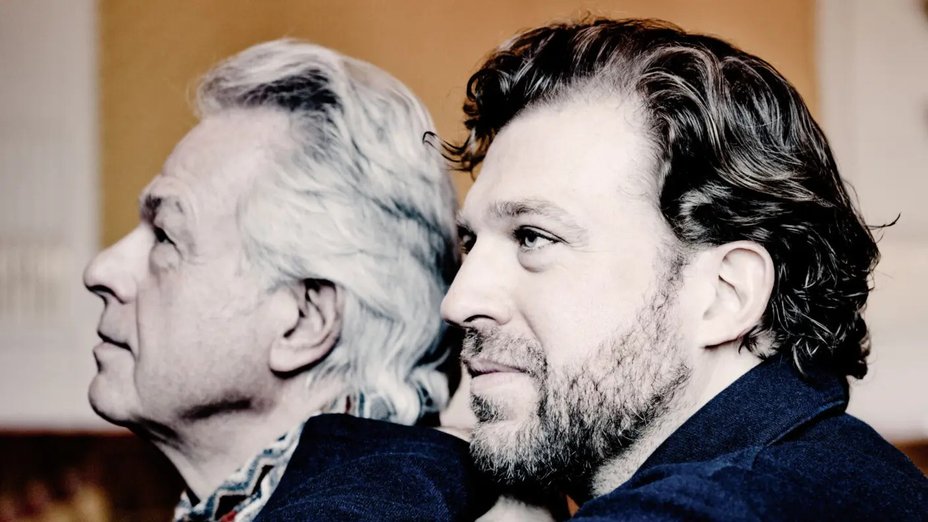
When you look at Julian Prégardien’s family background, his career seems almost inevitable. Or, to look at it another way, entirely impossible. For his father is none other than the singer Christoph Prégardien, who – while sharing similar artistic preferences – followed a somewhat different career path, yet enjoys a legendary reputation, particularly as the Evangelist in Bach’s Passions. Father and son Prégardien share other things in common: both began their vocal training at an early age with the Limburg Cathedral Boys’ Choir, both feel at home in the lyric tenor register and both have a particular fondness for the art song.
... like Son
»I come from Limburg an der Lahn, a mecca for amateur choirs, and I can say from the heart that I’m very grateful for that foundation,« says Julian Prégardien, describing his formative early years. In the choir, though, it was not so much the experience of his own voice and its power that he saw as the initial spark for his path as a soloist. Rather, it was a latent dissatisfaction with established readings and interpretations.
It wasn’t pride in his voice, but a desire for expression that paved the way. This talent was recognised and earned him his first solo roles while still in the Limburg choir, then later with the Stuttgart Chamber Choir and Collegium Vocale Gent. »And from there, my studies developed organically. I didn’t actually want to study voice at all; I wanted to sing in a choir. That was my home, after all.« Of course, his father initially advised him against pursuing a career as a singer. But when things became serious, he deliberately stayed out of his son’s plans for the future. Nowadays, the two perform together in father-and-son programmes, and the son has long since stopped having to contend with comparisons to his father.
Concert Tip :25 February 2027
Together with the Balthasar Neumann Choir, Julian Prégardien will perform Schumann’s cycle »The Pilgrimage of the Rose«.
Franz Schubert: »Auf dem Wasser zu Singen« :Christoph & Julian Prégardien

It’s all about Fun!
In any case, he takes a different approach, especially when it comes to actively questioning established formats. »The programmatic and conceptual ideas I had 15 years ago, especially for the chamber music format of the song recital, simply didn’t fit into the right box for most promoters. But it has always been a driving force for me to present this incredibly multifaceted world of song in equally multifaceted ways.« And not just in the form of the classical song recital with piano accompaniment.
He wants to invite audiences to discover that there are many other ways to experience an evening of song: »For example, singing a Schubert song in a wine bar with a guitar on your lap. Or going from house to house with it.« In Vienna, Prégardien has his own concert series called »Schubert for All«, where there is no set programme. Instead, the audience can request songs by Franz Schubert, which he then sings on the spot: »There are a total of 600 songs, and of course I haven’t studied them all – but I’m pretty good at sight-singing. It’s not at all about perfection though. It’s actually about having fun.«
The band The Erlkings, led by frontman Bryan Benner, shares a similar vision: they adapt Romantic art songs into arrangements reminiscent of popular music, aiming to make them accessible to a new audience. Prégardien collaborates with them regularly: »When Bryan has his guitar with him, music is possible anytime and anywhere. And suddenly a song recital can happen without needing that traditional, formal setting. Songs have a very communicative quality, because they are a medium. Actually, you could say that Schubert has been social media par excellence for 200 years.«
Franz Schubert: »Das Wandern ist des Müllers Lust« :The Erlkings & Julian Prégardien
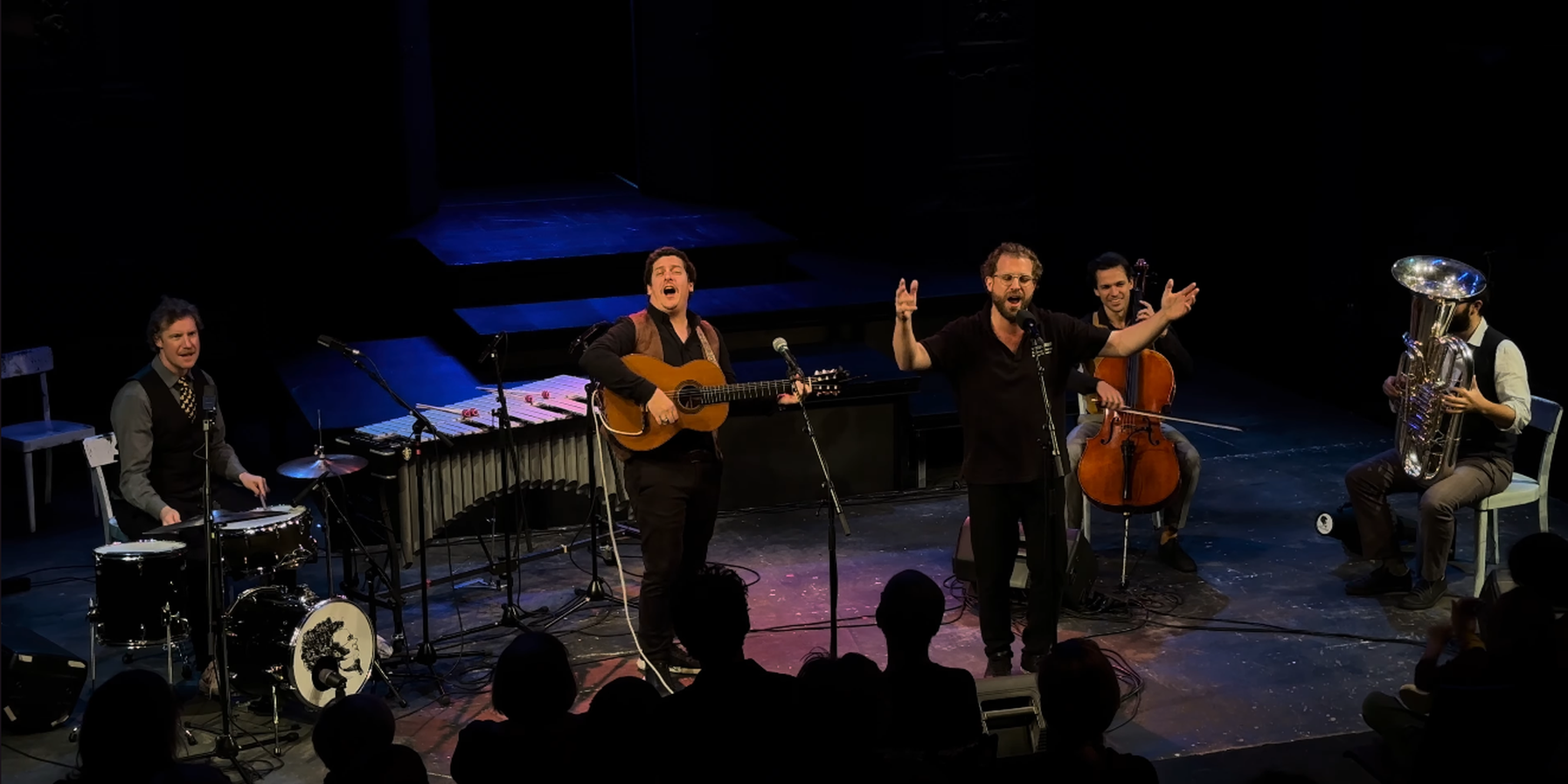
Prégardien wants to actively move beyond the enclosed concert setting. »You can connect the classical song with other art forms, as we do at the Liedstadt Festival. There are also choreographed evenings featuring moving music, during which we performers actually move ourselves as well.« One example is »Fields of Wonder«, an evening with Thomas Hampson that Prégardien co-organises. »Here we spell the word ›Wonder‹ with an ›o‹, but phonetically it’s almost the same as ›to wander‹, with an ›a‹. Wandering and wonder are very closely linked here. And this play on language opens up vast spaces in which new questions arise: How does space relate to the body, and conversely, how does the body relate to space? What does this have to do with music? What effect does it have on people? This gives rise to all kinds of energetic movements.«
Generally speaking, Prégardien believes that the art song genre is still too heavily influenced by the notion that it is an intellectual discipline. »It can be that, and it does have that aspect. But that is not all it is! Art song is a very sensual discipline in which a great deal that is personal is explored. It is a genre that can be very inviting because it tells stories and evokes vivid imagery. An intimate art form that stimulates the imagination. In other words, the art song is, in principle, one of the most accessible forms of music there is.«
This article appeared (in German) in Elbphilharmonie Magazin (Issue 3/26).


