
Interview: Bjørn Woll
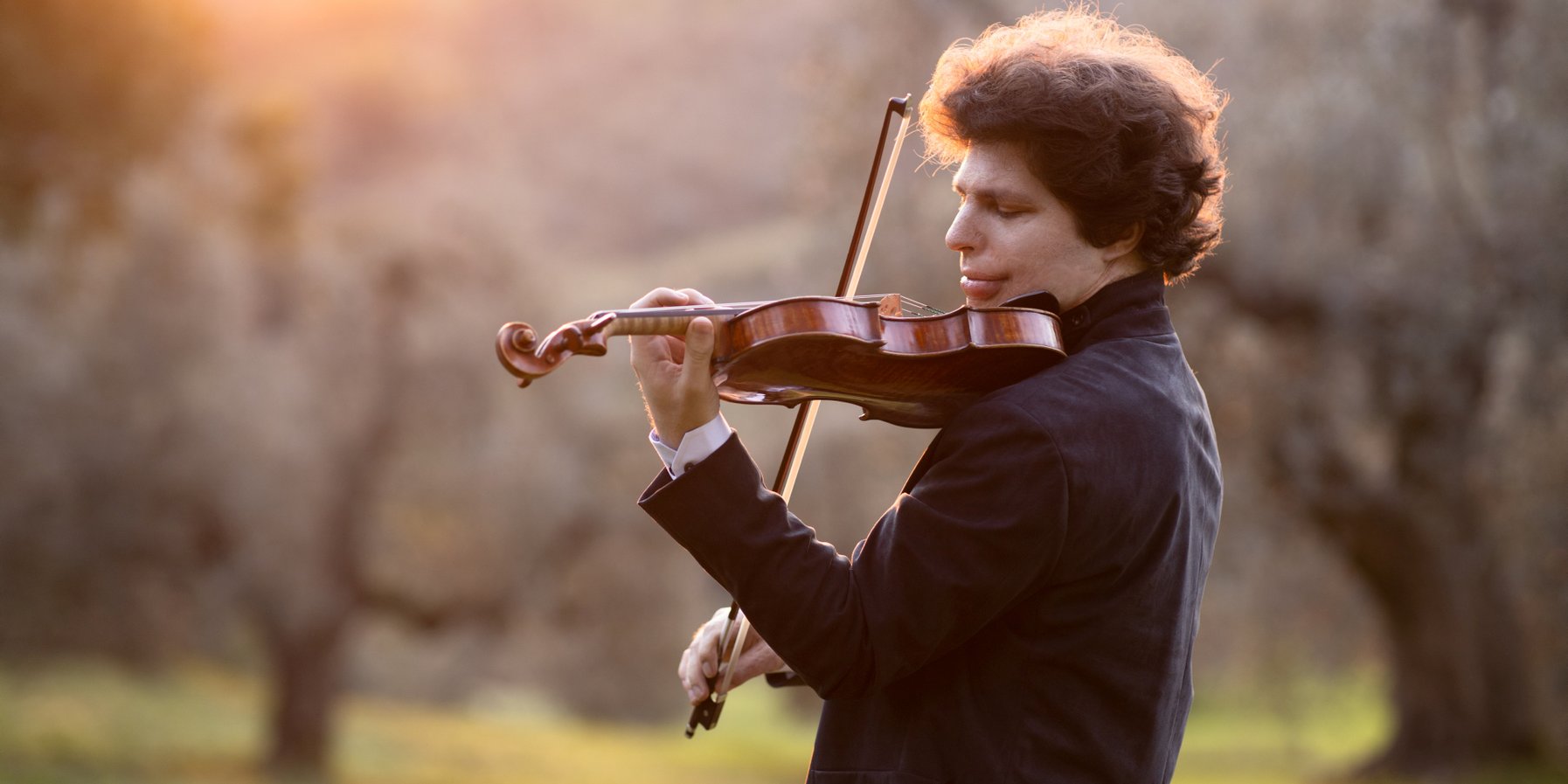
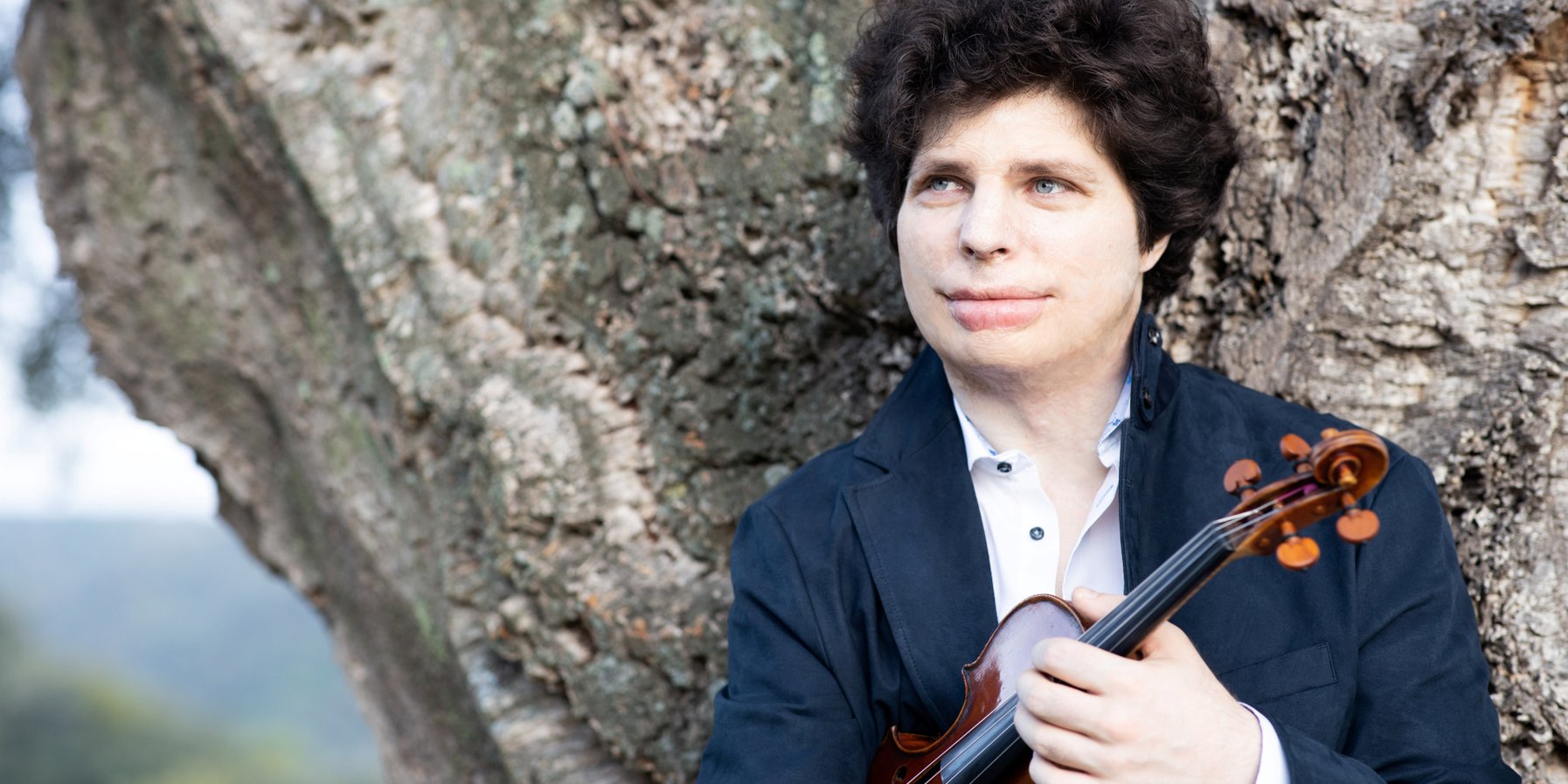
Vineyards and idyllic olive groves as far as the eye can see, the Tyrrhenian Sea just a few kilometres away: Augustin Hadelich grew up in Tuscany, not far from Pisa – a place where others go to spend their holidays. His German parents, both farmers, bought a farm there in the 1980s. At the beginning of the new millennium, the 19-year-old musician was drawn to America, where he studied with Joel Smirnoff at the Juilliard School in New York. He still lives in the U.S. today, holds both German and American citizenship, but continues to regard the rolling Tuscan countryside as his home.
In 2006, Hadelich won the gold medal at the Indianapolis Violin Competition – the most important violin competition in the U.S. – and this accolade proved a major boost to his career. Initially, the violinist – whose playing combines astonishing technique with an exceptionally beautiful tone – made a name for himself in his adopted home, but he soon made his presence known on the major international stages as well.
Hadelich is certainly no stranger to Hamburg either: in 2019, he made his Elbphilharmonie debut with Alan Gilbert and the NDR Elbphilharmonie Orchestra, where he served as Associate Artist from 2019 to 2023. Now he is returning to the Elbphilharmonie as Artist in Residence.
Augustin Hadelich
He possesses »perhaps the most beautiful violin tone of all« and is a firm audience favourite. As Artist in Residence, he is performing four times at the Elbphilharmonie and Laeiszhalle – as a soloist with a full orchestra, in an all-star trio and in chamber music duos.
In the upcoming season, you are the Elbphilharmonie’s Artist in Residence and are set to perform four concerts here. What does this venue mean to you?
Augustin Hadelich: The Elbphilharmonie is a very special place for me and somewhere I love performing. First of all, the building is incredible – nowhere else do you get a view of the Elbe like the one from the artists’ dressing rooms. Every nuance of the music can be heard clearly in the hall, which means I can explore an extraordinary level of detail there, even as a soloist with a large orchestra. In other halls, you sometimes have to paint with a somewhat broader brush, but at the Elbphilharmonie I can make use of the violin’s entire dynamic range, right down to the softest »piano«.
One of your performances is with the Pittsburgh Symphony Orchestra and its music director, Manfred Honeck. He studied violin and viola himself and used to be a violist with the Vienna Philharmonic. Is it an advantage to have a conductor who knows the violin so well?
There are wonderful conductors who don’t play the violin but nevertheless have a great capacity for empathy. That said, I can tell when conductors are violinists themselves and somehow possess a violinist’s instinct for what I’m about to do next. I have performed with the Pittsburgh Symphony many times before. It is one of the finest orchestras in the U.S. So I’m especially looking forward to performing the Barber Concerto with them in Hamburg.
Of all the American violin concertos, this is perhaps the most beautiful and noble – and the one I feel closest to personally. It is very soulful and full of warmth, and it has an aesthetic rooted in classical beauty. Under no circumstances should it be played in a superficial or sentimental way. I think more in terms of the beauty of Greek statues: the interpretation needs a certain nobility.
Samuel Barber: Violinkonzert :Augustin Hadelich | Krzysztof Urbański | WDR Sinfonieorchester
You have been living in the U.S. for more than twenty years now, so you know the American orchestral scene extremely well. You’re currently an Artist in Residence with the Boston Symphony Orchestra. It is one of the so-called »Big Five«, alongside the orchestras of New York, Chicago, Philadelphia and Cleveland. This »seal of quality« dates back to before the turn of the millennium. Does it still hold true, or which other American orchestras belong to this premiere league today?
Sixty years ago, these five major U.S. orchestras were better than all the others – there was a clear hierarchy. Nowadays, the orchestras of Los Angeles and San Francisco definitely belong in the same league as well, as do Pittsburgh, Minnesota, St. Louis and a number of others. You can no longer really say that American orchestras sound different from European ones. Every orchestra has its own unique performance tradition: Pittsburgh, for example, sounds completely different from many other American orchestras because its music directors – including the current one, Manfred Honeck – have had such a strong influence on shaping its sound.
What about the concert scene? Are programmes in the U.S. different from those in Europe, or are audience tastes essentially the same?
Concert programmes aren’t all that different – the core repertoire, the great masterpieces, they are appreciated everywhere. There are, however, composers who have a more difficult time in Germany, such as Sibelius. He is performed much more frequently in America; Janáček is heard more often there too. The difference is naturally most pronounced when it comes to American music, which is well known in the U.S., as well as in England and Australia, but is rarely heard elsewhere in the world – such as the Barber Concerto. When I arrived in America more than twenty years ago as a young German violinist, I was mainly invited to perform Mendelssohn, Beethoven and Brahms. Now it’s my turn to help make American violin concertos a little better known in Europe.
USA 250
Große Orchester, kleine Ensembles, Bluegrass, Jazz und vieles mehr – In der Saison 2026/27 feiert die Elbphilharmonie die Musik der USA in alle ihren Farben und Formen. Anlass ist das 250. Jubiläum der Unabhängigkeitserklärung.
Conductor Manfred Honeck on the traditions and idiosyncrasies of American orchestras
Read Interview
Speaking of German violinists in America: You grew up in Italy as the son of German parents, but you have lived in the U.S. for a very long time. How do you identify yourself? Or is that something that does not matter to you at all?
I used to try to define my identity or find an answer to the question: Am I more German or more Italian? When I arrived in New York, I was relieved to discover that I did not have to choose – it is all a part of who I am. The U.S. is my home now. When I think about home, though, I tend to think of Italy – the beautiful olive trees and the countryside where I grew up. Culturally, however, I have always been more German than Italian. Even at school, I was always the German boy in the class – it did not matter how well I spoke Italian.
You are performing the second orchestral concert of your residency with the Mahler Chamber Orchestra. So, on the one hand, there’s a large, late-Romantic orchestral ensemble for Barber and, on the other, a smaller, more chamber-music-like ensemble for Mozart. How does that change your approach as a performer?
The styles of the works are completely different and I actually adjust every aspect of my violin playing accordingly. In the case of Barber, the sound is broad and expressive, with tremendous warmth and lyricism, although in the final movement the articulation also becomes harsh and modern. Mozart, of course, is stylistically quite different. Not only is the ensemble smaller, but we also perform without a conductor. The communication between the orchestra and me is therefore much more immediate; the musicians listen and respond to me more directly. We are performing the first and last of Mozart’s five violin concertos and these two works reveal just how far Mozart developed within the space of a single year. Incidentally, this concert marks the beginning of a major Mozart project with the Mahler Chamber Orchestra.
For your recording of Bach’s sonatas and partitas, you used a Baroque bow; in Hamburg, you will be playing Mozart with a modern bow. To what extent has your playing been influenced by the principles of historically informed performance practice?
Historically informed performance practice has had a profound influence on all violinists of my generation and those younger than me. We no longer play everything with the same heaviness, but often with greater verve and more transparent textures. At the same time, we should not approach the subject too dogmatically or academically. With Bach, playing with a Baroque bow was a revelation for me, although we should not forget that, theoretically, almost anything can be achieved with either a modern or a Baroque bow. They simply have different strengths. Mozart always thought like an opera composer: even in his violin concertos, there are lyrical characters and comic figures. And they need to be played in completely different ways.
The »persona buffa«, of course, doesn’t sing with the same degree of vibrato and uses an entirely different articulation from other characters. I find it awful when every note in Mozart is given the same vibrato – as though you were spreading a thick layer of Nutella over a slice of bread. Vibrato is there to emphasise the phrasing – the finest Mozart singers approach it in exactly the same way; they don’t apply vibrato evenly to everything, but vary it within the phrase. It is about allowing everything to resonate and sing.
You are also performing in two chamber concerts as part of your residency. What appeals to you about that?
I grew up in an environment where I simply had very few opportunities to play chamber music. It was a wonderful discovery when I came to America and suddenly found myself able to do it regularly. You learn an enormous amount from it: listening to one another and understanding the subtle nuances of ensemble playing are important even for a soloist. I would love to play more chamber music, but unfortunately my concert schedule doesn’t always leave enough time for it. That makes it all the more special that I will be playing chamber music in Hamburg. I’m looking forward to the recital with Seong-Jin Cho – it is a new collaboration with a wonderful musician and outstanding pianist.
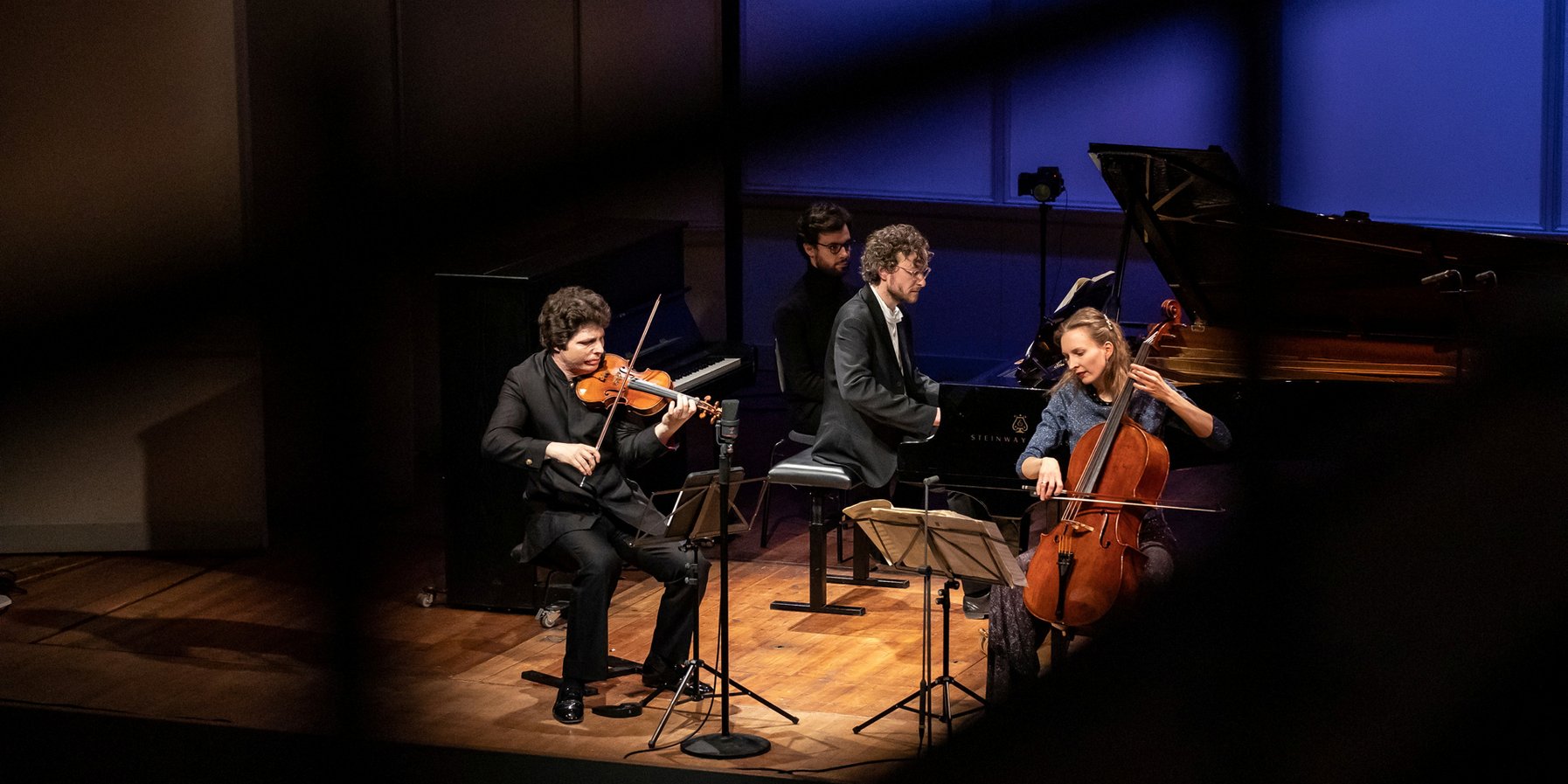
And I am delighted to be performing with Martin Helmchen and Marie-Elisabeth Hecker. We have played together many times and feel a deep musical kinship. We have similar tastes and a similar instinct for phrasing. More generally, one of the wonderful things about chamber music is that we sit so close to one another. Ideally, you might even forget that there is an audience there at all. It is completely different from a solo concert, where you are very aware at every moment that you are the centre of attention.
Five years ago, you changed instruments, moving from a Stradivarius to a Guarneri. How difficult was it to adapt?
The Stradivarius had a very bright sound – very direct and focused. The Guarneri del Gesù, on the other hand, is warm and slightly gentler in its articulation. I loved its sound from the very first moment, so the transition didn’t feel difficult at all. There were perhaps two months when I was slightly dissatisfied – the violin sounded wonderful, but I hadn’t yet learned to play it as well as I wanted. Then the pandemic and lockdown arrived, and I was very fortunate to have this new violin and to be able to spend months recording with it in the studio. By the time live concerts resumed, I had become very well attuned to the instrument.
Anne-Sophie Mutter once told me that every violin has its own character. What kind of personality does your Guarneri have? What does it readily reveal and where do you perhaps have to work a little harder to achieve the sound you have in mind?
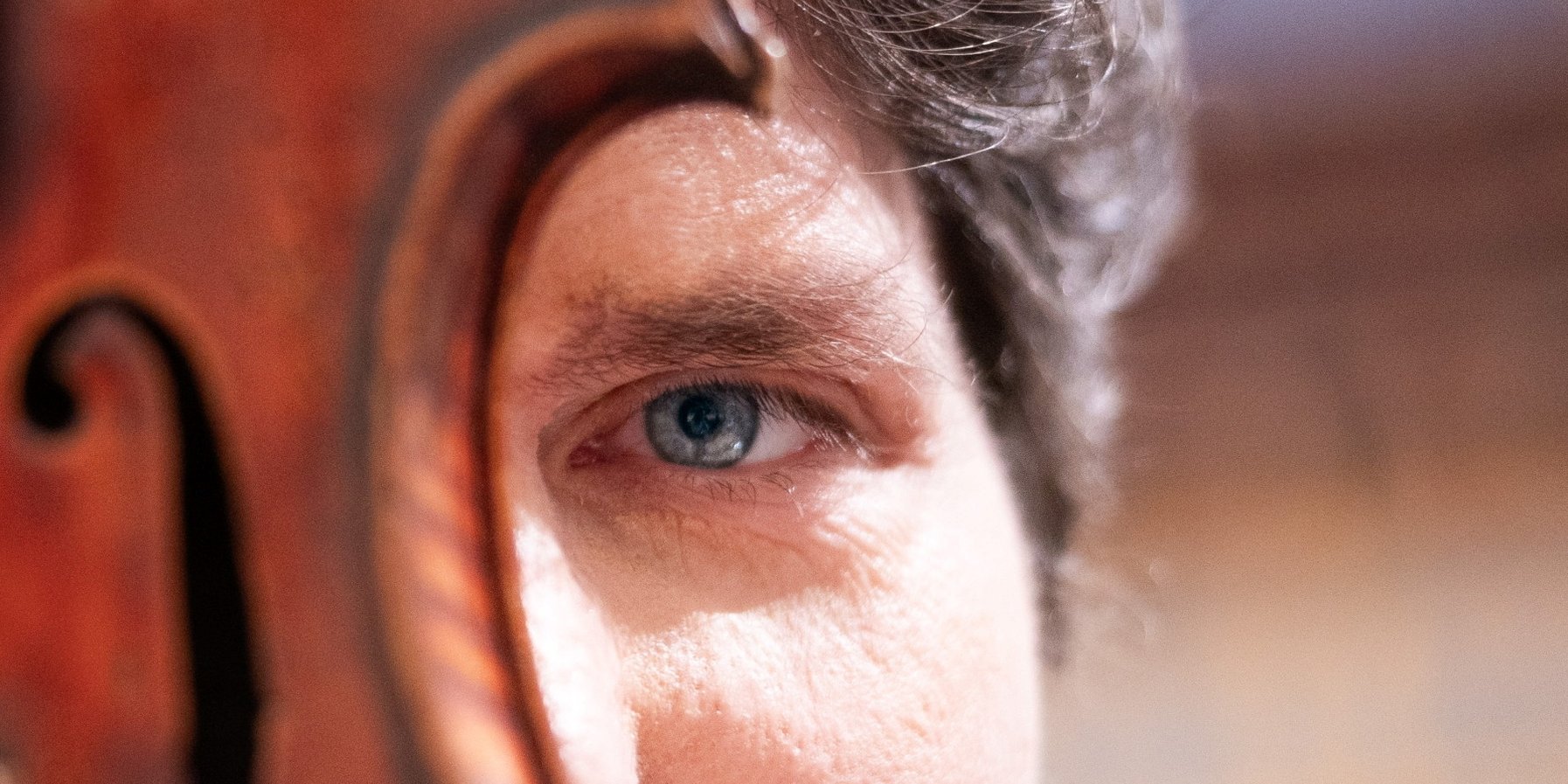
The great strength of this violin is its middle register – on the two middle strings, it has a warm, singing quality that somehow sounds very human. The opening of the Barber Concerto, for example, is magnificent on it! In general, however, I have to put in slightly more physical effort when playing because the sound doesn’t spring from the violin quite so readily by itself and you have to encourage it a little more. But I’ve become accustomed to that and learned to use the weight of my arm more efficiently.
Henryk Szeryng, one of the great violinists of the 20th century, played this Guarneri before you. Who do you consider to be the greatest violinists of the past? Who do you enjoy listening to when you’re not playing yourself?
I’ve always had a special love for David Oistrakh’s recordings. When I was growing up, he was a role model for me: he had a beautiful tone, but also great modesty in the way he presented himself as a musician. He was never interested in drawing attention to himself. Instead, he always tried to place the work itself at the centre. But when I listen to violin music, it usually feels more like work than pleasure to me. So when I’m listening purely for enjoyment, I often choose another repertoire. Songs, for example, or symphonic music.
This interview appeared (in German) in Elbphilharmonie Magazin (Issue 3/26).
- Elbphilharmonie Großer Saal
Augustin Hadelich / Seong-Jin Cho
Works for violin and piano by Johannes Brahms, Leoš Janáček, Amy Beach and Sergei Prokofiev
- Elbphilharmonie Großer Saal
Mahler Chamber Orchestra / Augustin Hadelich
Mozart: Symphony in A major, Violin Concertos in B-flat major, KV 207, & A major, KV 219
- Laeiszhalle Kleiner Saal
Augustin Hadelich / Marie-Elisabeth Hecker / Martin Helmchen
Beethoven: Cello Sonata in A major / Kodály: Duo for Violin and Cello / Schumann: Piano Trio No. 1


